



kscarbel2
-
Posts
19,161 -
Joined
-
Days Won
115
Content Type
Profiles
Forums
Gallery
Events
Blogs
BMT Wiki
Collections
Store
Everything posted by kscarbel2
-
GM Canada HQ blocked by Unifor in protest of Oshawa decision John Irwin, Automotive News / January 23, 2019 TORONTO — Unifor members on Wednesday morning formed a blockade outside of General Motors’ Canadian headquarters in Ontario, to protest the automaker’s plans to end production at the nearby assembly plant in Oshawa. Unifor President Jerry Dias said the union’s members would prevent GM Canada employees from entering the building. The move is in response to GM’s plans to stop allocating products to Oshawa Assembly beyond 2019. “GM headquarters will be down and it will stay down,” Dias said. “This is going to become a very major community initiative for us.” David Paterson, GM Canada vice president of corporate and environmental affairs, said GM employees would work from home Wednesday and that the company’s operations would be unaffected. He estimated about 700 GM employees work at the Oshawa headquarters. “We have the ability to work from home or at other locations, so we won’t be affected,” Paterson said. “We’ll have planned for this and have alternate arrangements.” ESCALATING PROTESTS Unifor’s action is the latest in an escalating feud between the union and GM. Unifor has undertaken an international campaign to save the Oshawa plant, taking out advertising in Canada and the United States and staging protests that briefly halted production at the factory and at one of its nearby suppliers. GM Canada, meanwhile, has taken to social media to refute claims by Unifor that the company is moving the Oshawa jobs to Mexico and has repeatedly urged the union to work with it on securing new jobs for workers. The war of words continued on Wednesday afternoon. During a news conference at the blockade, Dias said Unifor’s actions would happen on an ongoing basis at different GM facilities and suppliers. “What is happening here today is going to happen tomorrow,” Dias said “It’s going to happen on Friday. It’s going to happen at different locations, General Motors. We’re going to see you at the [Detroit] auto show that runs until the 27th. The simple reality is that we’re not going to stop.” Dias said Unifor's actions would not include an outright boycott of all GM products. "I'll never call for an outright boycott," Dias said. "Our members in Ingersoll make the incredible Equinox. Our members that work in St. Catharines provide powertrains for so many different vehicles that are sold in the United States. "But I have a real problem with the Mexican vehicles that GM thinks it can just dump on the Canadian and U.S. market. I'll leave it at that." In an interview following Dias’ press conference, Paterson downplayed the significance of the blockade and said he “felt bad” for Unifor members who have stood in cold, snowy and rainy conditions. “There’s nobody in the building today,” he said. “Basically, it’s a protest outside an empty building. I think the urgency, given that, is probably overstated.” Paterson said GM Canada considers Unifor’s blockade to be illegal, and the automaker could consider taking legal action in response. He said GM has asked local police to stop protesters from blocking the road to the headquarters, though he was unaware as of Wednesday afternoon if the company had filed for an injunction. “I believe this is an illegal action, so we’ll see how long they’re there,” Paterson said. “I honestly don’t know what our legal staff will do on that, but I presume from experience where Unifor has done this before, generally it’s agreed it’s an illegal action. In past instances, where they’ve done this before, there have been injunctions that have been secured. An Ontario Superior Court judge ruled in 2008 that a nearly two-week blockade of GM Canada’s headquarters by the Canadian Auto Workers, a predecessor of Unifor’s, that year was illegal. That blockade was in response to GM announcing that it would close its Oshawa truck assembly plant, which would shutter in 2009. “We’ve been saying for several weeks that we would like the union to sit down and discuss the packages that will be made for affected workers at the Oshawa plant over the next year,” Paterson said. “Until these types of actions are done, that’s not really possible until Unifor is ready to come to the table.” ‘IT’S GOING TO GET UGLY’ Dias said the blockade would be a sustained effort, lasting beyond Wednesday and again threatened to escalate Unifor’s battle with GM. “It’s going to get ugly and it is going to get ugly very quickly,” Dias said. “The bottom line is we’re not going away.” Dias said he was set to meet Wednesday morning with officials in Prime Minister Justin Trudeau’s office to discuss the Oshawa plant. He said he would urge the federal government to get more involved in its fight with GM and said he ultimately wants a meeting between himself, Trudeau and GM CEO Mary Barra. “I’m looking to get the federal government engaged immediately,” Dias said. “It’s past time.” Barra met with Navdeep Bains, the federal minister of innovation, science and economic development, in Detroit last week. Bains said he urged GM to reverse course on its Oshawa plans, though Barra said the decision was final. A Unifor spokeswoman said non-GM employees who work at the company’s Canadian headquarters will be allowed in by union members. Paterson said non-GM tenants of the building include Ontario Power Generation Inc. and cafeteria services. Oshawa Assembly is one of three North American assembly plants GM plans to stop allocating production to in 2019 as part of a larger corporate restructuring. Oshawa builds the Cadillac XTS and Chevrolet Impala sedans and does final assembly on previous-generation Chevrolet Silverado and GMC Sierra pickup bodies shipped from the United States. .


-
GM, facing losses in Brazil, seeks tax breaks in Sao Paulo state Marcelo Rochabrun, Reuters / January 23, 2019 SAO PAULO -- General Motors' Brazil unit is in advanced talks with Sao Paulo state to receive tax incentives, the company told public officials and union representatives at a meeting on Tuesday, a few days after telling workers in a memo that it was losing money in the country. GM's top executives in South America attended the meeting along with union representatives and mayors of the two cities where the automaker's Sao Paolo state plants are based. Two officials representing the two cities told Reuters GM disclosed the tax incentive discussions at the meeting. "They told us that the conversation with the state is very advanced, very positive," said Alberto Marques Filho, secretary of innovation for the city of São Jose dos Campos, where one GM plant is based and where the meeting took place. GM declined to comment. A representative for the state government said in a statement it has "been working to show the public that it is advantageous to keep the company in Sao Paulo." GM's dominance GM is the undisputed market leader for small cars and trucks in Latin America's largest economy, but it was not revealed until recently that the automaker was losing money there. Earlier this month, GM CEO Mary Barra said the company had lowered its break-even point in the region in recent years by 40 percent, but it still faced "unacceptable losses that need to be addressed." "We've begun work with key local stakeholders, dealers, suppliers, unions and government officials to take all necessary actions to generate acceptable returns in the near term or to consider other options," she added at an investor presentation on Jan. 11. Worker warnings GM posted a memo in its plants in Brazil warning workers that it had experienced deep losses in the past two years and could not keep operating that way. GM has yet to comment on the memo, which was seen by Reuters. GM, which is undergoing a global restructuring, also has announced thousands of layoffs in the United States and Canada. It also plans to shut two plants outside the United States which it has not yet identified. The automaker is also looking to negotiate future investments with its unions, the governments of cities where it operates, and suppliers, said José Auricchio, the mayor of another GM plant location, Sao Caetano do Sul. Auricchio and Marques Filho said GM had told them at the meeting that the governor of Sao Paulo, Joao Doria, had personally participated in five meetings with the automaker to discuss tax incentives. The memo added that any turnaround plan for GM would require "sacrifices from everyone." Last year, Brazil's federal government granted carmakers with local plants a 15-year package of tax breaks, extending subsidies for an industry that has struggled to compete. Economy Minister Paulo Guedes, who took office with a new government this month, has said Brazil cannot afford to keep subsidizing powerful industries, arguing that an end to protectionist policies will make the economy more competitive.
-
Ford posts first quarterly loss in 2 years Nick Bunkley, Automotive News / January 23, 2018 DETROIT — Ford Motor Co. lost $116 million in the fourth quarter, its first loss in two years, and its profit for all of 2018 fell by more than half as lower margins in North America combined with losses everywhere else in the world. The automaker said tariffs and higher commodity costs added up to a $1.8 billion hit during the year, and it took an $877 million hit to pensions and other benefit funds when financial markets tumbled late in the year. "It's not a year that we were happy with," Ford CFO Bob Shanks said. But he argued that the company "made a lot of progress underneath the surface in North America" and has begun working to fix problems in Asia and Europe. Ford CEO Jim Hackett, on a conference call with analysts and reporters, said Ford is taking “decisive action in all underperforming parts of the business” and will begin to show clear results from those moves in 2019. “We have a clear vision, we have a solid plan and we are in execution mode,” Hackett said. Most of Ford's financial metrics for the quarter were negative, save for revenue that rose 1.2 percent to $41.8 billion behind improved product mix and higher net prices. On the year, revenue rose 2.2 percent to $160.3 billion but net income fell 52 percent to $3.7 billion. Ford earned $7.6 billion in North America in 2018, 6 percent less than the prior year. That will result in an average profit-sharing payout to most UAW members in March of $7,600, which is $100 more than last year because of accounting adjustments made to last year's results. The company lost $2.2 billion in the rest of the world, with the Asia Pacific region accounting for half of the red ink. Ford lost $678 million in South America and $388 million in Europe. Ford Credit had its best result in eight years, with a profit of $2.6 billion, a 14 percent increase. Mobility expenses Shanks said spending on mobility services throughout the year amounted to a loss of $674 million, split evenly between development work on autonomous vehicles and on investments such as Ford’s purchase of an electric scooter company called Spin. In addition to tariffs and higher commodity costs, Ford said it took charges totaling nearly $800 million tied to recalls of vehicles with defective Takata airbags and lost about $800 million related to foreign currency exchange. Combined, that’s about $3.4 billion lost to factors that were entirely outside Ford’s control, including $1.9 billion in North America, Shanks said. Yet North American profits only declined by $450 million, he noted. “If you put those aside, North America actually advanced in the year,” he told reporters at Ford’s headquarters. “That’s extremely encouraging, because it is the foundation of the business.” Shanks said Ford expects results to improve in 2019, though he again declined to provide more specific guidance than the vague projections that frustrated analysts and contributed to a decline in the company’s stock last week. In the U.S., it has several high-profile vehicles coming to market, including the Explorer and Escape crossovers, after a recent product lull during which its U.S. market share declined. “We’re going to have a lot of ammunition in terms of new product,” Shanks said. Potential labor disruption He cited the potential for labor disruptions in the year ahead as one potential negative. Ford has to negotiate with workers in Europe as part of its restructuring in that region, he said, and the UAW’s contracts with all of the Detroit 3 automakers expire this fall. Ford knows what it needs to do to fix its business and is confident in its plan, Shanks said, though he declined to elaborate on any details that the company has not yet released. “The choices that we’ve made in terms of what we are going to do to improve the business are largely made,” he said, “and now it’s just down to execution.”
-
Maybe UPS wanted to buy American. Most Kenworth customers love their trucks. That's a fact. And look at vocational, for example. Kenworth has taken a massive market share in vocational over the last 5-6 years coast-to-coast.
-
Allison providing transmissions for International CV Series Trailer-Body Builders / January 18, 2019 Allison Transmission’s Allison 1000 Series and 2000 Series fully automatic transmissions are the exclusive choice for the newly introduced International CV Series vocational trucks, the company said. In this series, 6-speed Allison Automatics are paired with the International 6.6-liter turbocharged diesel engine. Additionally, the Allison-equipped International CV Series trucks are rated at up to 22,900 pounds GVWR, and capable of 37,500 lbs GCWR. “The exceptionally durable and high-performing Allison 1000/2000 Series transmissions are ideally suited to partner with the International CV Series’ commercial-grade power, reliability and practicality,” said Rohan Barua, vice president of North America OEM sales at Allison. Standard and available Allison transmission features in the International CV Series include: Power Take-Off (PTO) option enables users to run power auxiliary equipment such as dump truck bodies, tow truck winches, hydraulic tools and bucket lifts Close-ratio 6-speeds, with double overdrive, to climb challenging terrain and maximize fuel economy Ideal integration with the powerful International 6.6L diesel V8. Under a collaborative engineering effort, the Allison 1000/2000 Series transmissions are optimized to take advantage of International’s robust 350 horsepower and 700 foot-pound of torque Available on rugged-duty, motorhome and emergency vehicle transmission applications, Allison Automatics allow rescue vehicles to accelerate faster and ease the integration of body and pumping equipment Allison’s patented Continuous Power Technology delivers smooth, seamless, full-power shifts, as well as superior acceleration in the CV Series Allison FuelSense 2.0 electronic controls for increased fuel economy and Dynamic Shift Sensing might be available for future releases Allison Automatics provide the greatest value in the market by combining enhanced performance and fuel economy, greater operational flexibility, and improved driver comfort and control. The combination of Allison 1000/2000 transmission and International CV Series Class 4/5 trucks accommodates a range of specialized body types, including construction, urban delivery, landscaping and emergency vehicle.
-
Kenworth to replace W900 with new W990 in 2020
kscarbel2 replied to kscarbel2's topic in Trucking News
-
Kenworth, Peterbilt, Mack showcase offerings during World of Concrete
kscarbel2 replied to kscarbel2's topic in Trucking News
Seriously, would you buy a truck from this guy? Has he ever even driven a truck? -
Kenworth, Peterbilt, Mack showcase offerings during World of Concrete
kscarbel2 replied to kscarbel2's topic in Trucking News
-
Kenworth, Peterbilt, Mack showcase offerings during World of Concrete
kscarbel2 replied to kscarbel2's topic in Trucking News
Geez, where do they find these scruffy and clueless guys? -
Kenworth, Peterbilt, Mack showcase offerings during World of Concrete
kscarbel2 replied to kscarbel2's topic in Trucking News
-
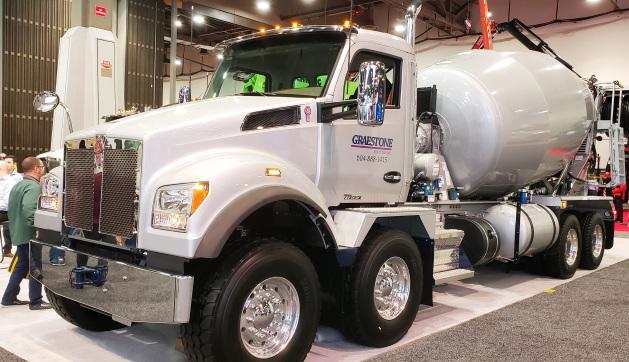
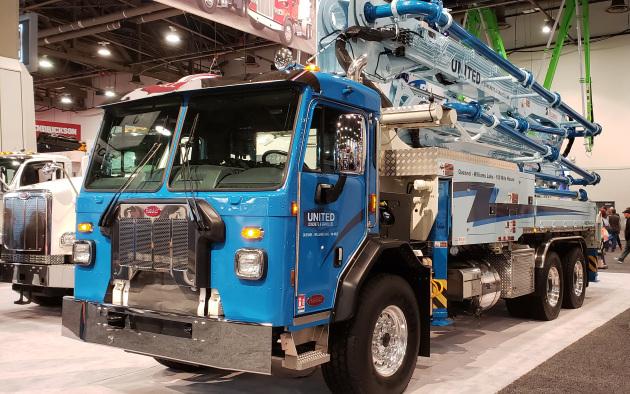
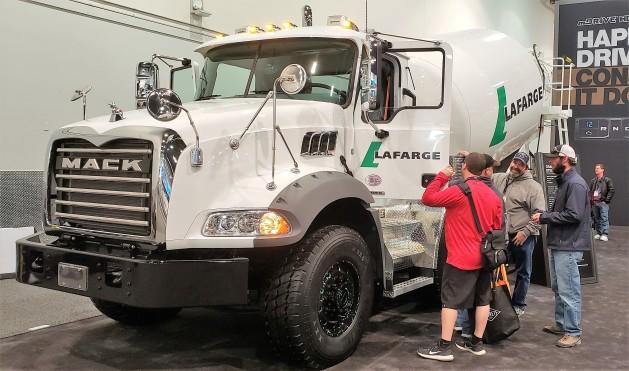
Truck News / January 22, 2019 LAS VEGAS, Nev. – Kenworth Trucks, Peterbilt Motor Company, and Mack Trucks are displaying an array of offerings during World of Concrete, including mixers and pump trucks. Kenworth is showcasing its T880S mixers and T880 pumper during the Las Vegas show. Its T880S twin steer mixer is equipped with a 14-yard London mixer body and a Paccar MX-13 engine with 455 hp and 1,650 lbs.-ft. of torque. It also features an Allison 4700RDS seven speed automatic transmission, set-forward dual Paccar 20,000-lb. front axles, and 46,000-lb. Meritor tandem rear axles. Kenworth also has a T880 Schwing pumper with a S36X 36-meter, truck mounted concrete pump and Allison 4500RDS six speed transmission. “Truck operators can depend on the Kenworth T880 and T880S to get the job done in their specific vocational applications,” said Kurt Swihart, Kenworth marketing director. “The vocational flagship Kenworth T880 series offers low operating cost, excellent performance and productivity, and outstanding driver comfort.” Peterbilt has its model 567 twin steer mixer, another model 567 mixer, and model 520 concrete pump truck on display during the show. “Peterbilt is the most sought after brand in the concrete industry and finished 2018 with a record vocational market share in part because of the strong demand for concrete products,” said Tony Sablar, Peterbilt’s vocational marketing manager. “Customers visiting the show will be able to experience first-hand the innovations in uptime, safety and connectivity that Peterbilt has introduced in its vehicles. The Model 567 has a leading reputation as one of the most rugged, reliable and technologically advanced vehicles in its class. The Model 520 is a versatile workhorse that has evolved into one of the preferred vehicles in the vocational segment. We are proud to display both vehicles at World of Concrete.” Mack Trucks is showcasing several mixers and pump trucks during World of Concrete, including the Granite Axle Back twin steer mixer, volumetric mixer, and a third concrete mixer. Mack also brought the Granite Axle Forward bridge formula mixer, as well as the TerraPro Cabover pump truck and 8×4 pumper. .
-
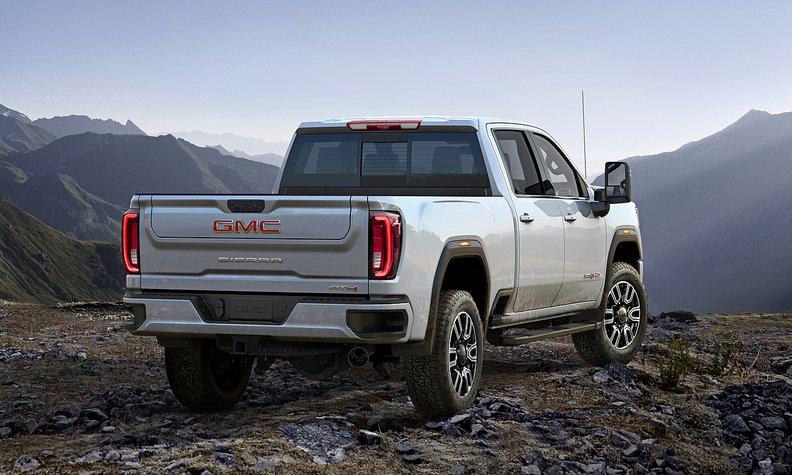
GMC adds AT4 subbrand, Sierra 1500 features to HD lineup Michael Wayland, Automotive News / January 22, 2019 SAN DIEGO — GMC is expanding its new AT4 subbrand and many defining characteristics of the Sierra 1500 to its heavy-duty brethren. Like the light-duty model, the 2020 GMC Sierra 2500HD and 3500HD will feature the brand's six-way MultiPro tailgate, large head-up display and advanced trailering system with an app, among other things. Compared with the current Sierra HD, the redesigned pickup is taller and longer but features a 1-inch lower bed lift-in height. It incorporates design elements similar to its light-duty sibling, including redesigned C-shaped headlamps and taillamps and a larger grille — unique to each trim — and functional hood scoop. "It's bigger, stronger and smarter," Duncan Aldred, vice president of GMC, said during the vehicle's Tuesday unveiling. He called the Sierra HD "the crown jewel" of the brand’s lineup. The pickup, expected to go on sale late summer, will be available in base, SLE, SLT, AT4 and Denali in dual-rear-wheel and single-rear-wheel configurations. Like its Silverado HD sibling, the Sierra HD will be powered by an all-new gasoline engine or Duramax 6.6-liter diesel engine with SAE-certified 445 hp and 910 pound-feet of torque. The performance of the diesel engine, mated to an Allison-branded 10-speed transmission, is similar in horsepower to similar Ford and Ram models, but with lower torque output. Ford's 6.7-liter Power Stroke V-8 diesel is rated at 450 hp and 935 pound-feet of torque, while the Ram HD's Cummins 6.7-liter diesel engine features 400 hp and 1,000 pound-feet of torque. More than 90 percent of current Sierra HD buyers purchase crew cab models with diesel engines, according to Aldred. Towing capacity, according to GMC, will exceed 30,000 pounds. GM did not release pricing or payload for the pickup. Aldred called the pickups “the ultimate trailering machines,” following a Sierra HD 3500 model pulling a large boat and marine lift behind it during the unveiling. The boat and hoist weighed more than 225,000 pounds. GM said it will release specific towing, payload and other specifications closer to launch. The Sierra HD AT4 model, like its light-duty siblings, features darker or blacked-out parts as well as additional off-road components such as off-road suspension, Rancho shocks, skid plates and an Eaton locking rear differential. GMC launched the AT4 subbrand last year on the 2019 Sierra 1500. GM invested $1.5 billion to support the launch of the redesigned Sierra HD and Silverado HD at Flint Assembly in Flint, Mich. GMC's annual sales declined 0.8 percent last year to fewer than 560,000 units, while Sierra sales increased 0.7 percent to nearly 220,000. Other features on the 2020 GMC Sierra HD: Cargo bed side steps on all box styles, located in front of the rear wheel openings, ahead of corner steps in the rear bumper to improve access to the cargo area. ProGrade Trailering System that includes an in-vehicle Trailering App that allows trailer diagnostics and pre-maintenance reminders, among other things. Best-in-class front head and legroom, with crew cab models. An available camera system with 15 views, including a "transparent trailer view," which helps optimize the driver's view around the truck and compatible trailers. Available rear camera mirror. Available 15-inch-diagonal head-up display that offers useful trailering information, including vehicle speed, navigation information and an inclinometer display for the road grade. .
-
The Volvo design Mack brand wiring harnesses are a nightmare for all from coast-to-coast. And pity the customer whose truck is down needing a replacement.....time to rent a truck for a while.
-
Pelosi is going to be 79 in March.....and she looks it. Maxine Waters, another piece of work, will be 81 next August. Term limits ???
-
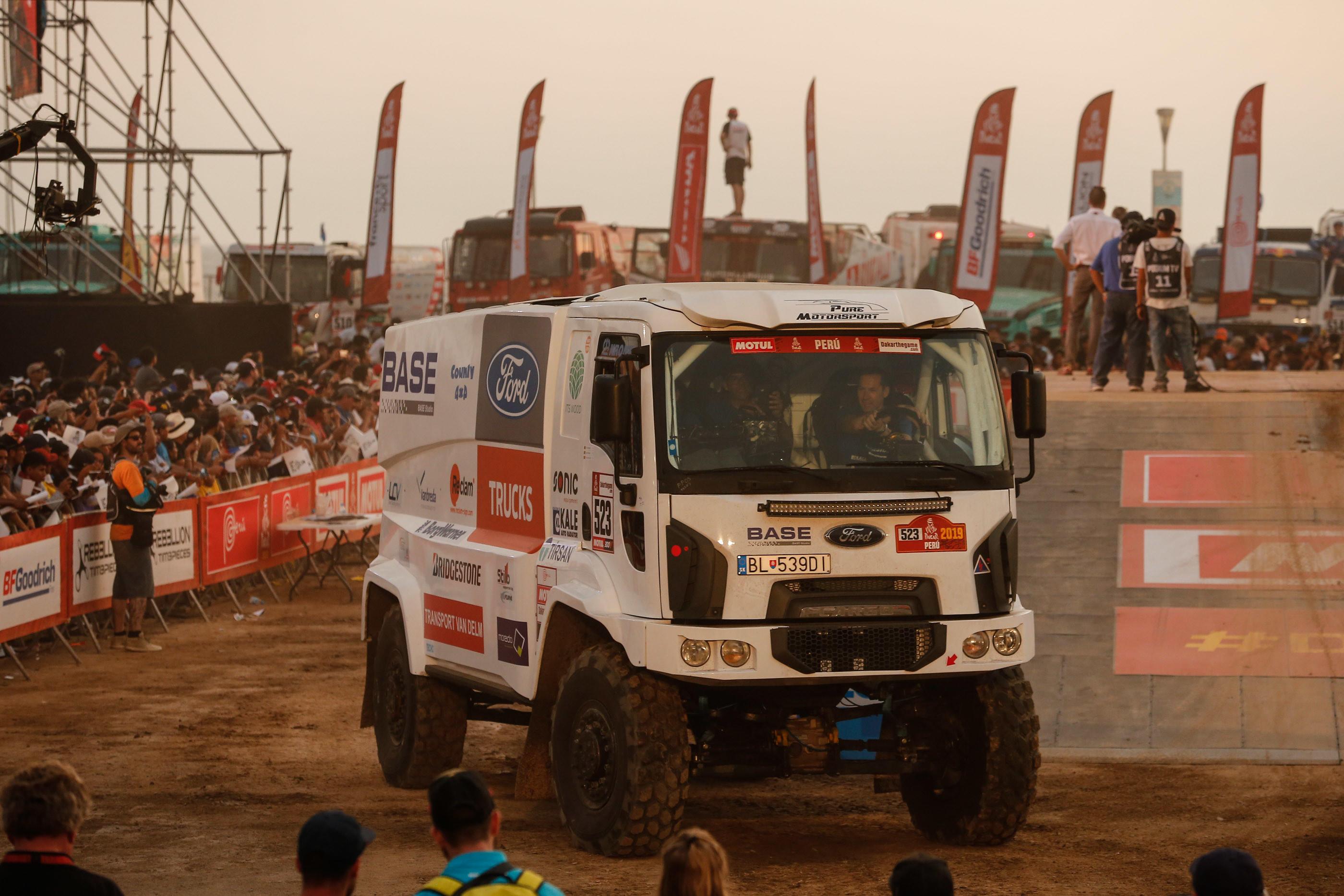
Ford to run DAKAR 2019 with two 4x4 Cargo trucks
kscarbel2 replied to kscarbel2's topic in Trucking News
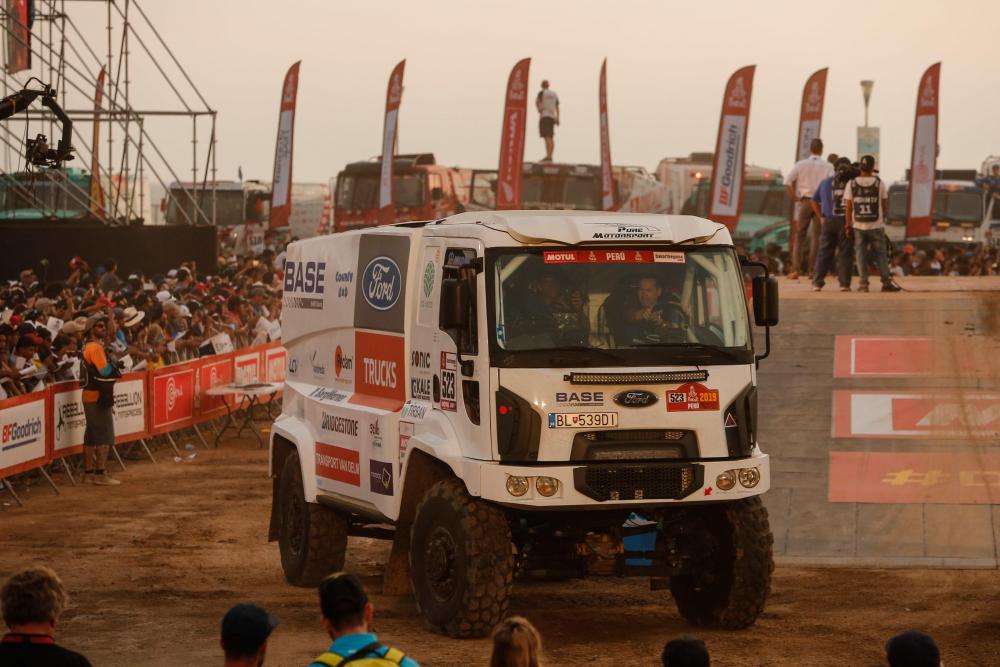
-
GM Bailout??? Looks like the big winner will be China.
kscarbel2 replied to Red Horse's topic in Odds and Ends
Take the western reporting on China with a grain of salt Bob. -
GM Bailout??? Looks like the big winner will be China.
kscarbel2 replied to Red Horse's topic in Odds and Ends
GM is NOT a success story in China. GM's China adventure began with high potential.......until they fired GM China head Phil Murtaugh in 2005, the only GM exec who ever understood China. When GM speaks of its car sales, it's a massive distortion. Buick sales are steady but modest (compared to other brands, Chevrolet is a failure and Cadillac can only dream of competing with the European brands there. The large numbers that GM talks of in China are largely the Wuling mini vans, produced by the SAIC-GM-Wuling joint venture. In my mind, it's a stretch for minority shareholder GM to count those Wuling mini vans as it does GM brand vehicles. Take out the Wuling vans and China looks like a flop (you've been in China how many years and only sell how many???). -
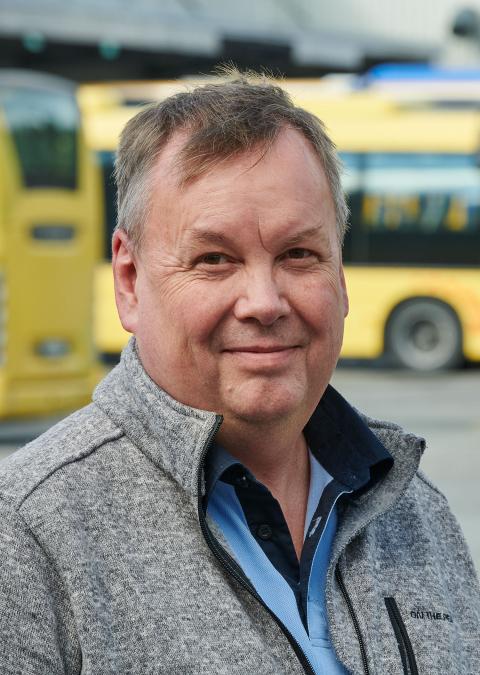
Chapter 5: A success story Scania Group Press Release / 17 January 2019 Nettbuss Stadsbussarna operate nine lines in Östersund with a total of 30 yellow Scania buses. A key person in the electrical bus project is Håkan Olofsson, Traffic Planner and System Operator at the company. Nettbuss is Scandinavia’s second largest bus company, with businesses in Norway and Sweden. In the autumn of 2017, the electric bus project started in Östersund, and in December that same year, the first timetable for electric bus traffic was created. In March 2018, the first electric buses from Scania were delivered and operated. “This has been a very positive experience. Our employees believe that it has worked very well. The electric buses actually work better than our well-run diesel buses, even when it comes to torque, acceleration, stability, brakes and more”, he says. Planning routes for electric buses instead of regular diesel buses puts other demands on Håkan Olofsson. Charging stations and charging time on the two ends of the bus line have an impact on timetables. “Generally, the transition to electrical vehicles has been wonderful. Our drivers have been very interested in this project, they have embraced it and really want it to be success.” Theoretical training for 100 drivers When starting the new bus route, Scania held theoretical training for 100 drivers, as they all needed skills in operating electrical buses. When in regular service, appointed instructors from Nettbuss Stadsbussarna joined the first trips. If additional help was needed, Scania’s experts were available on site. “We are positively surprised at how smooth the introduction of these new buses has worked, with this new technology. The first three buses have been in traffic for about 40 hours a day with temperatures ranging from minus 30 degrees Celsius in the winter – and more snow than ever – to 30 degrees Celsius in the summer.” The Nettbuss’ city bus model is called Citywide LF 4×2 and is equipped with a 130-kW electric motor powered by 110 kWh lithium ion batteries. Additional vehicles will be launched in early 2019, which will have more powerful electric motors and even larger batteries. Energy saving measures Electric buses also have Electronic Stability Control (ESP), which you usually do not find on city buses. Both heat and air conditioning consume a lot of energy and keeping energy consumption down is particularly important for electrical buses. Composite flooring, additional roof insulation and LED lighting are examples of energy saving measures inside the buses. .
-
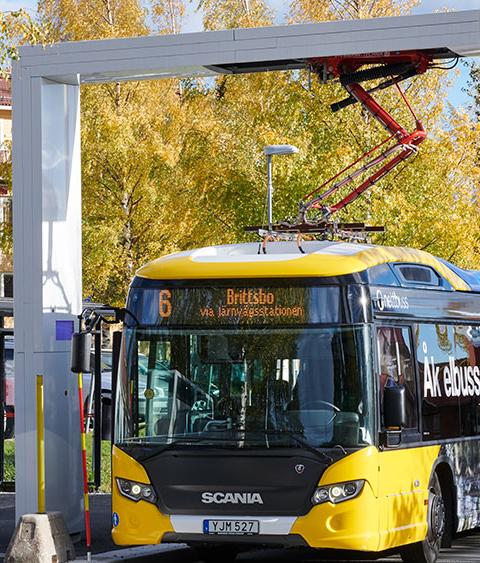
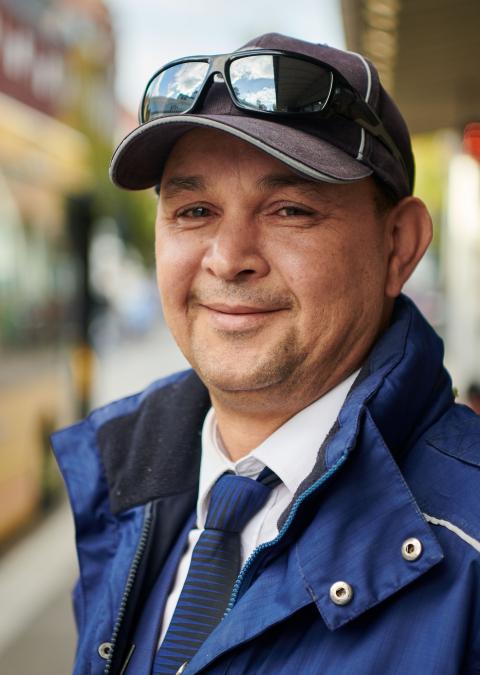
Chapter 4: A tour with “Potter” on Line 6 Scania Group Press Release / 17 January 2019 Line 6 between Torvalla and Brittsbo is one of the busiest bus routes in Östersund, with about 100 departures a day. After the line was rescheduled and electrified, several new residential areas now have access to the city buses, enabling them to choose the bus instead of cars. The line is just over 14-kilometres long and runs from Torvalla in south-eastern Östersund, through the city centre and past the hospital, to the new large residential area Brittsbo in the north. During peak hours, the bus runs every 15 minutes and the line is covered by a total of seven buses. The line has more than 800,000 passengers per year and is operational 16 hours a day. Each Line 6 bus covers 330 kilometres a day. Part of the route has dedicated bus lanes. At the end stations in Brittsbo and Torvalla Centrum, the buses are charged for 6-8 minutes using pantographs, before returning to the other end station where they are recharged again. A full charge gives the buses enough range for a return trip. Therefore, the buses can continue driving even if one of the charging stations is out of service, or if there is no time to charge the bus. In Brittsbo, the pantograph has just charged the batteries, when Petra boards the bus with her stroller and daughter Lina. Petra appreciates the open space and the low and flat floors, as it makes her travel easy and convenient. Lina is sleeping and as soon as Petra takes a seat, she plugs in her phone in one of the power sockets to charge it, and to surf while going downtown. “To be honest, I don’t see this as a bus”, she says. “The drive is so quiet and smooth that the 20 minutes to downtown feel more like some sort of… waiting or resting-room.” The buses were all given individual names The first three electric buses were all given individual names. “Tor-Britt” is named after the two end stations Torvalla and Brittsbo, “Jorm” after a regional mountain troll. “Potter” is of course named after the British soccer coach Graham Potter, who propelled Östersund FC to Europa League and international fame, before he was recruited to the English Championship Club Swansea. “What Potter did for soccer in Östersund was almost magical. Perhaps this electric bus and the other ones can make an even greater footprint”, says Petra. At Kyrkparken’s bus stop in the centre of Östersund, Karin gets off “Potter” to go to her home at Odenbacken. She has made this trip five days a week over the past six months, and now she finds it hard to remember riding a regular bus. Appealing interior and practical features “I work in the service sector in the city centre, and my days are usually quite hectic. It is lovely to step on the electric bus to go home, so smooth and silent. Sometimes, I would like the trip home to be longer,” she adds. The design of the electric buses has been determined by travellers’ wishes for an appealing interior with practical features on board. The buses have extra wide doorways with low inlets, allowing quick and smooth loading and disembarkment. “They are so incredibly quiet!” Line 6 used to be a rough ride, according to the bus driver Janne Monteiro. Every shift felt like an eternity. “It was busy, crowded, and the 14-kilometre long route felt even longer with many stops on the way”. But it all changed with the electric buses. “Above all, they are so incredibly quiet! You do not feel the same fatigue when driving them. It is a different drive all together”, he says, and gives an example: “Two and a half hours in an older bus … you really feel it. But driving an electric bus for the same amount of time, I could easily take another lap without a break.” The setting around the driver’s seat is very similar to a regular Scania Citywide, although the instrument panel is a bit different. For example, the tachometer has been replaced by an instrument showing the charging status of the batteries. When the bus arrives at the charging station, Janne Monteiro only needs to pull the handbrake, make sure that the bus is placed correctly, and that the electrical outlet on the roof is connected to the pantograph for the charging to take place. The entire charging process takes no longer than 6-7 minutes. Every bus driver in Östersund has been positive so far. They value the quietness and absence of vibrations, but also the quick response when starting and accelerating. In fact, acceleration is throttled electronically, which keeps the wheels from losing traction or passengers from being injured, but also saves energy. Janne Monteiro knows many of his passengers well and he finds them satisfied with the new city buses. “Most people I have talked to enjoy Scania’s electric buses. Quiet and comfortable. I even know of people who wanted to go for another round – 28 kilometres – just for the joy of it!” A concert hall on wheels To further highlight the non-existent noise level of the electric buses, the theatre group Estrad Norr was invited to perform as on-board entertainment, offering different performances like opera, dance, scenic readings and music improvisations. They also produced a video clip where Estrad Norr performs the lead theme of the Phantom of the Opera. Watch the video here: .
-
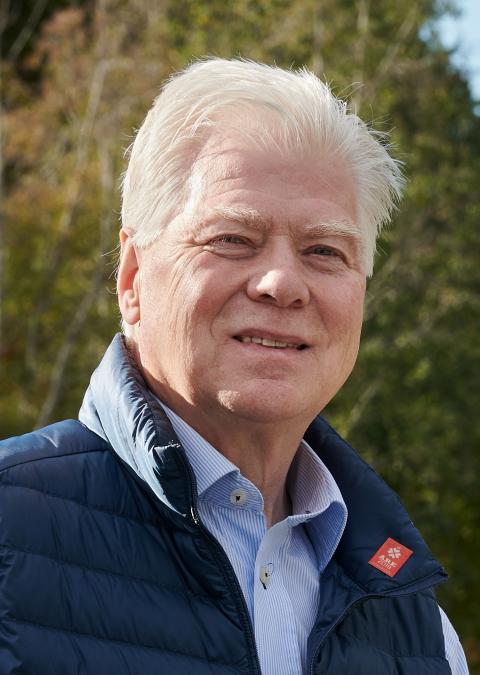
Chapter 3: When the trout came back Scania Group Press Release / 17 January 2019 Fifty kilometres south of Östersund’s city centre, Claes-Göran Bergh gazes down at the Billsta stream. Here, the hydroelectric power supplying energy to Scania’s electric buses in Östersund coexists with high ecological values. In 1964 Bergh joined Jämtkraft’s predecessor Östersunds Elektriska AB – on the first day of his working life. He started by washing analogue electric meters with gasoline. Soon he advanced to building high voltage lines. After five years of environmental studies, his career took a new direction. Now, he is Environmental Manager at Jämtkraft, and is passionate about sustainable overall solutions. He points at the wooden tunnel that leads the water down to the turbine in one of Billsta stream’s three small-scale power plants. He explains that it matters how the electricity is produced when operating buses in local traffic. “Fossil-produced electricity, using for example coal, has a major impact on the climate, while the electricity that we produce in the Billsta stream is renewable and fully carbon neutral. It is more the kind of electricity requested by the community, and that you want when working with transport.” The Billsta stream runs from Lake Näkten, down to Storsjön, the fifth largest lake by water surface in Sweden. In the 19th century, the lake was surrounded by rich wildlife. But 100 years ago, when a saw and mill were built, and timber was transported on the water, it lost its natural current. Fast forward to today, and the project “Förbifart Billsta” (Bypass Billsta). In an unconventional cooperation with Jämtkraft, The County Administrative Board of Jämtland, The Swedish Society for Nature Conservation and the fisheries area of Storsjön-Berg, the small hydroelectric stations in the Billsta river were built. Three fish ladders were created to bypass the power plants, a dam was removed, and the waterways could eventually be reopened for fish migration. Like turning on a switch “What´s incredible is that the Billsta stream was closed for 100 years, but the genetics in the fish in Storsjön still remained. When the power plants were rebuilt, and the stream was reopened, it was like turning on a switch! Immediately, the grayling began to move up the river to play. Suddenly, hundreds of large trout – some weighing up to 10 kilograms – were climbing up the bypass channels.” Even the eel are back, and osprey have been seen around the Billsta river. “It is like all these species took a pause for 100 years” Claes-Göran Bergh smiles happily and concludes: “It is like all these species took a pause for 100 years. Now we are able to operate the public transport system in Östersund with renewable electricity, while increasing biodiversity. There is a huge spectrum of benefits with this project, and they all lead to a more sustainable society.” With the electric bus project, Jämtkraft reaches the inhabitants in Östersund doubly, as the energy company’s customers consume electricity at home as well. “As we use renewable electricity in multiple systems, Jämtkraft and our customers can reduce fossil energy consumption very effectively. Scania’s electric buses obviously contribute in a good way to a more profitable deal for us in this production of renewable electricity.” Watch the trout move up the Billsta river Current data from fish counting stations around Sweden is presented at fiskdata.se. When the fish pass the counter in for example the Billsta river, time, direction, speed and size of the fish are recorded. At the same time, a shadow image is created that allows you to distinguish whether the registered object is a fish or not. The fish counting stations are also equipped with underwater cameras that record every object. With the video, it is possible to determine the species of the fish with high accuracy. Watch the giant trout move upstream in the Billsta river here. .
-
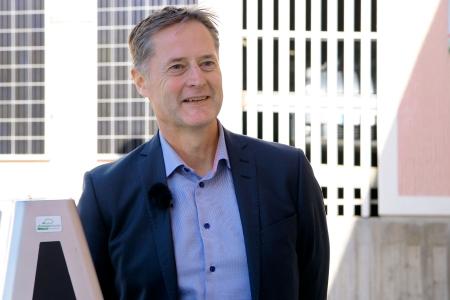
Chapter 2: The energy expert: “Change will be fast” Scania Group Press Release / 17 January 2019 In the municipally owned energy company Jämtkraft’s head office at Kyrkgatan in Östersund, the company’s newly appointed CEO Erik Brandsma is settling in. He is a Forest Engineer trained in the Netherlands and Canada. He has a solid background in energy issues from international power companies and sustainable development projects within the UN and the OECD. As General Director of The Swedish Energy Agency for the past six years, he has worked with energy systems development and electrification of transport. Erik Brandsma gladly talks about synergies in the transition that the energy and transport sectors are in the middle of, and he is impressed by the cooperation in the electric bus project in Östersund. The project is being carried out in collaboration with Scania and Östersund Municipality, Krokom Municipality, Jämtkraft, Nettbuss, Länstrafiken (the public transport organisation in Jämtland county), The Swedish Transport Administration, Region Jämtland Härjedalen and ABB. “This is a partnership where all parties contribute with different perspectives. We provide expertise within energy and transmission, and we also contribute by delivering local renewable energy into this system. Scania provides know-how and products, and the municipality works as a marketplace that keeps it all together.“ Not a one man show “This is how innovation will drive the transformation that we need in our different sectors”, he says and clarifies: “In the transport and energy sectors, we have realised that this is not a one man show. We need to work together to find new innovative ideas and solutions that support and grow society. Our partnership in Östersund is an example of how we have succeeded in creating a solution together that helps. This project is a model for further development of new business ideas.” “We are examining how future cities will look” “We have two different actors from two industries that collectively contribute to an offer that we have built from scratch. We are examining how future cities will look. There are so many aspects that play a part in this, ranging from quality of life to climate change, and how to use the city wisely. That´s what I find so unique about this project.” We must reach our climate goals Erik Brandsma sees electrification as an important – although not the only – solution for the shift in the transport sector. “There are biofuels and other aspects that could be addressed. But electrification with renewable green energy is a prerequisite for us to meet our climate targets in the Paris Agreement.” And he is convinced that the electrification of the transport sector will be fast. “For every new forecast we make, we estimate that it will go even faster. Frankly, it needs to be fast, because we must reach our climate goals. We also see a demand that increases much faster than we thought. Cities want clean, quiet and efficient transport. This is exactly what the partners in the electrical bus project can offer.” .
-
Chapter 1: The beginning of something greater Scania Group Press Release / 15 January 2019 Line 6 in Östersund is a newly established 14-kilometre long main bus route that runs from Torvalla, south of the city, through the city centre and to the newly built Brittsbo district in the north. The route is operated by Nettbuss, with electric buses from Scania. Line 6 in Östersund is a newly instated 14-kilometre long main bus route that runs from Torvalla, south of the city, through the centre and to the newly built Brittsbo district in the north. This route is operated by Nettbuss, with electric buses from Scania. Since Line 6 began its operations in March 2018, three electric buses have rolled 120,000 kilometres. More than 300,000 travellers have commuted silently to and from their jobs – with zero emission. “In the beginning of 2019, we will add another three of Scania’s electric buses to Line 6. Our plan is to open another electric bus route at Frösön, where Östersund’s Airport is located”, says Anne Sörensson, Climate Coordinator and Project Manager for the electric bus project in Östersund .“This is only the beginning of something greater,” she adds. “We are also exploring the possibility of using electric buses at the two world championships that Östersund and Åre will host in the beginning of 2019: The FIS Alpine World Ski Championships 5-17 February, and IBU World Championships Biathlon 7-17 March. It takes a great deal of planning, as well as adding mobile charging stations at the airport and in Åre. Offering fossil free transport during these major events would be amazing”. The electric buses are an important piece of the puzzle in electrifying the entire transport sector in Östersund. “We invested early in charging infrastructure for electric cars and have now moved to electric buses. We see electrification as an important part of Östersund’s mission to be fossil fuel free in 2030. It is a very ambitious target”, Anne Sörensson continues. “Sustainable transport is about moving people and goods while contributing to economic and social development without risking the environment or people’s health and safety. We are approaching a tipping point, where new technology, new business models and sustainable transport are taking off across the board,” she says. In Östersund, the transition to fully fossil fuel free transport is driven by a partnership between the municipality, companies, organisations, regional and national authorities. Since 2015, municipalities and county councils in Sweden can seek funding from The Swedish Transport Administration to promote sustainability through urban environment agreements. The ideal application should take a holistic approach to promoting sustainable urban environments and sustainable travel. Charging infrastructure for electric buses may be included in the city’s environmental agreements, if they are a part of a larger solution with other public transport facilities, such as dedicated bus routes with bus stops and signal systems. How the project started In the first round of applications in 2015, Östersund’s municipality was granted co-financing for an electric bus line. One of the reciprocal requirements was that it should be completed by 2018. To find suitable vehicles, it was natural for the project group to visit the Scania headquarters in Södertälje. With close to 100 per cent of the existing city bus lines and extensive regional testing of new vehicles and solutions, Scania was already very much present in the Östersund municipality. They eventually selected the model Scania Citywide Low Floor, which was introduced at the world’s largest bus fair Busworld in Kortrijk, Belgium, at the end of 2017. After seven months of operational experience, Anne Sörensson is extremely satisfied with the electric bus system, claiming that it has fulfilled all of their requirements. “We began last winter when it was minus 30 degrees Celsius and we have operated in 30 degrees Celsius weather over the summer. The vehicles have worked flawlessly over a span of 60 degrees!” “And it has been rewarding to see how satisfied the locals are. Their only complaint is that now the old buses are too loud”, adds Anne Sörensson. .
-
Scania Group Press Release / 17 January 2019 The grayling, the trout and the osprey are back in Billsta stream, where three small-scale power plants produce local renewable energy for Östersund’s electric buses. This small city in the middle of Sweden, located some 560 kilometres north of the capital Stockholm, is developing a sustainable transport system for the future that is partner-driven and combines ecological, economic and social sustainability. For the locals, the reborn wildlife in Billsta stream is the icing on the cake. First and foremost, they are proud of being at the forefront of developing sustainable transport systems for the future. The electrical bus project in Östersund shows that you can combine public transport with modern environmental requirements, efficient renewable hydropower and high natural values. In partnership and cooperation with different stakeholders, a solution has been developed that benefits nature, energy production and transport.
-
https://www.bigmacktrucks.com/topic/22128-en-471-gas-motor-questions/
-
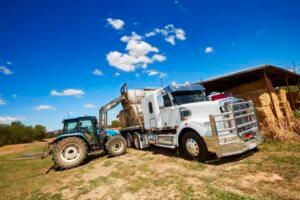
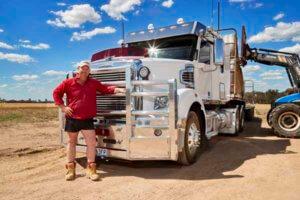
Power Torque Magazine / January 2019 Burrumbuttock Hay Runners organiser Brendan Farrell has taken delivery of a Freightliner Coronado ahead of another hay run to the Queensland outback. Freightliner has lent Mr Farrell the Coronado 122 for summer so he can continue his tireless work helping Australian farmers through tough times. In addition to his role helping drought-stricken farmers, Brendan is also an owner-driver and has already put the Coronado 122 to work. The Coronado 122 will also be used to carry hay for the 15th Burrumbuttock Hay Run to be held on January 26, which will deliver hay to farmers in Quilpie and surrounding areas in South West Queensland. The scale of the operation is hard to comprehend, with Mr Farrell expecting a fleet of 300 volunteer truck drivers delivering more than 10,000 large hay bales. Freightliner was quick to organise a truck for Mr Farrell when it heard his own two older trucks were off the road. “Brendan has been helping Aussie farmers for years in a truly selfless manner,” says Freightliner Australia Director, Steve Downes. “When we heard he was having truck trouble, it was a no-brainer to help him out with a Freightliner for a few months. We know the Coronado is tough enough to do this important work and we know Brendan will love driving it.” Brendan has completed several runs in the Coronado 122, which was built to road train specification. He is impressed. “This is Mickey Mouse compared to my old trucks,” he says. “It is so comfortable to drive, and to sleep in. I’m doing a lot of kilometres, so it’s important to be able to get a good rest when I pull up.” Brendan says the Coronado’s 15-litre Detroit engine “has plenty of horsepower.” He is also pleased that it has been fitted with an 18-speed Eaton manual as he still enjoys shifting gears himself. “It’s bloody beautiful – a real nice looking truck,” he says. For information on helping out with the Australia Day hay run or donating to the cause, head to the Burrumbuttock Hay Runners’ Facebook page. .


BMT Forum Logo