



kscarbel2
-
Posts
19,172 -
Joined
-
Days Won
115
Content Type
Profiles
Forums
Gallery
Events
Blogs
BMT Wiki
Collections
Store
Everything posted by kscarbel2
-
1975 RS685LT
kscarbel2 replied to Quickfarms's topic in Antique and Classic Mack Trucks General Discussion
That's an earlier version with the one-piece grille (versus the later 3-piece). Nice truck. -
If you want to enjoy that Mack V8 for many more years, then turn it back down to stock spec. That's adequate power. Otherwise you're going to be needing parts that are either NLA or cost a fortune.
-
-
Ford's Stock Slump Sends Dividend Yield to Highest Since 2001 Bloomberg / October 2, 2018 Ford Motor Co.’s plummeting share price has sent its dividend yield to the highest in 17 years, an indication of just how rich a disbursement the company is paying during troubled times. The automaker’s stock fell to $9.20 on Tuesday, the lowest close since August 2012. That means Ford’s 15 cents a share quarterly dividend currently has an annualized yield of 7.93 percent, a level last seen in September 2001. Wall Street has warned that Ford may have to pare back its dividend -- the most generous among its automotive peers -- as earnings evaporate overseas and the company initiates a restructuring that it’s said may cost $11 billion and take as much as five years. The company has insisted it’ll maintain the payout.
-
Unless the engine has been modified. stick with the Mack spec Spicer clutch that the truck was engineered with. Don't second guess Mack engineering. A new 108935-94 is exactly what's needed. Mack never installed Lipe......they don't offer a Mack spec clutch. The Spicer clutch I speak of is not an off-the-shelf clutch from Spicer. It was built by Spicer to Mack engineering's specification, and was never sold to any other OEM. If you have juiced up the engine above 500 horsepower, buy the 108935-15. But if you haven't, don't buy it.
-
Reuters / October 2, 2018 U.S. Federal Reserve Chairman Jerome Powell on Tuesday hailed a “remarkably positive outlook” for the U.S. economy that he feels is on the verge of a “historically rare” era of ultra-low unemployment and tame prices for the foreseeable future. It is a view, he said, based on how a changed economy is operating today, with businesses and households immunized by strong central bank policy from the inflationary psychology that caused unemployment, inflation and interest rates to swing wildly in the 1960s and 1970s. It is an outlook that includes an economic performance “unique in modern U.S. data,” with unemployment of below 4 percent expected for at least two more years and inflation remaining modest even as wages rise. And it is an outlook he feels will even survive the Trump administration’s efforts to rewrite the global trading system, a policy shift Powell said may lead to one-time price hikes, but not to persistent changes in the annual rate of inflation going forward. “This forecast is not too good to be true,” Powell told the National Associate for Business Economics, but instead “is testament to the fact that we remain in extraordinary times.” “These developments amount to a better world for households and businesses which no longer experience or even fear the scourge of high and volatile inflation.” Asked about the impact of tariffs on inflation, he replied that, so far, “we don’t see that in the data.” Powell spoke as debate among economic analysts and investors has begun turning toward a central question: Will the current low rate of unemployment inevitably doom a near decade-long expansion by driving inflation to levels the Fed will have to suppress with faster and higher than expected rate increases? That’s not the view contained in the Fed’s most recent round of forecasts, which sees a hot job market, steady economic growth, steady 2 percent inflation and only modest rate increases through 2021 - as if the United States had slipped into the sort of pleasant long-run equilibrium described in textbook economic models. Seeds of Trouble But several economists here argue that the seeds of trouble have already been planted, with companies using the recent tariff hikes on steel and other goods as an excuse to raise prices more generally, and to perhaps keep doing so. At a time when Amazon announced a nationwide minimum wage increase that could put pressure on other retailers, the administration was trumpeting a trade pact with Mexico and Canada that will steer auto production to higher wage locales, and leaves in place new tariffs on steel, a key industrial input. Boston Federal Reserve bank president Eric Rosengren said the current debate over globalization was not so much a “trade war” but “more of a supply chain war” that could take years to sort out as companies shift around production to higher-cost locales to escape tariffs on imports from China. “Big importers will tell you it is not that easy to change...It becomes a real risk if all of a sudden you are not sure what your price is going to be,” he said on Monday. Catherine Mann, global chief economist at Citigroup and former chief economist at the Organization for Economic Cooperation and Development, said the spark could be lit early next year. The costs of adjusting to tariffs and to trade uncertainty “gives firms cover to say, ‘I’m going to raise my prices,’” she told the NABE annual conference. “I’m timing it for the beginning of the year,” Mann said, when a windfall from this year’s tax cuts fade. Powell, in his remarks, said the Fed is not blind to the possible “revenge” of prices rising as they have before during times of sustained low unemployment. The central bank is guarding against that with its current, gradual interest rate increases, and will respond “with authority” if an inflationary mindset threatens to take hold. But he noted that many current and past Fed officials, himself among them, had warned in the years following the 2007 to 2009 financial crisis that falling unemployment and the Fed’s printing of trillions of dollars of new money would unhinge inflation at any moment. It never happened, and he said there is no reason now to expect it will. “I am glad to be able to stand here and say that the economy is strong, unemployment is near 50-year lows, and inflation is roughly at our 2 percent objective,” Powell said. “The baseline outlook for forecasters inside and outside the Fed is for more of the same.”
-
Operating RPM decal part#
kscarbel2 replied to seyser's topic in Antique and Classic Mack Trucks General Discussion
I can tell you for a fact that 4MR334P21 is indeed the Mack part number. -
You want a new coaxially dampened ceramic button Spicer. Mack model number CL7984 (part number 11HB59P120) (9 spring / 6 paddle 15.5'" discs) Spicer number 108935-94 reference: https://www.stemontreal.com/cat/Eaton-Fuller-Clts/Clts-Mack-App-Guide.pdf
-
Operating RPM decal part#
kscarbel2 replied to seyser's topic in Antique and Classic Mack Trucks General Discussion
What's the number you're seeing? -
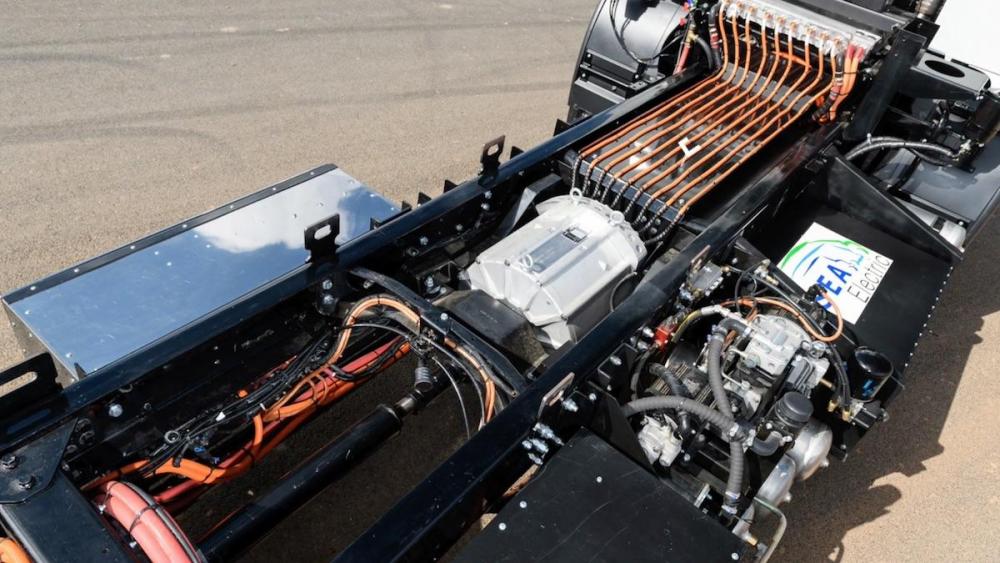
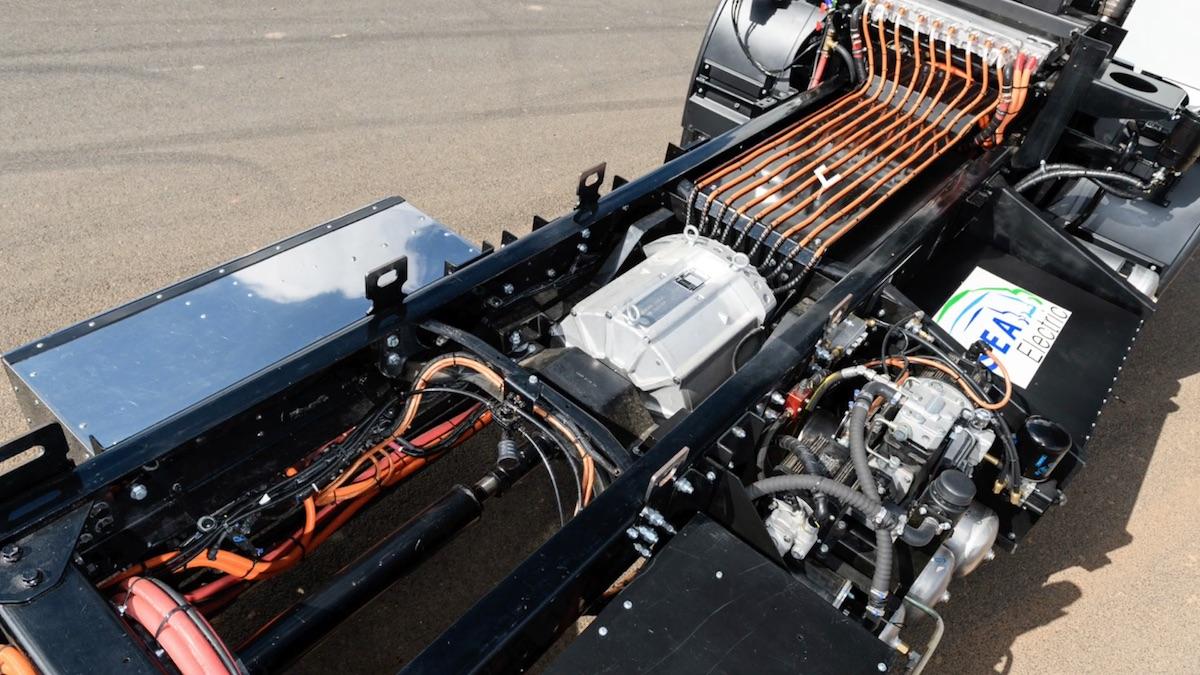
Diesel News Australia / September 2018 After being shown at an expo next week, there will be an example of Iveco’s Electric Acco on the road. The new truck will be an Australian-first, an operational Iveco Acco waste truck, not powered by traditional diesel but by battery electric power. The joint project between waste body equipment manufacturer, Superior Pak and Australian electric drivetrain manufacturer SEA Electric, will see the Acco enter full service shortly after the expo with WM Waste Management Services. Superior Pak have the exclusive distributorship for the vehicle within the Australian Waste Industry. Powering the truck is a SEA-Drive 180 electric driveline featuring 220kWh NMC (nickel manganese cobalt oxide) batteries, which provides the vehicle with a range of approximately 250km at full GVM (up to 23.5 tonnes) along with a limited top speed of 100km/h. The vehicle features a 22kW on-board charger allowing the truck to be plugged-in and charged from any three-phase power source. Battery charging time from totally flat to full charge is reckoned to be approximately eight hours. Battery longevity is calculated at 3,500 charge cycles. The first truck off the production line is a special order featuring a two-in-one body incorporating an industrial cage with electric ramp for picking up white goods and similar heavy items, while at the rear is a more traditional compactor body, it will be used on a hard waste collection with the City of Casey in Melbourne. “We’ve had a similar electric powered collection vehicle operating in New Zealand for some time now, and the owners are very pleased with the performance,” said Rob Wrigley, Superior Pak Managing Director. “The payback on the vehicle is attractive as is the low operating costs and lower total cost of ownership. “So when the idea came to develop a vehicle for Australia we again looked at the Iveco Acco platform. The Acco is such an icon of the industry and we’re already extremely familiar working with this platform, so our choice of truck was easy. “Being locally manufactured was another consideration for us in using the Acco, as the build process was more streamlined and we could also offer the market a complete, Australian designed and built, turn-key solution.” Iveco’s production line can provide Superior Pak and SEA Electric with a ‘glider’, essentially this is a complete cab chassis minus the driveline and associated equipment such as exhaust, fuel tanks, traditional battery boxes and related items. “These vehicles normally operate on known fixed routes where their travel range can be managed,” said Tony Fairweather, SEA Electric Group Managing Director. “The work is also ‘back to base’ in nature, meaning that at the end of a route, the vehicle has completed the job and can then be fully charged before the next working day.” .
-
Gerharts 2018
kscarbel2 replied to Hobert62's topic in Antique and Classic Mack Trucks General Discussion
Cloudy but no rain. https://weather.com/weather/5day/l/USPA0925:1:US -
“This isn’t a revolutionary deal. It’s a modification of a deal already in place,” said Eric Winograd, senior U.S. economist at AllianceBernstein, an investment and research firm. “The total economic impact will be very small. I do not expect it to boost the U.S. economy.” “We see this rebranded NAFTA agreement as a marketing exercise,” said Chris Rupkey, chief financial economist at MUFG Union Bank. “The harsh war of words from Trump’s economics team terrified markets, consumers and businesses for a time, but what the U.S. actually got was much more modest than what the angry war of words seemingly demanded.” Lorenzo Caliendo, an economics professor at Yale University’s School of Management who co-authored a NAFTA study published in 2015 that concluded each American had gained about $45 a year from that treaty, said the new agreement would “clearly not” return significant numbers of manufacturing jobs to the United States.
-
RT / October 1, 2018 A fiery speech by an Iranian representative, responding to Saudi accusations at the UN General Assembly, blamed terrorist activity around the globe on Riyadh – and even quoted Hillary Clinton to back that up. Accusing Iran of supporting terrorism was a “strange and outlandish claim” by Saudi Foreign Minister Adel Jubeir the Iranian representative said. He was addressing the United Nations in Arabic, explaining that he was doing so in order “to make sure that our position is rendered clear” to Riyadh. “Everybody knows that Saudi Arabia supports terrorism in a very blatant and widespread manner,” the diplomat said. He then added, unexpectedly, that “in the framework of WikiLeaks in 2009, Hillary Clinton is said to have stated that Saudi Arabia is the greatest donor to terrorist groups around the world.” WikiLeaks did publish a memo by Clinton – which she put together in 2009, while being the US Secretary of State – that said that “donors in Saudi Arabia constitute the most significant source of funding to Sunni terrorist groups worldwide… Saudi Arabia remains a critical financial support base for Al-Qaida, the Taliban… and other terrorist groups.” Tehran accuses Riyadh of being responsible for terrorist attacks “in the Middle East, north Africa and Europe” as well as of backing Islamic State (IS, formerly ISIS/ISIL) and Al-Qaeda.
-
Renault chief says governments have ‘condemned’ diesel Financial Times / October 1, 2018 Changing government policies over diesel have “condemned” the fuel by leaving car buyers afraid of feeling “trapped” with vehicles they cannot sell, the chief executive of Renault has warned. Carlos Ghosn, who heads the global alliance of Renault, Nissan and Mitsubishi Motors, said on Monday that consumers buy cars based on price, running cost and resale value and “do not care” what engine their vehicles have. “They use common sense. Governments decide to support diesel, then the consumer goes in that direction,” he told an audience in Paris on the eve of the Paris Motor Show. “When governments give signals that it’s not good, they are going to stop incentives, stop using diesel cars in cities, consumers are saying ‘why should I buy diesel car to find myself trapped three to four years down the road with something that is a big investment’.” He added: “Diesel is condemned because policymakers have condemned diesel. That is it.” Governments across Europe had incentivised diesel technology as a way of lowering CO2 emissions, because the fuel is about 20 per cent more efficient than petrol. But many have begun phasing out incentives, or proposed banning the fuel type outright, following concerns over inner-city air quality, an issue linked to nitrogen oxide (NOx) fumes from older diesel cars. Concerns over the extent of diesel pollution were also raised by the 2015 Volkswagen scandal, when the carmaker admitted to selling 11m cars worldwide that emitted far higher levels of NOx on the road than in laboratory tests. Paris wants to ban all diesel cars from the centre of the city as soon as 2024, while several cities in Germany have begun banning older diesel cars in their most polluted streets. The public’s appetite for the fuel has also collapsed, with diesel’s market share falling from more than 50 per cent to about a third of sales. Carmakers are planning to phase out diesel engines, with Nissan, Toyota and Fiat Chrysler all killing off diesel from passenger cars in the coming years. Renault will halve the number of diesel cars it offers, Mr Ghosn said. “We have to follow the technology but at the same time listen to political trends . . . because those trends will define which technologies will win,” he said. In a barb at the mayor of Paris, Anne Hidalgo, he used her plans to ban diesel cars from the French capital as an example of the kind of policies condemning diesel and influencing consumer choices. Mr Ghosn’s comments come in the week that the European Parliament votes on tough new rules that will force the car industry to cut CO2 emissions by 2030. While the industry wants a 20 per cent by the end of the next decade, some countries are pushing for a 30 per cent reduction, which would be much more difficult to achieve. Carmakers already have to reduce CO2 emissions by 2020 or face significant fines, a goal that is spurring the launch of electric cars across Europe over the next two years.
-
Matt Cole, Commercial Carrier Journal (CCJ) / October 1, 2018 More than 28,000 International trucks are included in two separate recalls announced recently by Navistar, according to documents from the National Highway Traffic Safety Administration. Continental Tire also announced a recall of approximately 2,000 commercial truck tires. The largest of the two Navistar recalls affects 26,288 trucks equipped with Cummins ISX15 or X15 diesel engines. In certain driving conditions, such as on a long downhill grade, the fuel line may burst if the fuel pump cooling circuit screen becomes restricted. This is the same issue that prompted Daimler Trucks North America to recall 4,500 trucks. Affected International trucks include: 2017-2018 International 9900I 2017-2019 International HX 2017-2019 International LoneStar 2018-2019 International LT 2017 International PayStar 2017-2018 International ProStar Cummins will notify owners of affected trucks. A remedy for the recall is still being developed. Affected truck owners can contact Navistar customer service at 1-800-448-7825 or Cummins customer service at 1-800-286-6467. NHTSA’s recall number is 18V-588. Another recall from Navistar affects approximately 2,089 vehicles equipped with long stroke brake chambers and spring actuated parking brakes. The recall affects a number of International buses in addition to several truck models. In the affected trucks, the spring actuated parking brake may be improperly crimped to the long stroke service brake chamber, causing an air leak and the possible separation of the spring brake chamber from the service brake section. Affected trucks include: 2019 International DuraStar 2019 International HV 2019 International HX 2019 International LoneStar 2019 International LT 2019 International MV 2019 International RH 2019 International WorkStar Navistar will begin notifying owners on Nov. 6, and dealers will replace the brake chamber assemblies for free. Owners can contact Navistar customer service at 1-800-448-7825 with recall number is 18512. NHTSA’s recall number is 18V-597.
-
Kenworth Truck Co. Press Release / September 20, 2018 .
-
Kenworth to replace W900 with new W990 in 2020
kscarbel2 replied to kscarbel2's topic in Trucking News
-
Kenworth to replace W900 with new W990 in 2020
kscarbel2 replied to kscarbel2's topic in Trucking News
For design director, developing the Kenworth W990 a balance of emotions Neil Abt, Fleet Owner / September 30, 2018 When Jonathan Duncan, director of design for Kenworth Trucks, and his team set out to create the next generation of the W900, he said they were facing “more emotional than functional details.” Since its debut in 1961, the W900 had bas been a vehicle that “makes other truckers stare and nod their heads in appreciation,” he said. After working on the project for more than two years, the new W990 was unveiled Sept. 27 at the Las Vegas Speedway during an event for fleet and dealer representatives. “The Kenworth W990 represents the pride, image and freedom of trucking, and captures the spirit of what trucking is all about,” said Mike Dozier, general manager of Kenworth. The following morning, during a ride-and-drive event for journalists at the nearby Kenworth Sales Las Vegas dealership, Duncan said every step of the process focused maintaining the “wow factor” from the W900, while trying to improve it. “Balancing the legacy with true innovation was really rewarding for our design team,” Duncan said. He called the grill the “face of the new W990” and discussed how the hood complements the stainless steel air intakes. The bumper-to-back measures 131.5-inches - 1.5 inches longer than the existing W900L. The cab is based on the T680 and T880, so there are eight more inches between the seats, making it easier to move around the cab. The mirrors were lowered for better visibility and the bolt-on fender makes it easier to get on and off. Kurt Swihart, Kenworth’s marketing director, said the W990 is viewed by many fleets as an important component of their driver recruiting and retention programs. He called it a “reward truck,” with an exterior that displays pride and small details on the inside that drivers appreciate. That feeling was shared by Kyle Cousins, vice president of operations of Fleetnor Bros., who was on hand to take the keys to one of the first W990s. “A well-spec’d long-hood conventional stands out in a crowd,” he said. “The big hoods get you noticed; and customers, as well as our, drivers love them. I know it’s helped in our recruiting and retention.” .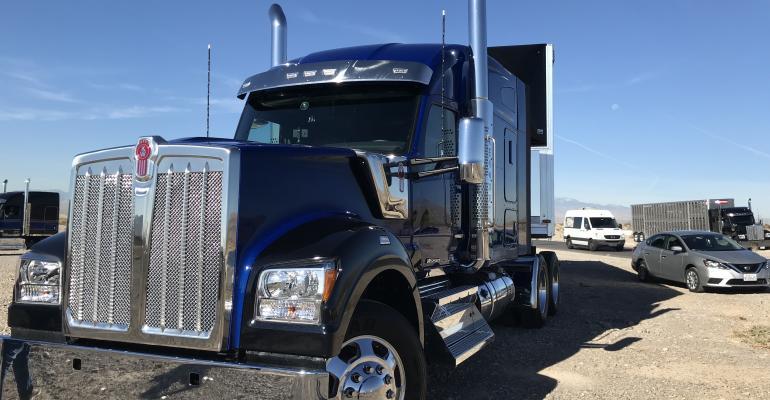
-
Kenworth to replace W900 with new W990 in 2020
kscarbel2 replied to kscarbel2's topic in Trucking News
Kenworth Touts New W990 at Las Vegas Media Event Joe Antoshak, Transport Topics / September 28, 2018 Kenworth Truck Co. introduced a new long-hood conventional Class 8 tractor at a media event at Las Vegas Motor Speedway on Sept. 27. The Kenworth W990 will be available as a day cab as well as with 40-inch flat top and 52-inch and 76-inch midroof sleeper configurations. Standard power will come from a Paccar MX-13 engine, with ratings up to 510 horsepower and 1,850 pound-feet of torque. Standard equipment includes Paccar’s proprietary 12-speed automated transmission and 40K tandem rear axles. “We are passionate about our products, our customers that depend on them, and the drivers that operate them,” Mike Dozier, Kenworth general manager and Paccar vice president, said in a news release. “We know that there are many customers and drivers out there who share our passion.” The new truck is built on the same 2.1-meter cab platform used in the Kenworth T680 and T880, with style options including a limited edition cab and sleeper interior, and the W990 Driver’s Studio package of premium options. “The Kenworth W990’s excellent performance, classical styling, premium finishes and lifestyle amenities underscore a sense of driver achievement and pride,” Dozer said. “We are driven to provide the best equipment in the industry to get the job done.” Audio entertainment components include a 320-watt amp, 10-inch subwoofer and eight speakers. A swivel TV mount can accommodate up to a 28-inch flat screen, and prewire for satellite TV is an option. The Driver’s Studio offers a 180-degree swivel passenger seat and rotating table for two, a refrigerator and a space that can fit a microwave. The sleeper boasts ample LED lighting, and under the lower bunk there is room for a full-size wardrobe, multiple drawers and more storage. The W990 also features an 1,800-watt inverter that includes shore power connection and four standard 120-volt sleeper outlets. The truck is standard with Kenworth’s TruckTech+ remote diagnostics system, and the Kenworth NAV+HD 7-inch in-dash display gives access to truck-specific navigation, roadside assistance, vehicle data, hands-free calling, audio control, blind-spot camera inputs and the internet. -
Ford to end Focus output in Argentina Paul Lienert, Automotive News / October 1, 2018 DETROIT -- Ford Motor Co. plans to stop building the Focus compact car in Argentina in May 2019 as it seeks to stem losses from its operations in South America. Ford said it will continue to build Ranger compact pickups at its Pacheco plant in Argentina, which employs about 3,440 people. A spokesman said it was "too early" to say if there would be layoffs at Pacheco once the Focus ceases production, but the company was in talks with the union that represents workers at the plant. Once one of Ford's most popular models, the Focus will no longer be built in the Americas after 2019, although it is expected to continue in production in China and Europe, where redesigned versions were just introduced. Ford said South American customers, like their counterparts in North America, are increasingly choosing SUVs and crossovers over traditional passenger cars like the Focus. The U.S. automaker, meanwhile, is discussing joint vehicle development with Germany's Volkswagen Group in Europe and South America. Last week, Pablo Di Si, chief executive for Volkswagen in Latin America, told Reuters the companies are studying a partnership in Brazil and the talks are "advancing positively." In a statement on Monday, Ford said it is evaluating "multiple alternative investment projects" in South America, where "a significant redesign of our business model is required to determine where and how we should participate" in the market. VW currently builds a Ranger-size pickup called the Amarok at its own plant in Pacheco and said last year that it plans to add a new SUV, the Tarek, in 2019. Ford may add one or two new crossovers to its Pacheco plant in 2021-2021, according to a supplier source familiar with the automaker's plans. The two companies previously shared vehicle development and assembly in South America in a joint venture called Autolatina, that was dissolved in 1995. General Motors said earlier this year it was planning for long-term profitability in South America, built on the back of draconian cost cutting and the introduction in 2019 of the same low-cost vehicles it is developing for Chinese consumers. Ford earlier this year stopped building the Focus in Michigan, blaming declining U.S. demand for passenger cars. In late August, it also scrapped a plan to import a version of the next-generation Focus from China because of the prospect of higher U.S. tariffs.
-
With NAFTA redo, Trump claims victory for hardball trade tactics Eric Kulisch, Automotive News / October 1, 2018 WASHINGTON -- President Donald Trump on Monday touted a new North American trade agreement as not only a victory for U.S. companies and workers, but also validation of an aggressive policy approach built on threatening trading partners with tariffs to exact concessions. Recent tariffs on steel and aluminum imports -- as well as the threat of tariffs on autos and higher duties on all goods if the U.S. exercised its right to terminate NAFTA -- got Canada's and Mexico's attention, forcing them to make concessions, Trump said in a televised address from the White House's Rose Garden to promote the new U.S.-Mexico-Canada Agreement. The replacement for NAFTA would raise the threshold for regional content in autos crossing North American borders duty-free and add stricter labor standards in the auto trade, including a minimum wage for some products. Canada, which has long supported the labor provisions as a way to defend against the flight of factory jobs, agreed to open up its market further to U.S. dairy products. "Without tariffs we wouldn't be talking about a deal," the president said, comparing lawmakers and others who feared tariffs would backfire to "babies" lacking the stomach to confront trading partners that don't provide reciprocal market access to U.S. exports. Trump said tariffs also provide negotiating leverage in other trade disputes. "Because of the power of tariffs, in many cases, we won't even have to use them," he said. "And in many cases, countries that are charging massive tariffs are eliminating them." In the past two months, he said, the European Union, Japan and India have reached out to the U.S. to start negotiations designed to address their respective trade surpluses with the U.S. Japan talks Last week, the U.S. and Japan announced the start of trade talks. Trump claimed Japan had refused to talk about opening its market to U.S. goods until he threatened a "very substantial tax" on Japanese auto imports, although Japan had negotiated with the U.S. on the multilateral Trans-Pacific Partnership agreement before Trump withdrew from the deal upon taking office. The European Union, Trump said, was unwilling to loosen protections on domestic markets until "I said we're going to put a tax of 20 percent on all the millions of Mercedes and BMWs that they sell here." Trump recently suggested tariffs on the EU should be imposed even if regulatory barriers fall away because Europeans don't have a cultural affinity for American brands. "Billions and billions" of dollars would flow into U.S. coffers, he said. Steel tariffs not lifted The U.S. did not lift steel tariffs on Canada and Mexico as part of the new trilateral deal, but Trump and U.S. Trade Representative Robert Lighthizer said talks are underway on a compromise that could involve replacing tariffs with quotas. The 25 percent tariffs on imported steel have significantly added to production costs for automakers as the price of steel from all sources has surged more than 30 percent. "We are not going to allow our steel industry to disappear," Trump said. "It was almost gone. I don't want plants closing." U.S. Steel, Nucor and other domestic producers have announced plant expansions this year. "They're hiring thousands of workers. I'm not giving that up," the president said. Other tariffs The Trump administration is studying the possibility of imposing wholesale tariffs of up to 25 percent on imported autos and auto parts on the grounds of a potential national security threat they pose and the need to protect a domestic auto manufacturing base. Japan and the EU are under a moratorium from any potential tariffs while trade talks continue, but the White House has made clear they could be imposed if its conditions aren't met. German automakers exported 657,000 vehicles to North America last year, with total exports of vehicle components, cars, engines, as well as secondhand vehicles totaling $36.4 billion in 2016, according to the German auto industry association VDA. U.S. Commerce Department figures show the U.S. imported 1.16 million new vehicles from the European Union in 2017, of which 491,587 were from Germany. On a dollar basis, the U.S. imported $42.8 billion worth of vehicles from the EU, while the value of exports to the region was $8.6 billion.
-
"People should and do trust me" - Hillary Clinton
kscarbel2 replied to kscarbel2's topic in Odds and Ends
Say what you will, I thought Franken was very effective, based on what I observed on C-SPAN. Pelosi (age 78) and Waters (age 80) both should have retired long ago. -
"People should and do trust me" - Hillary Clinton
kscarbel2 replied to kscarbel2's topic in Odds and Ends
Franken resigned in January, ten months ago. -
"People should and do trust me" - Hillary Clinton
kscarbel2 replied to kscarbel2's topic in Odds and Ends
Who is "frankenstein" ? -
They copied the idea from Galpin Ford, who does it best. https://www.galpinford.com/horselesscarriage/




BMT Forum Logo