



kscarbel2
-
Posts
19,135 -
Joined
-
Days Won
115
Content Type
Profiles
Forums
Gallery
Events
Blogs
BMT Wiki
Collections
Store
Everything posted by kscarbel2
-
Freightliner introduces next-generation Cascadia
kscarbel2 replied to kscarbel2's topic in Trucking News
. . . . . -
UAW reaches deals with Navistar, Clark County engineer’s office
kscarbel2 replied to kscarbel2's topic in Trucking News
UAW reaches deals with Navistar, Clark County engineer’s office Springfield News-Sun / November 14, 2016 The United Auto Workers Local 402 has ratified a deal for more than 100 workers at Springfield’s Navistar facility, and reached an agreement with employees in the Clark County Engineer’s Office. The two most recent agreements would mean all four of the UAW’s bargaining units are currently under contract, said Jason Barlow, president of the UAW Local 402. The units include Navistar’s Springfield production facility, Navistar’s Truck Specialty Center Bargaining Unit, the Clark County Engineer’s office and Akzo Nobel Paint in Springfield. The UAW Local 402 represents more than 1,100 Navistar workers at its Springfield plant. Hourly workers in the county engineer’s office were scheduled to vote on ratify a proposed three-year contract Monday evening, and no further details were immediately available. That deal, which covers about 25 workers, included changes in overtime pay, clothing allowances and other benefits, as well as raises each year of the deal, Barlow said. Members of Navistar’s Truck Specialty Center Bargaining Unit also recently ratified a four-year contract with Navistar, covering workers at the company’s Springfield facility, Barlow said. The unit represents 131 UAW mechanics who perform truck modifications and pre-delivery inspection service on two shifts. “This year was kind of a perfect storm,” Barlow said of the recent contracts. The union and company reached a deal in October just as the previous contract was set to expire. The new agreement includes wage increases each year of the contract, a new training program for workers, offers a $2,000 signing bonus and strengthens the 401K retirement program for workers, Barlow said. The contract also includes some changes in work rules sought by the company, he said. “In all reality, this was not a concessionary agreement,” Barlow said. Overall, Navistar employs more than 1,500 workers at its Springfield plant, and thousands of retirees also live in the area. The company recently struck a new deal with Volkswagen in which the German firm pledged to buy a roughly 17 percent stake in Navistar and invest as much as $256 million in the manufacturer. Employment has been steadily growing locally after the truckmaker previously announced two separate deals to build GM vehicles in Springfield. The company is having a non-production week this week, Barlow said, in part due to light demand in the heavy truck market. Navistar’s competitors have laid workers off, he said, while Navistar has instead decided to implement down time for workers. “We’re one of the only heavy truck groups in the U.S. that doesn’t have people on long-term layoff,” Barlow said. The union leader is optimistic work at the facility will increase and he said the company is preparing to begin production as part of the joint agreement with GM in January or early February. “That will bring some additional job security to Springfield,” Barlow said. .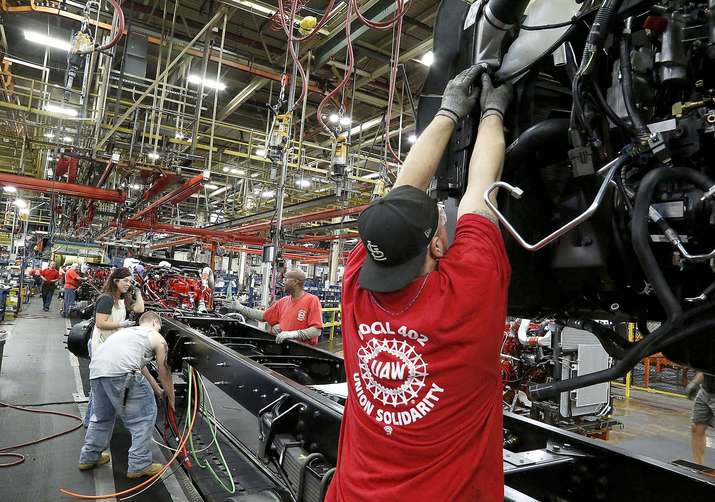
-
-
Fleet Owner / November 14, 2016 December 1 is fast approaching. If you’re a fleet owner and that day does not resonate with you, you could be in trouble. On December 1, 2016 major changes to the overtime rule will be going into effect. The U.S. Department of Labor is changing the overtime exemption regulations and that change has the potential to impact 4.2 million employees who are currently classified as exempt. And I am betting some of them work for you. By way of review, an exempt employee is one that is not eligible to receive overtime pay for hours worked over 40. Conversely, non-exempt employees have to be paid time and a half for any hours they work over 40 in a week. The big change is in the dollar threshold of the wage for an exempt employee. Prior to December 1 it is $23,600. After that date it jumps to $47,476. In other words full-time salaried employees who earned $455 a week were not eligible for overtime protection under the Fair Labor Standards Act. Next month that weekly amount is $913. The mostly likely place where fleets will see this play out is with their administrative and professional staff and people like dispatchers, clerks, etc. If you have not started to take steps to address this change, you already are behind the curve. It is going to become even more critical to accurately track hours worked by employee. You may need to put a new process in place to keep a very close eye on hours worked if you want to control overtime expenses and at the same time, ensure that your business does not suffer. You have several options for dealing with this change: Cap hours worked per week at 40 Pay the additional overtime for your employees who have been impacted by the change Raise salaries so they are higher than the threshold Move employees from salaried to hourly There is no one right solution. Each fleet will have to do some calculations to figure out which option makes the most sense in its operation. One thing you can’t do is ignore the change because that could land you in big trouble. And if you think this is going away, think again. The plan is to update the salary threshold every three years. More information about the ruling is available at https://www.dol.gov/WHD/overtime/final2016/
-
.
-
Trump team seeks top-secret security clearances for Trump's children CBS / November 14, 2016 President-elect Donald Trump is potentially seeking top secret security clearances for his children. The Trump team has asked the White House to explore the possibility of getting his children the top secret security clearances. Logistically, the children would need to be designated by the current White House as national security advisers to their father to receive top secret clearances. However, once Mr. Trump becomes president, he would be able to put in the request himself. His children would need to fill out the security questionnaire (SF-86) and go through the requisite background checks. While nepotism rules prevent the president-elect from hiring his kids to work in the White House, they do not need to be government officials to receive top secret security clearances. The issue raises another layer of questions about the unique role his children are playing and conflicts of interest with their running his network of businesses. Mr. Trump’s children Ivanka, Eric and Donald Jr., as well as son-in-law Jared Kushner, were named to the president-elect’s transition team late last week. Though they were an integral part of his campaign team, Mr. Trump’s children have all stated that they will not hold formal roles in the government. “No,” Ivanka told CBS News’ Lesley Stahl when asked during a “60 Minutes” interview if she would join the administration. “I’m going to be a daughter. But I’ve-- I’ve said throughout the campaign that I am very passionate about certain issues. And that I want to fight for them.” .
-
Speaking on Trump, President Obama said: “Regardless of what experience or assumptions he brought to the office, this office has a way of waking you up. Reality has a way of asserting itself." ------------------------------------------------------------------------------------------- President Obama, alluding to why Hillary Clinton lost the election. "I believe that we have better ideas, but I also believe that good ideas don't matter if people don't hear them. And one of the issues that Democrats have to be clear on is that given population distribution across the country, we have to compete everywhere, we have to show up everywhere. We have to work at a grassroots level, something that's been a running thread through my career." "I won Iowa not because the demographics dictated that I would win Iowa, it was because I spent 87 days going to every small town, and fair, and fish fry, and VFW hall. And there were some counties where I might have lost, but maybe I lost by 20 points instead of 50 points. There are some counties that maybe I won that people didn't expect — because people had a chance to see you and listen to you and get a sense of who you stood for and who you were fighting for." Listen in at 2:00
-
.
-
Trump and Immigration (Illegal Immigrants in the US)
kscarbel2 replied to kscarbel2's topic in Odds and Ends
Trump says he will on day one deport from the U.S., or incarcerate in the U.S., two to three illegal immigrants who are "criminals and have criminal records, gang members, drug dealers." But how many illegal immigrants have committed crimes in the U.S., other than immigration violations? In 2013, there were 1.9 million removable criminal aliens (criminal immigrants, both legal and illegal). This number includes people lawfully in the U.S. (legal immigrants) who face deportation after being convicted of serious crimes. However, only 820,000 (43 percent) of the 1.9 million removable criminal aliens are illegal aliens (illegal immigrants) with criminal convictions. . -
R/RW trim levels
kscarbel2 replied to sodly's topic in Antique and Classic Mack Trucks General Discussion
http://www.bigmacktrucks.com/topic/34169-mack-cabs/ -
My old friend, my posts here focus on Trump because.......this is the "Trump" thread (note the title). We have another thread on Hillary Clinton........http://www.bigmacktrucks.com/topic/40814-people-should-and-do-trust-me-hillary-clinton/?page=1 Am I required to post "anti Obama stuff". I've said before, I didn't vote for him.....I'm neutral on him. I am not demonizing anyone. All of us here on BMT love our country, and born from that love we take the time to have a healthy exchange of thoughts here. Speaking from a global view and also including the U.S. home front, we are now living in dangerous times. I started the Trump and Hillary threads, and now some new Trump-related threads given he is president-elect, so that everyone can exchange thoughts on key issues. We live in a closed news environment knowing only a very small fraction of what our government is actually doing both at home and abroad. Much of the news is “fed” to achieve a desired reaction. Though I may fail you at times, I attempt to post news that is worthy of your time. I abbreviate it to conserve your time. For example, many articles have several paragraphs at the end recapping what you already know from the day before. I try to post worthy news, and only the late breaking news. I don't post articles where the media needed to fill space....I don't want to waste your time. Often, only one sentence is new news, the rest rehashed from yesterday. I note overseas media because they absolutely present us with a different view which can broaden our horizons, and they often report on what the mainstream U.S. media avoids for sensitivity reasons. I also want to add that I make a concerted effort to support all the news posts with videos when available, so that you can see/hear for yourself. In summary, I make a sincere, dedicated attempt at presenting the most meaningful news, ridden of "fluff". In our controlled, closed news environment, you have to guess what's really going on. We are not given enough facts to "connect the dots". And many news items are "injected" in to steer the masses one way or the other, whether its to vote for a presidential candidate or go out and purchase the latest iphone (When they tell you its time to go buy stocks, it's actually not).
-
Fiat Chrysler, Cummins spar over costs of diesel emission recall
kscarbel2 replied to kscarbel2's topic in Trucking News
Dodge Truck Owners Accuse Chrysler of VW-Like Cheating Bloomberg/Reuters / November 14, 2016 Allegations of cheating pollution standards have reached U.S. automakers as Fiat Chrysler Automobiles was sued by consumers who said engines in some Ram pickup trucks were rigged to hide that emissions were as much as 14 times higher than permitted by law. FCA is the first U.S. carmaker to be sued by consumers. Similar claims were made against German carmakers. Volkswagen AG admitted that it installed devices designed to fool emission testing in 11 million cars worldwide in a scandal that may cost it 18.2 billion euros ($19.5 billion). Claims of rigging vehicles have also been made against Mercedes, which has denied the allegations. Fiat Chrysler and its diesel technology partner Cummins Inc. hid from consumers that pollutants that were supposed to have been broken down inside the diesel engines instead had a tendency to escape, almost doubling the emissions and reducing the vehicle’s fuel efficiency, according to the lawsuit. The companies are accused of fraud, false advertising and racketeering in the complaint, filed today in U.S. District Court in Detroit on behalf of the owners of almost 500,000 Ram 2500/3500 model trucks. Ram became its own brand under the FCA umbrella in 2009. Before that, Ram trucks were sold under the Dodge brand. The lawsuit against FCA -- created in 2014 through the merger of Chrysler and Fiat -- further calls into question the credibility of clean-diesel technology. Excessive emissions from the vehicles exposed the general public to noxious levels of smog, according to the consumer complaint. The claims involving Ram pickups from 2007 and 2012 predate the first known sales of emissions-cheating vehicles by Volkswagen by two years. FCA said it is reviewing the complaint. "Based on the information available to it, FCA US does not believe that the claims brought against it are meritorious," FCA said in a statement to Reuters. "FCA US will contest the lawsuit vigorously." Cummins refused to comment. “The sheer level of fraud and concealment between Chrysler and Cummins is unconscionable, and we believe we have uncovered a deeply entrenched scheme," Steve Berman, a lawyer for the plaintiffs, said in a statement. “Chrysler and Cummins spent years lying through their teeth and making empty promises to deliver the cleanest trucks on the market -- lip service to deceptively dominate what they saw as a profitable market.” Regulatory shift The alleged fraud was prompted by a regulatory shift in 2001, according to the filing. Companies saw an opportunity for growth after the U.S. Environmental Protection Agency announced stringent new emissions standards for heavy-duty diesel engines effective 2010. Chrysler and Cummins bet they could leapfrog the industry and produce a vehicle to meet those standards three years ahead of schedule, according to the complaint. Cummins increased its r&d budget by 60 percent from 2002 to 2007 to $321 million, about a quarter of which was dedicated to meeting the new standards. The outcome, though, was a flawed engine with limited capacity for trapping excess emissions, according to the complaint. Diesel engines, while more fuel-efficient, produce greater volumes of nitrogen oxide pollutants, or NOx. Cummins’s engines had limited capacity to store or dispose of the NOx. Instead of NOx being broken down in a process called regeneration, the pollutant had a tendency to escape from the vehicle, sometimes nearly doubling emissions and reducing the vehicle’s fuel efficiency as much as 4 percent, according to the complaint. The process concealed the true emissions output and wore down the car’s catalytic converter, which could cost as much as $5,000 to replace. Reimbursement sought The companies failed to disclose the engines’ shortcomings, which would have prompted drivers to reconsider FCA's marketing and ultimately the value of the vehicles, according to the complaint. The suit seeks reimbursement and damages for truck owners. Rushing to the market to beat competitors was only part of the reason for the fraudulent design, according to the complaint. Cummins also sought to “bank emissions credits to spend on other, dirtier engines,” according to the complaint. VW resolved a major chunk of its dispute in the U.S. in October when a San Francisco federal judge approved a $14.7 billion settlement with drivers intended to get 480,000 cars with polluting 2.0-liter diesel engines off the road by June 2019. The company is still trying to reach a settlement covering about 80,000 VW and Audi models with 3.0-liter diesel engines. This month, the company was accused in a lawsuit of installing defeat devices on more than 100,000 vehicles with 3.0-liter gasoline engines. The German carmaker’s technology partner Robert Bosch GmbH is also accused in the lawsuits of playing a key role in the development of VW’s emission-cheating technology. FCA vs. Cummins The class action suit comes as Fiat Chrysler and Cummins are fighting over the costs of an emissions recall involving a different, newer population of trucks. Cummins spokesman Jon Mills said the lawsuit "has no merit. We are obviously disappointed in the effort to tarnish our image and we plan to vigorously defend ourselves." Reuters reported on Oct. 10 that FCA and Cummins have been fighting over the $200 million estimated cost for a recall of 130,000 newer 2500 Ram pickup trucks equipped with Cummins diesel engines that could exceed U.S. pollution limits. The U.S. Environmental Protection Agency and California Air Resources Board have demanded a recall of 2013-2015 model year Ram 2500 pickup trucks with 6.7L Cummins diesel engines because moisture can lead to the deactivation of the selective catalyst reduction system, causing excess nitrogen oxide emissions, Cummins said. Fiat Chrysler has sued Cummins to recover the $60 million it has spent to date repairing 42,000 trucks at its own expense, a company lawyer said in court documents. Settlement talks are ongoing. Cummins counter-sued, saying FCA would not cooperate in the recall "for one reason -- money" and said the automaker was "holding both Cummins and its own customers hostage." When the emissions system fails, the warning light goes on and if the vehicle isn't fixed soon the vehicles go into "limp mode" that allow them to only be driven very slowly. -
Whoa......who said it was okay for the Clinton Foundation to accept millions of dollars from Middle Eastern countries??? I myself never said that. Though you and I are not first-hand witnesses to such, we're told it happened and inclined to believe it. Good luck getting more than a handful of truth from the news, however I do believe the Wikileaks revelations. I myself have commented numerous times on the disgusting barbaric punishments of Shariah (Islamic) Law. It's no wonder many feel that life under Shariah (Islamic) Law is incompatible with Western culture and values.
-
Throughout his campaign, he made hundreds of vague promises without any details on how he'd accomplish them. He is overflowing with rhetoric, but lacking in substance (he's a politician by definition, though not by profession).
-
Commercial Motor TV - sponsored by DAF Trucks / November 11, 2016 .
-
In a Trump world, men can marry men, and women can marry women.....................but women who have abortions (we're not talking late term) will be punished by the government. Go figure. Women's rights thrown to the curb. Trump want to appoint pro-life judges to the Supreme court and is inclined to see Roe vs. Wade overturned, sending abortion regulation back to the individual states, amounting to a massive step backward. Trump says, "I pledge to every citizen of our land that I will be president for all Americans'. But actually, all Americans except the American citizen women who want/need/have an abortion.
-
-
Trump - same-sex marriage okay, but not abortion The Guardian / November 13, 2016 President-elect Donald Trump sent conflicting messages about his hopes for the supreme court on Sunday, saying he will appoint justices who will send abortion rights “back to the states”, but not those who seek to repeal marriage equality “because it was already settled”. Trump made the comments in his first broadcast interview as president-elect, with CBS’s 60 Minutes, which aired on Sunday evening. The supreme court has had eight members since the death of conservative justice Antonin Scalia in February. Senate Republicans have refused to even consider Obama’s nominee for the seat, Merrick Garland. The vacant seat became a central campaign issue for conservatives, and CBS host Lesley Stahl asked Trump whether he would appoint a supreme court justice who wanted to overturn Roe v Wade, the 1973 case that upheld the right to abortion. “So look,” Trump said. “Here’s what’s going to happen. I’m going to – I’m pro-life. The judges will be pro-life.” Pressed, he said: “Having to do with abortion – if it ever were overturned, it would go back to the states. So it would go back to the states.” That did not mean women would not be able to get an abortion, Trump said, but “they’ll perhaps have to go, they’ll have to go to another state”. “Well, we’ll see what happens,” he added. “It’s got a long way to go, just so you understand. That has a long, long way to go.” In March, Trump suggested that women should face “some form of punishment” for having abortions, before reversing and saying states and Congress should lead lawmaking. Asked by Stahl whether he supported marriage equality, which was made law by the supreme court in Obergefell v Hodges in 2015, Trump suggested the case did not concern him to the degree of Roe v Wade. “It’s irrelevant,” he said, “Because it was already settled. It’s law. It was settled in the supreme court. I mean it’s done.” Trump’s vice-presidential pick, Indiana governor Mike Pence, has opposed same-sex marriage throughout his career, and supported so-called “conversion therapy” programs that purport to change people’s sexual orientation. Pence also signed a religious freedom law that sought to allow people to refuse service to same-sex couples because of religious convictions. Trump, however, said he considered the matter resolved. “These cases have gone to the supreme court,” he said. “They’ve been settled. I’m fine with that.” .
-
During last week's excitement, Navistar (NAV) set a new 52-week high of $27.36. Oshkosh (OSK) set a new 52-week high of $65.76. Paccar (PCAR), which set its 52-week high of $60.86 on April 27, reached $60.41. Update; NAV set a new 52-week high of $27.48 on Monday, Nov 14.
-
Trump and Immigration (Illegal Immigrants in the US)
kscarbel2 replied to kscarbel2's topic in Odds and Ends
It completely boggles my mind that our country literally does not round up the illegal immigrants and immediately deport them. Why do we have immigration laws, if there's no intent to fully enforce them? The lack of enforcement isn't an oversight. The government you see, or the people behind the veil, are purposely allowing illegal immigrants to stay. And recall, two mass amnesties were granted by Reagan (3 million) and George H.W. Bush (1.5 million), without the vote of the American people, and Obama wanted a third amnesty to 5 million. Now, Trump is going to grant amnesty to 9 million* non-criminal illegal immigrants in the country, the largest amnesty of U.S. history! His campaign promise was just hot air. * 11 million illegals - 2 million criminal illegals = 9 million. (Trump says, according to federal data, there are at least 2 million criminal aliens.......good luck rounding up a fraction of them. "Day one, my first hour in office, those people are gone," said Trump.) The 11 million number comes from from your government, which has multiple reasons to underestimate the actual number, which is estimated to be as high as 30 million*. * For example, in August 2015, Mexico’s former ambassador to the U.S., Arturo Sarukhan, says there are 30 million “undocumented [illegal] immigrants” living in the United States (Video at 1:00 - http://www.msnbc.com/andrea-mitchell-reports/watch/backlash-grows-over-trump-s-immigration-plan-507691587765). Florida Senator Marco Rubio says there are 12 to 13 million illegal immigrants are in the U.S., but what's a few million in difference? Even Trump said (Aug 31, 2016) there could be 30 million: "Honestly we've been hearing that number for years. It's always 11 million. Our government has no idea [There's some truth]. It could be 3 million. It could be 30 million," Trump said. "They have no idea what the number is. Frankly our government has no idea what they're doing on many, many fronts, folks." Trump told you, “We will immediately terminate President Obama’s two illegal amnesties, in which he defied federal law and the Constitution to give amnesty to approximately 5 million illegal immigrants. 5 million.” Obama was only going to grant amnesty to 5 million. Trump is going to “trump” Obama’s number and grant amnesty to 9 million. Why, because Trump actually feels that if illegal immigrants have been skillful enough to avoid detection for 20 years, they should be rewarded with amnesty. "You know my views on it and I'm not necessarily, I think I'm probably down the middle on that also,” said Trump. “Because I also understand how, as an example, you have people [illegal immigrants] in this country for 20 years, they've done a great job, they've done wonderfully, they've gone to school [for free], they've gotten good marks, they're productive — now we're supposed to send them out of the country, I don't believe in that." There are so many ramifications in play here. For starters, the lack of integrity with any person who knowingly enters the United States illegally speaks for itself. There action is criminal in nature. Thus these people are non-starter undesirables. And obviously, any job these people take could/would have gone to an American, or legal immigrant. Trump said, "We want people to come into our country, but they have to come into our country legally and properly vetted, and in a manner that serves the national interest. There will be no amnesty. Our message to the world will be this: You cannot obtain legal status, or become a citizen of the United States, by illegally entering our country. Can't do it." And yet, we are now under Trump looking at the largest amnesty plan for illegal immigrants in American history. On “60 Minutes”, Trump said his administration will “get the people that are criminal and have criminal records, gang members, drug dealers, we have a lot of these people, probably 2 million, it could be even 3 million. We are getting them out of our country, OR we are going to incarcerate. "Or we are going to incarcerate"??? Where did that concept come from. "Or"? As in, put them in U.S. prisons at the taxpayer's (our) expense? -
Trucking contributed $6.3 million to campaigns this cycle, mostly to Republicans Commercial Carrier Journal (CCJ) / November 11, 2016 As an update to the figures published by CCJ last much regarding trucking contributions to the 2016 election cycle, trucking industry political contributors gave $6.32 million to political campaigns this election cycle, according to the Center for Responsive Politics. Trucking donations heavily favored Republicans, who received 82 percent of the industry’s contributions — $4.89 million. Democrats received $1.03 million from the trucking industry. Republican presidential candidate Sen. Ted Cruz (Texas) was the industry’s top recipient, scoring more than $169,000. President-elect Donald Trump was second, drawing $161,703. Democratic nominee Hillary Clinton ranked third, receiving $114,256. As noted in prior CCJ coverage, Trump’s trucking-sourced donations lagged well behind Republican nominee Mitt Romney’s 2012 draw of $1 million from the industry and 2008 nominee John McCain’s $375,000. The total $6.32 million from trucking contributors in 2016 is $1.5 million less than mid-term election donations ($7.87 million) from the industry in 2014 and $3.5 million less than the 2012 presidential election cycle’s $9.98 million. However, it’s a tad more than the $5.9 million given in the 2008 election cycle. Below is a list of some of the industry’s top campaign contribution recipients, as well as some of the industry’s top political contributors: Recipients: Sen. Ted Cruz: $169,674 Donald Trump: $161,703 Hillary Clinton: $114,256 Rep. Jeff Denham: $111,850 Rep. Bill Shuster: $113,750 Sen. Bernie Sanders: $75,886 Rep. Sam Graves: $71,952 Sen. John Thune: $68,750 Sen. Ron Johnson: $64,873 Sen. Marco Rubio: $63,465 Jeb Bush: $61,470 John Kasich: $60,150 Ben Carson: $56,985 Paul Ryan: $51,265 Contributors: American Trucking Associations (ATA): $621,450 Prime Inc: $270,768 Owner-Operator Independent Drivers Association (OOIDA): $256,750 Werner Enterprises: $212,389 CenTra Inc: $186,935 Penske: $185,015 Crete Carrier Corp: $184,570 National Tank Truck Carriers: $175,500 Oshkosh Corp: $169,125 Anderson Trucking Services: $152,150 Old Dominion: $150,132 Schneider National: $116,348 Ruan Companies: $102,850 Paccar Inc: $86,013 Swift Transportation: $81,734
-
. .
-
.
-
76 of Donald Trump’s many campaign promises The Washington Post / January 22, 2016 1. Build a wall along the southern border that's taller than the arenas where Trump holds his rallies, taller than any ladder and one foot taller than the Great Wall of China. This "artistically beautiful" wall will be constructed out of hardened concrete, rebar and steel, and it will be "the greatest wall that you've ever seen" -- so great that the nation will likely one day name it "The Trump Wall." 2. Make Mexico pay for the wall. If Mexico refuses, then the United States will impound all remittance payments taken from the wages of illegal immigrants, cut foreign aid, institute tariffs, cancel visas for Mexican business leaders and diplomats, and increase fees for visas, border-crossing cards and port use. 3. "If I become president, we're all going to be saying 'Merry Christmas' again." 4. Get rid of Common Core because it's "a disaster" and a "very bad thing." Trump says he wants to give local school districts more control and might even eliminate the Department of Education. 5. The Environmental Protection Agency might also disappear. 6. Get rid of Obamacare and replace it with something "terrific" that is "so much better, so much better, so much better." 7. Knock down the regulatory walls between states for health insurance, making plans available nationally instead of regionally. 8. Rebuild the country's aging infrastructure -- especially bridges and airports that look like they belong in a third-world country -- for one-third of what the United States is currently paying for such projects. 9. Save Medicare, Medicaid and Social Security without cutting benefits. 10. Defund Planned Parenthood. 11. "I will take care of women, and I have great respect for women. I do cherish women, and I will take care of women." 12. Frequently use the term "radical Islamic terrorism." 13. Temporarily ban most foreign Muslims from entering the United States "until our country's representatives can figure out what is going on." Trump would allow exceptions for dignitaries, business people, athletes and others who have "proven" themselves. 14. Bar Syrian refugees from entering the country and kick out any who are already living here. Trump says wealthy Persian Gulf nations like Saudi Arabia should pay to set up a heavily guarded "safe zone" in Syria. 15. Heavily surveil mosques in the United States. Trump has said he's open to the idea of closing some mosques. 16. Create a database of Syrian refugees. Trump hasn't ruled out creating a database of Muslims in the country. 17. Never take a vacation while serving as president. 18. Prosecute Hillary Clinton for her use of a private e-mail server while serving as secretary of state. 19. Make medical marijuana widely available to patients, and allow states to decide if they want to fully legalize pot or not. 20. Stop spending money on space exploration until the United States can fix its potholes. Encourage private space-exploration companies to expand. 21. Pick Supreme Court justices who are "really great legal scholars." 22. Ensure that Iowa continues to host the nation's first presidential nominating contest. 23. Strengthen the military so that it's "so big and so strong and so great" that "nobody's going to mess with us." 24. Be unpredictable. "No one is going to touch us, because I'm so unpredictable." 25. Allow Russia to deal with the Islamic State in Syria and/or work with Russian President Vladimir Putin to wipe out shared enemies. 26. "Bomb the s--- out of ISIS." Also bomb oil fields controlled by the Islamic State, then seize the oil and give the profits to military veterans who were wounded while fighting. 27. Target and kill the relatives of terrorists. 28. Shut down parts of the Internet so that Islamic State terrorists cannot use it to recruit American children. 29. Bring back waterboarding, which the Obama administration considers torture. Trump has said he's willing to use interrogation techniques that go even further than waterboarding. Even if such tactics don't work, "they deserve it anyway, for what they're doing." 30. Leave troops in Afghanistan because it's such "a mess." Protect Israel. And increase U.S. military presence in the East and South China Seas. 31. Find an "out" clause in the Iran deal and then "totally" renegotiate the whole thing. 32. "I promise I will never be in a bicycle race. That I can tell you." (This promise is connected to criticism of Secretary of State John F. Kerry, who was injured while riding a bicycle amid the Iran negotiations.) 33. Refuse to call Iran's leader by his preferred title. "I guarantee you I will be never calling him the Supreme Leader... I'll say, 'Hey baby, how ya doing?' I will never call him the Supreme Leader." 34. Negotiate the release of all U.S. prisoners held in Iran before taking office. (Five hostages were recently released, including Washington Post reporter Jason Rezaian; Trump has taken some credit for this.) 35. Oppose the killing of journalists: "I hate some of these people, but I would never kill them." 36. Find great generals -- like the next Gen. Patton or Gen. MacArthur -- and do not allow them to go onto television news shows to explain their military strategy: "I don't want my generals being interviewed, I want my generals kicking a--." Trump likes generals who are rough, foul-mouthed and beloved by their troops. 37. Drop that "dirty, rotten traitor" Bowe Bergdahl out of an airplane into desolate Afghanistan without a parachute. 38. Fire "the corrupt and incompetent" leaders of the U.S. Department of Veterans Affairs and dramatically reform the agency. Allow veterans to take their military identification card to any medical facility that accepts Medicaid patients to receive care. Embed satellite VA clinics in rural hospitals and underserved areas, and ensure than every VA hospital is permanently staffed with OBGYN doctors. 39. Invest more heavily in programs that help military veterans transition back to civilian life, including job training and placement services. Also increase funding for the treatment of post-traumatic stress disorder, traumatic brain injuries and mental health issues. Veterans who apply for a job at a VA facility will have five points added to their qualifying scores. 40. Bring back jobs from China -- and Mexico, Japan and elsewhere. 41. "I will be the greatest jobs president that God ever created." Trump says cities like Reno, Nev., will "be a big fat beautiful beneficiary" of these new jobs. 42. Students at Wofford College in South Carolina, where Trump attended a town hall, will all have jobs at graduation. 43. Aggressively challenge China's power in the world by declaring the country a currency manipulator, adopting a "zero tolerance policy on intellectual property theft and forced technology transfer" and cracking down on China's "lax labor and environmental standards." 44. Rather than throw the Chinese president a state dinner, buy him "a McDonald's hamburger and say we've got to get down to work." 45. Replace "free trade" with "fair trade." Gather together the "smartest negotiators in the world," assign them each a country and renegotiate all foreign trade deals. 46. Put billionaire hedge fund manager Carl Icahn in charge of trade negotiations with China and Japan, and pick an ambassador to Japan who is "a killer," unlike the current ambassador, Caroline Kennedy. 47. Tell Ford Motor Co.'s president that unless he cancels plans to build a massive plant in Mexico, the company will face a 35 percent tax on cars imported back into the United States. Trump is confident he can get this done before taking office. (Last year he incorrectly said this had already happened.) 48. Force Nabisco to once again make Oreos in the United States. And bully Apple into making its "damn computers" and other products here. 49. Impose new taxes on many imports into the country. Numbers thrown around have included 32 percent, 34 percent and 35 percent. 50. Grow the nation's economy by at least 6 percent. 51. Reduce the $18 trillion national debt by "vigorously eliminating waste, fraud and abuse in the federal government, ending redundant government programs and growing the economy to increase tax revenues." 52. Cut the budget by 20 percent by simply renegotiating. 53. Get rid of the Dodd-Frank Wall Street Reform and Consumer Protection Act. 54. Simplify the U.S. tax code and reduce the number of tax brackets from seven to four. The highest earners would pay a 25-percent tax. The corporate tax rate would fall to 15 percent. Eliminate the "marriage penalty" for taxpayers and get rid of the alternate minimum tax. 55. No longer charge income tax to single individuals earning less than $25,000 per year or couples earning less than $50,000. These people will, however, be required to file a one-page form with the Internal Revenue Service that states: "I win." 56. Ensure that Americans can still afford to golf. 57. Allow corporations a one-time window to transfer money being held overseas, charging a much-reduced 10 percent tax. 58. Get rid of most corporate tax loopholes or incentives, but continue to allow taxpayers to deduct mortgage interest and charitable donations from their taxes. 59. On his first day in office, Trump would get rid of gun-free zones at military bases and in schools. 60. Use "common sense" to fix the mental health system and prevent mass shootings. Find ways to arm more of the "good guys" like him who can take out the "sickos." Get rid of bans on certain types of guns and magazines so that "good, honest people" can own the guns of their choice. 61. Impose a minimum sentence of five years in federal prison for any violent felon who commits a crime using a gun, with no chance for parole or early release. 62. Fix the background check system used when purchasing guns to ensure states are properly uploading criminal and health records. 63. Allow concealed-carry permits to be recognized in all 50 states. 64. Sign an executive order calling for the death penalty for anyone found guilty of killing a police officer. 65. Provide more funding for police training. 66. And provide more funding for drug treatment, especially for heroin addicts. 67. On the first day in office, terminate President Obama's executive orders related to immigration. This includes getting rid of "sanctuary cities" that Trump says have become refuges for criminals. 68. Deport the almost 11 million immigrants illegally living in the United States. 69. Triple the number of U.S. Immigration and Customs Enforcement officers. 70. Continue to allow lowly paid foreign workers to come to the United States on temporary works visas because Trump says they are the only ones who want to pick grapes. 71. End birthright citizenship. 72. Say things that are politically incorrect, because the country does not have time to waste with political correctness. 73. Make America great again -- and strong again, as it has become too weak. 74. Be a cheerleader for America and bring the country's spirit back. "Take the brand of the United States and make it great again." 75. Bring back the American Dream. 76. Start winning again. "We're going to win so much -- win after win after win -- that you're going to be begging me: 'Please, Mr. President, let us lose once or twice. We can't stand it any more.' And I'm going to say: 'No way. We're going to keep winning. We're never going to lose. We're never, ever going to lose."
-
Trump's "Day One" Promises Everything that Donald Trump has promised to do on his first day in office. "Repeal every single Obama executive order." (He has also pledged more specifically to "eliminate every unconstitutional executive order.") "Repeal Obamacare." (On Trump's campaign website, he's less bullish, promising only to "ask Congress" on day one to repeal Obamacare immediately.) "End the war on coal." "Begin swiftly removing criminal illegal immigrants from this country." (More specifically, Trump has promised to do this in his "first hour" in office, "day one, before the wall, before anything.") "Begin working on an impenetrable, physical, tall, powerful, beautiful, southern border wall." Meet with Homeland Security officials and generals to begin securing the southern border. "Notify all countries that refuse to take back dangerous illegal immigrants who have committed crimes in this country that they will lose access to our visa programs if they continue to do so." Convene his top generals and inform them they have 30 days to come up with a plan to stop ISIS. Fix the Department of Veterans Affairs. Call the heads of major companies who are moving operations oversea to inform them that they'll face 35 percent tariffs. "Contact countries and say…'Folks, we love protecting you, we want to continue to protect you but you're not living up to the bargain'…They're not paying what they're supposed to be paying—which is very little, by the way." "Defend the unborn." "Withdraw from TPP." "Start taking care of our…military." Suspend Syrian refugee resettlement. "Notify our NAFTA partners of my intention to renegotiate the deal." "Designate China as a currency manipulator." "Direct every agency in government to begin identifying all wasteful job-killing regulations, and they are going to be removed." "Get rid of gun-free zones [in] schools" and "military bases"—which would require repealing a 25-year-old federal law. ("My first day, it gets signed, okay? My first day. There's no more gun-free zones.") "Ask Congress to pass 'Kate's Law'—named for Kate Steinle—to ensure that criminal aliens convicted of illegal reentry receive strong mandatory minimum sentences." Learn the difference between Hezbollah and Hamas.

BMT Forum Logo