


kscarbel2
-
Posts
19,178 -
Joined
-
Days Won
115
Content Type
Profiles
Forums
Gallery
Events
Blogs
BMT Wiki
Collections
Store
Everything posted by kscarbel2
-
Krupp made a beautiful truck, but I particularly liked the Henschels. The ZIL 130 reminds me of a Bedford TJ.
-
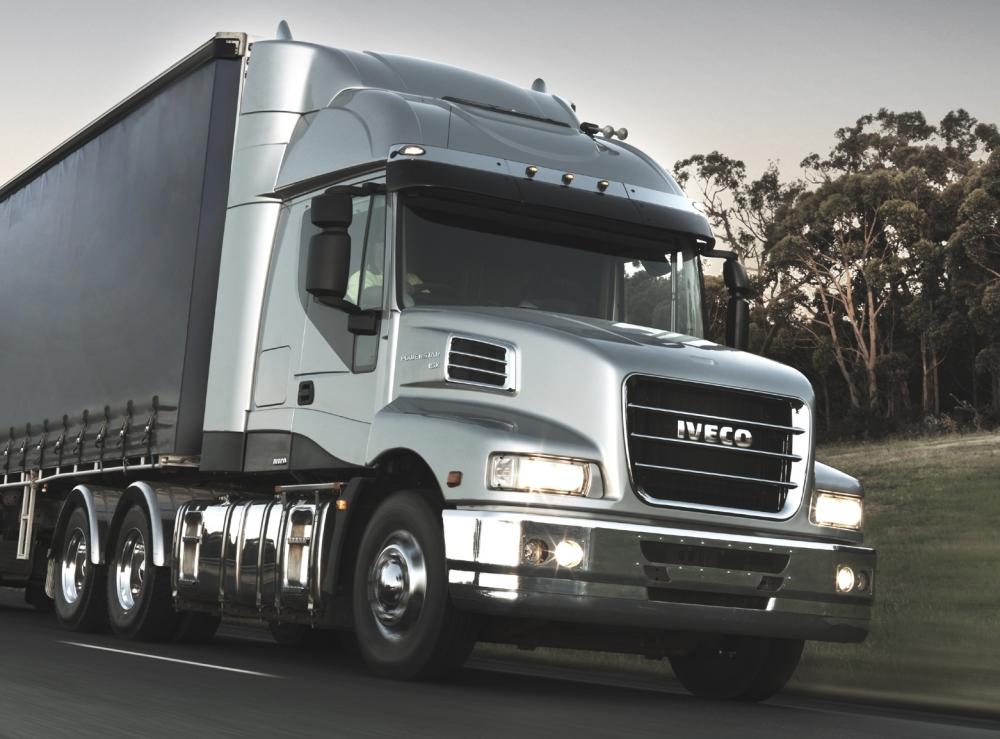
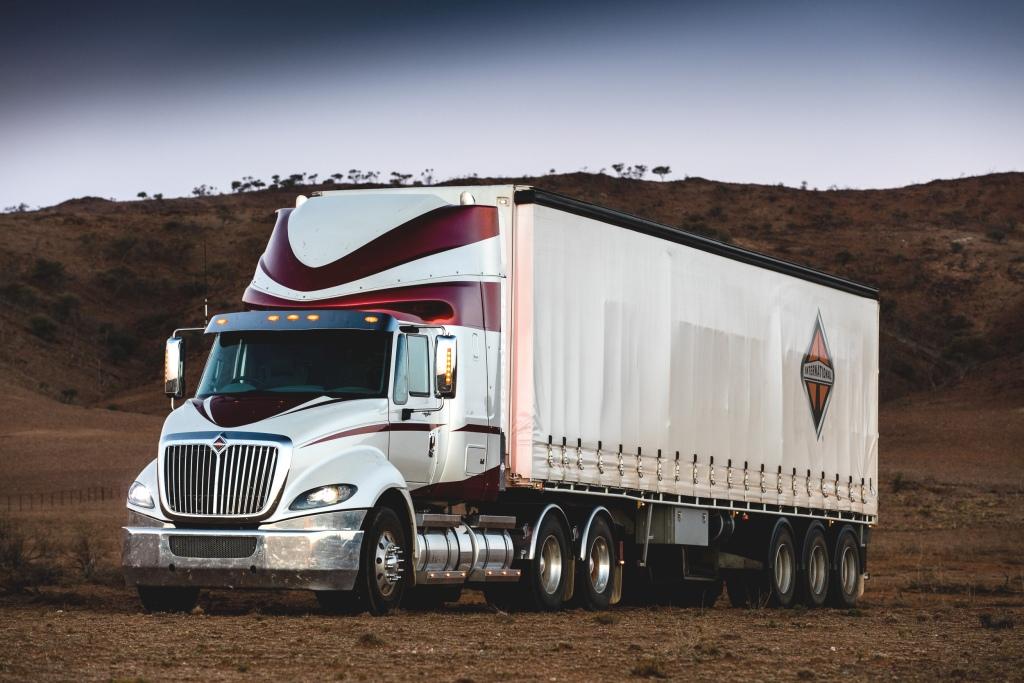
Nobody likes Iveco's Australian market conventional cab PowerStar more than me. It's an impressive truck in both form and function. But I look at the International line-up and PowerStar range as products for two different types of customers. I've yet to see one product range that appeals to everyone, which is why we have Ford, Chevy and Dodge to choose from for pickups. Sure, if we could buy a Ford pickup with the Chevy's Allison transmission and the Dodge's Cummins 6.7L, we'd only need that one pickup to perfectly meet everyone's needs............but that's another story. I think it's going to work out fine. .
.thumb.jpg.3b8929b0b51fe22b3eebf0804ee1b4fa.jpg)
-
.thumb.jpg.6ba80aa55e0b7aee06a3f57573f7f76e.jpg)
.thumb.jpg.ce42c6db78878edfac81c53eebde58f4.jpg)
.thumb.jpg.fb5c2c47bba9fa221dae547bda4e8a26.jpg)
.thumb.jpg.2b2bdb1269ceba8e5e67d832430f03b8.jpg)
-
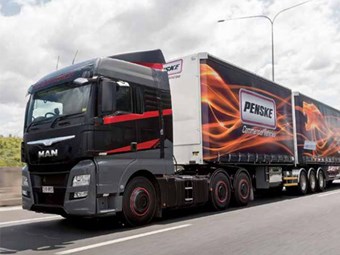
The 15.2-liter D38-powered MAN TGX has also been launched by Penske in the New Zealand market. http://www.man.co.nz/truck-range/tgx-range/man-tgx-d38/
-
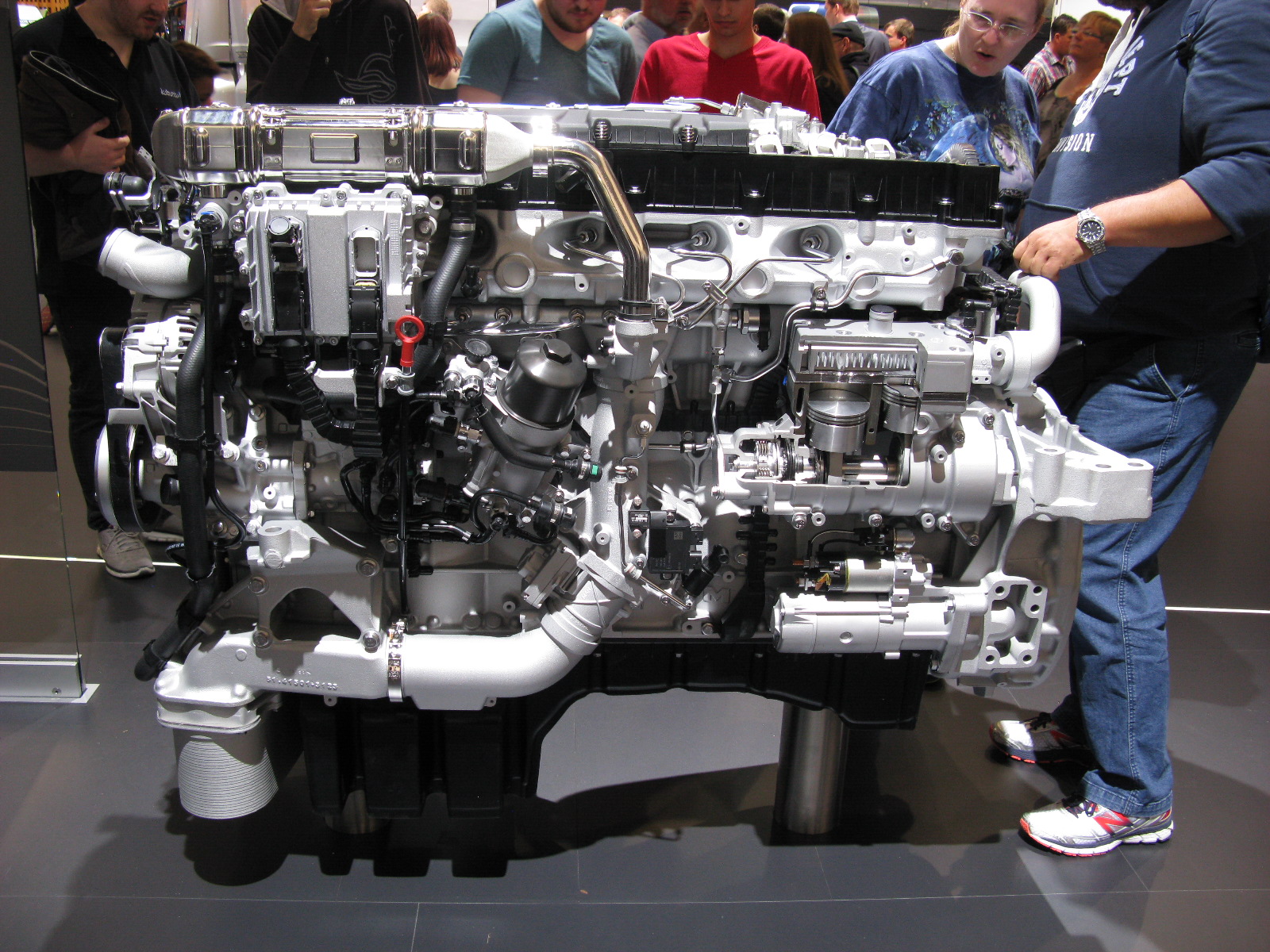
Australasian Transport News (ATN) / October 11, 2016 Combining European design with Australian tweaks, MAN’s new TGX flagship model aims at the B-double market MAN Truck & Bus has launched the TGX D38 during an event hosted by Penske Corporation chairman Roger Penske in Brisbane today. The new TGX flagship model, the MAN’s D38 joins the Australian heavy-duty market on the back of an 18-month test period in local conditions. Offering a 15.2-litre, six-cylinder engine with 560hp at 2,000ft-lb and maximum torque at 930rpm, the new MAN is targeted at long distance B-double applications. When it comes to transmission, the D38 ships with an automated manual 12-speed Traxion Transmission shifting system, which offers three fuel-efficient modes and GPS-controlled cruise control from MAN EfficientCruise. The cruise control system utilises topographical map data to foresee route gradients ahead and optimise the required fuel consumption. Speaking at the launch, Penske says the Australian arm of Penkse Commercial Vehicles worked in conjunction with MAN Germany to tailor the truck for the local environment. "The MAN D38 has been engineered for local customers, and with their needs of economy at the fore," Penske says. "I believe that the MAN D38 package from Penske Commercial Vehicles will quickly become an attractive and viable business option, giving our customers the edge they need." Echoing Penske’s remarks, MAN Truck & Bus Australia general manager Mark Mello says the new D38 combines economy and power. "Given our reliance on truck transportation in Australia and the distances between cities, efficiency and productivity are the key factors that dictate business success today," Mello says. "The MAN TGX D38 strikes an excellent balance of capacity and cost efficiency, and is built specifically for customers who transport high-gross combination weights. "We believe these qualities stand operators requiring B-double and heavy-duty applications in Australia in good stead." The new MAN TGX D38 is currently available from Penske Commercial Vehicles. Related reading: http://www.man.com.au/wp-content/uploads/2016/10/MAN-D38-Brochure-alternate-colour-1.pdf http://www.truck.man.eu/man/media/en/content_medien/doc/business_website_truck_master_1/Broschuere_D38_D_Screen.pdf . .
-
Scania Australia Press Release / October 10, 2016 Millers Transport Group, established in 1923, is a family run company transporting shipping containers in Melbourne, Victoria, Australia. .
-
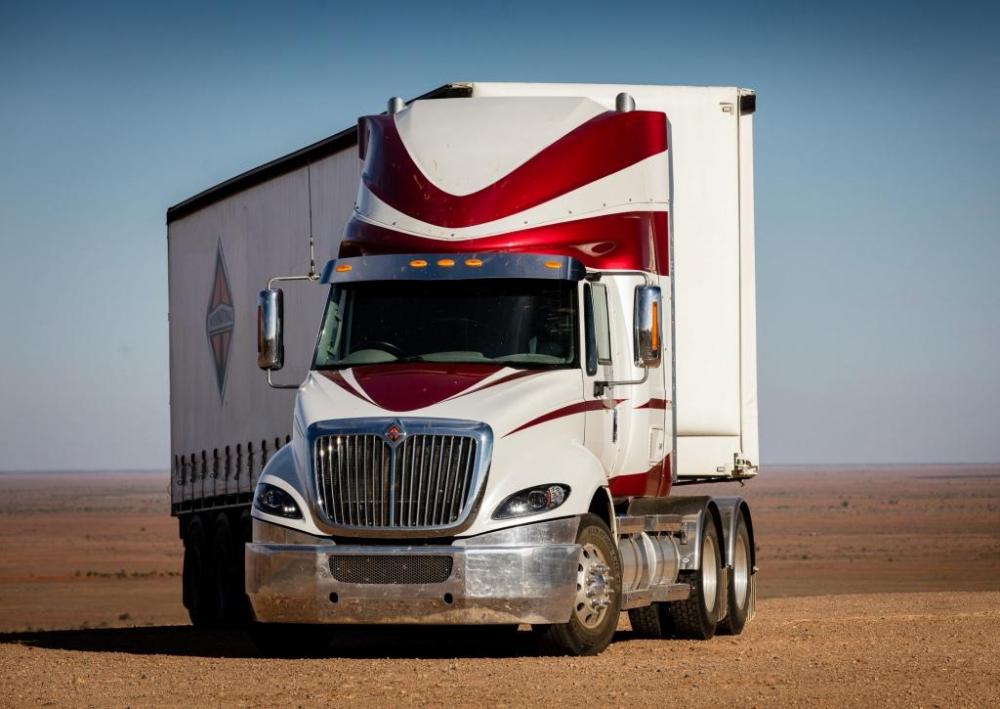
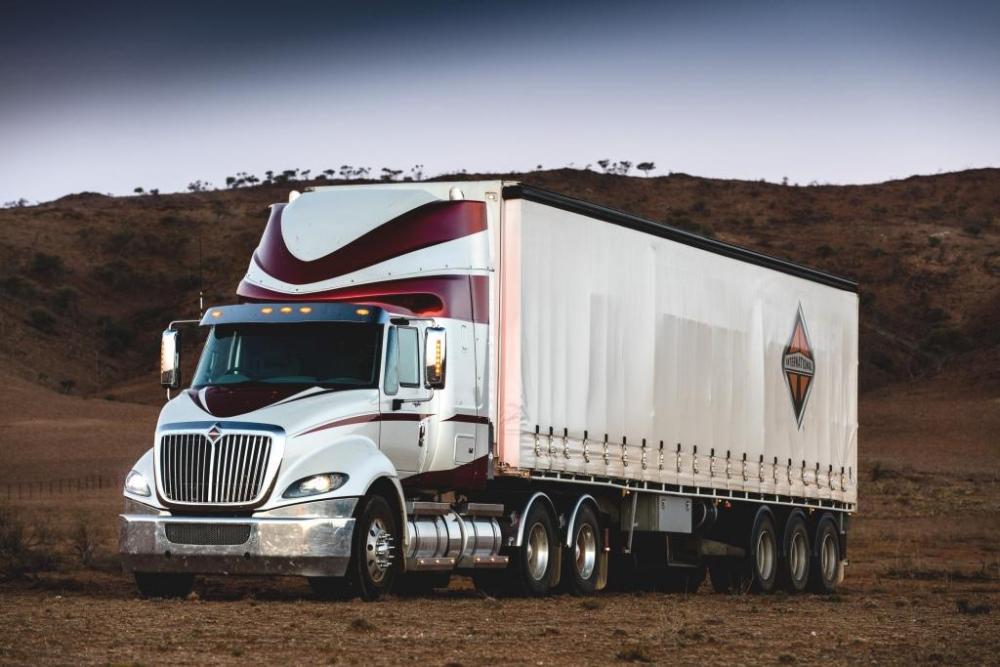
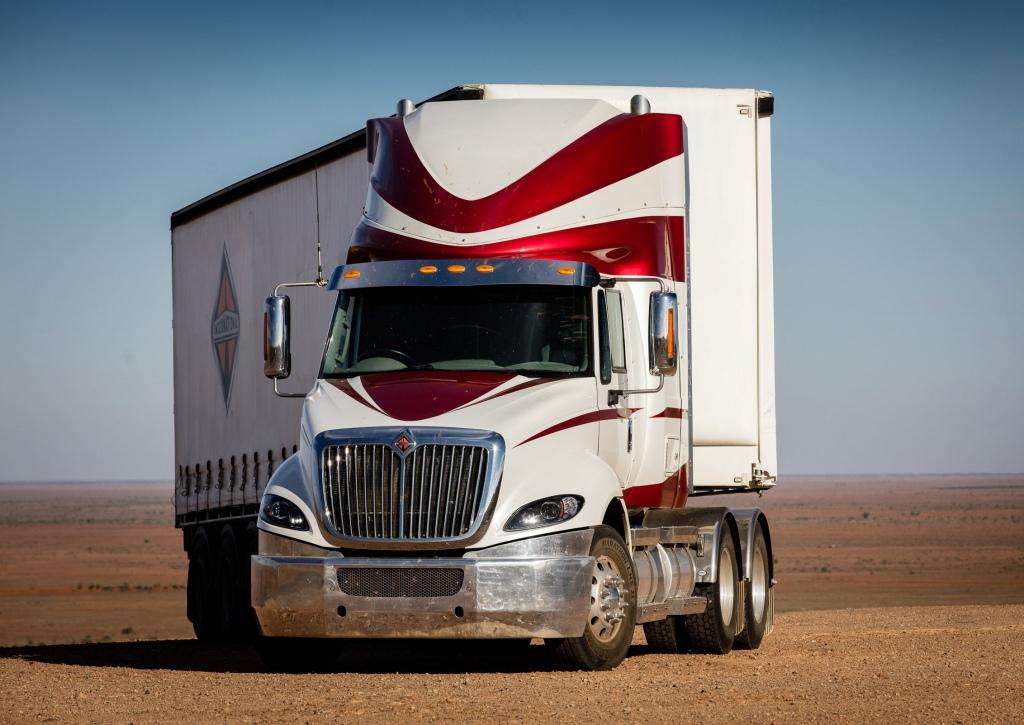
Done Deal: CNH Industrial Appointed Australian distributor of INTERNATIONAL Trucks Power Torque AU / October 11, 2016 A joint announcement was made today by CNH Industrial and Navistar Inc. executives confirming that Iveco Australia’s parent company, CNH Industrial, has been appointed sole distributor of International Trucks in the Australian market. Today’s announcement ends months of speculation as to the framework under which International would return to Australia, after initial plans were outlined by Navistar Inc. at the 2015 Brisbane Truck Show. Operational aspects of the arrangement are still being finalized by both parties who are evaluating several models, like the ProStar, in an effort to ensure that the International brand is strongly promoted and supported from the outset. The return of International to Australia and its tie-in with Iveco and its Dandenong facility in Melbourne, marks a homecoming to the location where thousands of International commercial vehicles were manufactured and or assembled since 1952. The DNA still runs deep today with the current Iveco ACCO range sharing its lineage with earlier ACCOs developed under International Harvester (http://www.bigmacktrucks.com/topic/36017-the-legendary-acco-–-designed-and-built-by-australians/). Navistar Sr. VP Distribution & Export, Mark Belisle, said the company had taken extensive due diligence in evaluating and pursuing the best course of action for the return of International Trucks to Australia. “Despite not having sold here for a number of years, International is still entrenched in the Australian market and remembered fondly by fleet operators, this enthusiasm for the marque was also highlighted at the 2015 Brisbane Truck Show with both the ProStar and LoneStar display trucks capturing show-goers’ imaginations,” Mr. Belisle said. “Of course the return of a brand to Australia that is so well regarded, deserved a detailed plan befitting of its standing here, and that meant establishing a partnership with a company that was well equipped to assist in properly relaunching in the local market”. “In CNH Industrial we’ve found a partner with the necessary credentials and industry experience to help Navistar meet its goals here. The close history between CNH Industrial’s Iveco brand and INTERNATIONAL is not lost on us either, it adds an element of emotion to the partnership”. “We look forward to the months ahead and bringing some exciting new INTERNATIONAL vehicles to market.” In commenting on the agreement, CNH Industrial Executive Managing Director – ANZ, Ray Osgood, said he was extremely pleased to have established a partnership with Navistar Inc. for the distribution rights. “International had a long and successful history in Australia and dominated the commercial vehicle market for several decades – there remains a lot of passion for the brand here today, and it still has a lot of equity in this market,” Mr. Osgood said. “CNH Industrial is extremely excited at the prospect of partnering with Navistar in reintroducing the iconic International Trucks to Australia. Our operational experience with Iveco and the obvious synergies and history between the two brands will provide notable efficiencies as the International range is introduced in the months ahead. “Furthermore, we see the arrangement to be mutually beneficial in that the International product range primarily consisting of conventional cabs, will compliment Iveco’s strengths in cab-over truck models.” International Trucks History – Australia 1912: International Harvester company of Australia Pty Ltd is formed 1949: Local International truck manufacturing and assembly begins in South Melbourne 1952: International manufacturing facility opened in Dandenong, Melbourne (now owned and operated by Iveco Trucks Australia) 1955: Mk1 4x4 GS army truck production began 1961: Anglesea proving ground established to help development of extended truck lines 1961: AACO production began 1965: New facilities added to Dandenong works – capacity is almost doubled 1972: ACCO A is released 1982: International Harvester experiences global financial concerns – Receiver Manager appointed in Australia 1985: International Harvester becomes International Trucks Australia Ltd 1992: Iveco acquires International Trucks Australia Ltd, including Dandenong manufacturing facility and ACCO model range 1997: 200,000th International / Iveco unit manufactured at Dandenong facility 2001: Company name officially changed to Iveco Trucks Australia Ltd 2004: Relaunch of International 9000 Series in Australia, assembled at Dandenong 2006: International 7600 introduced 2017: International Trucks to relaunch in Australia .
-
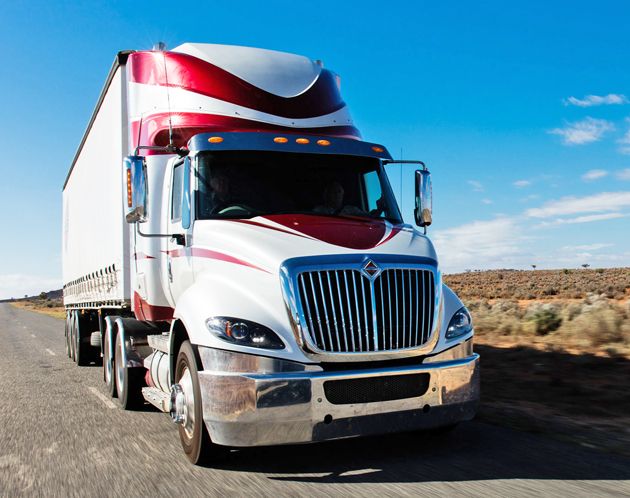
Prime Mover Magazine / October 11, 2016 A joint announcement was by Iveco Australia parent company, CNH Industrial and US truck brand Navistar has confirmed that Iveco will now distribute International trucks into Australia. The announcement ends months of speculation as to the framework under which International would return to Australia, after initial plans were outlined by Navistar in 2015. The return of International to Australia and its tie-in with Iveco and its Dandenong facility in Melbourne, marks a homecoming to the location where thousands of International commercial vehicles were manufactured and or assembled since 1952. “Despite not having sold here for a number of years, ‘Inter’ is still entrenched in the Australian market and remembered fondly by fleet operators,” said Mark Belisle, Navistar Sr. VP Distribution & Export. “We look forward to the months ahead and bringing some exciting new International vehicles to market.” CNH Industrial Executive Managing Director – ANZ, Ray Osgood, added. “International had a long and successful history in Australia and dominated the commercial vehicle market for several decades – there remains a lot of passion for the brand here today, and it still has a lot of equity in this market,” he said. “CNH Industrial is extremely excited at the prospect of partnering with Navistar in reintroducing the iconic International Trucks to Australia. Our operational experience with Iveco and the obvious synergies and history between the two brands will provide notable efficiencies as the International range is introduced in the months ahead. “Furthermore, we see the arrangement to be mutually beneficial in that the International product range primarily consisting of conventional cabs, will compliment Iveco’s strengths in cab-over truck models.” According to both CNH and Navistar, operational aspects of the arrangement are still being finalised by both parties, which are still evaluating several models. .
-
Hendrickson Press Release / October 4, 2016 A value-added option for INTRAAX and VANTRAAX trailer suspension systems, TIREMAAX helps fleets and owner operators in their efforts to minimize costly tire wear and improve productivity and fuel mileage. Related reading - http://www.hendrickson-intl.com/Trailer/On-Highway/TIREMAAX .
-
BPW Press Release / October 4, 2016 BPW is presenting AirSave, a cost-effective solution for keeping tyre pressure within the optimum range automatically with accompanying indication of imminent tire failures. AirSave is easy to retrofit and freely scalable thanks to its decentralized and autonomous design. The system can be combined with every brand of tires and rims. “Today’s TPMS systems use telematics applications to show any deviation from the optimum tyre pressure. However, whether and when the problem is resolved, for example by topping up with air, remains open. This is only possible with automatic tire pressure control systems, such as our AirSave system,” explains BPW Innovation Management Director Markus Kliffken. One advantage that AirSave has over previous tire pressure control systems: it is an autonomous solution that can be easily fitted or retrofitted with minimum additional cost. The system consists of a compressor, electric control unit, tire valve, a number of pressure and temperature sensors as well as a power source. Each individual tire is automatically adjusted to the correct pressure while traveling. System faults such as a steady loss of pressure are indicated by means of an LED light directly on the tire. “Tyre pressure plays an important role in reducing operating expenses. If it is not within the optimum range, this can lead to increased tire wear, reduced tire mileage and higher fuel consumption as well as CO2 emissions,” says Kliffken. “Thanks to AirSave’s decentralised system, it is much easier to locate tire damage.” AirSave is easy to retrofit and freely scalable thanks to its decentralized and autonomous design. Moreover, the system is completely maintenance-free. Because AirSave is mounted on the hub, no special components are required for the wheel itself, and servicing the tires is straightforward. The system can be combined with every brand of tires and rims. .
-
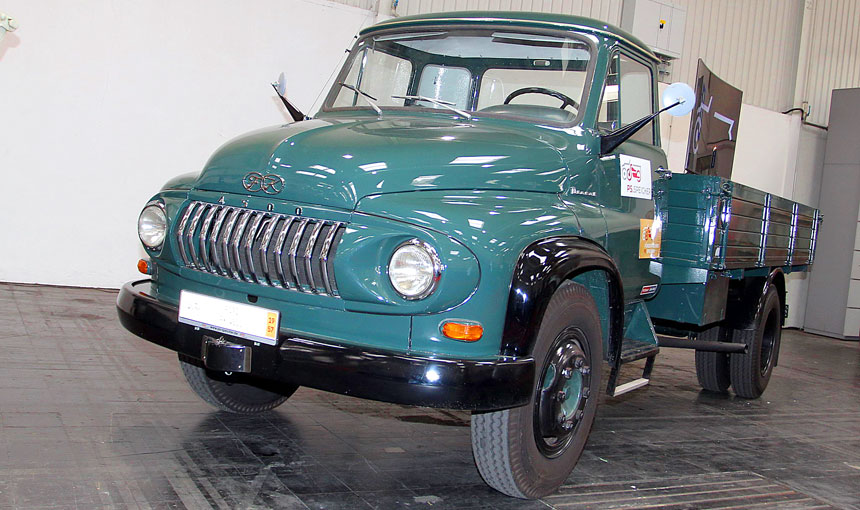
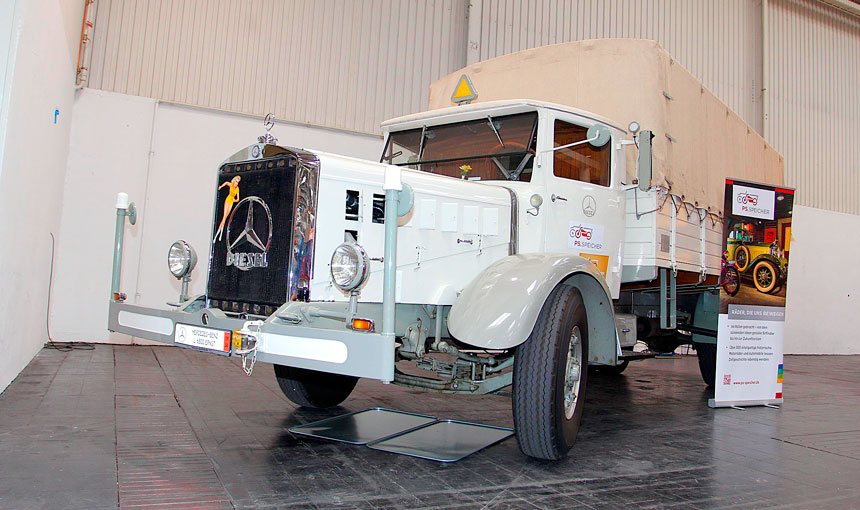
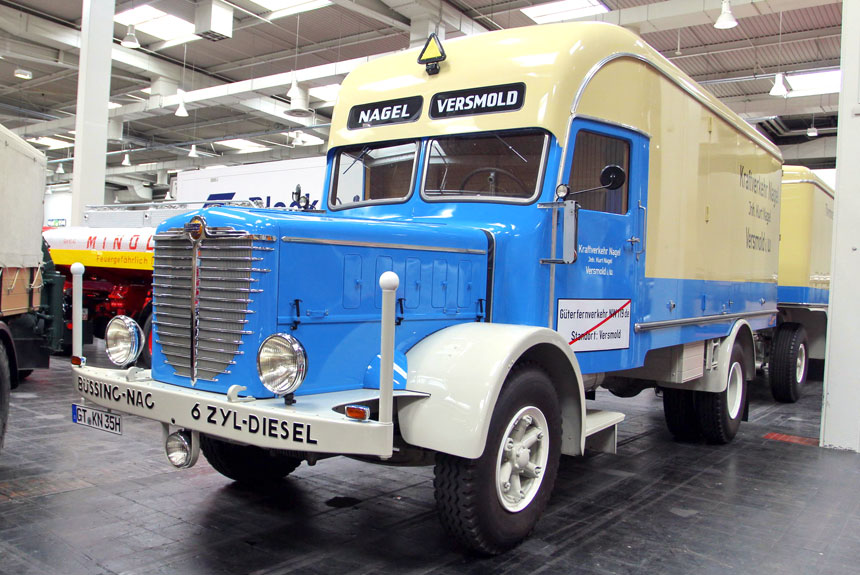
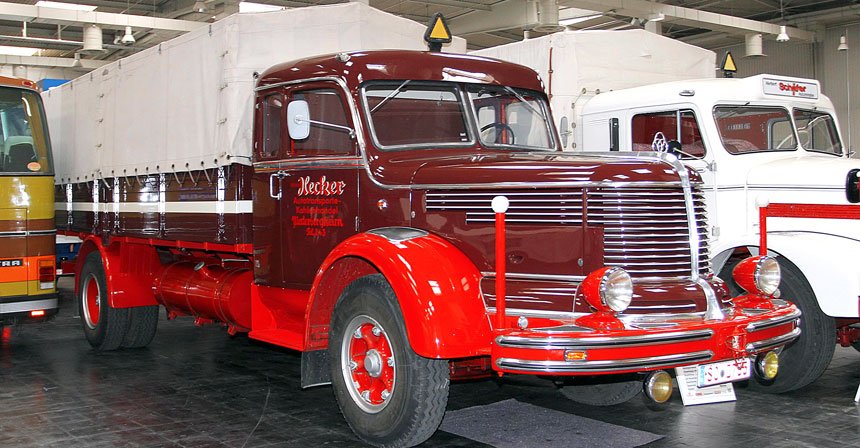
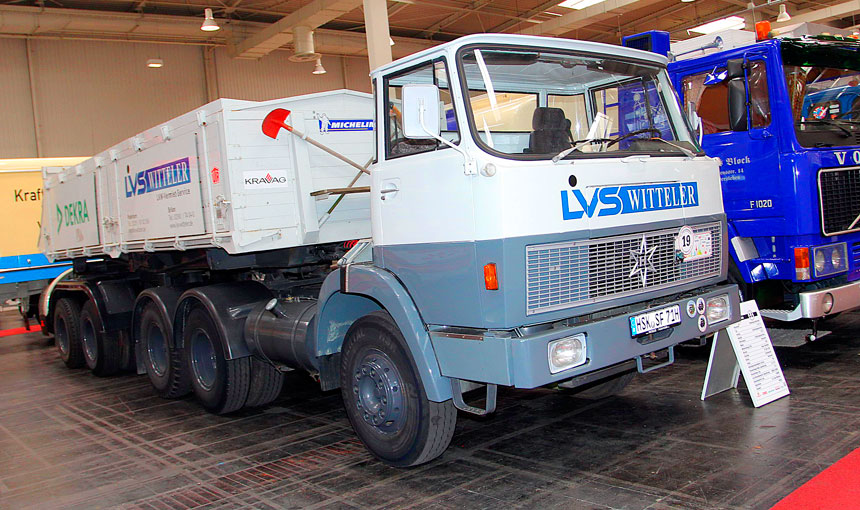
ZIL 130 Mercedes-Benz L6500 Bussing-NAG 650 Krupp Titan (WW2 U-Boat builder. Later known as Hanomag Henschel, the truckmaking unit was acquired by Daimler-Benz in 1968) Henschel (former locomotive and WW2 aircraft and tank builder including all Tigers. Later known as Hanomag Henschel, it was acquired by Daimler-Benz in 1970) Mercedes-Benz NG (forerunner to the SK) IFA L60 (Industrieverband Fahrzeugbau, East German truckmaker) Skoda Liaz 706RT (LIberecké Automobilové Závody - Czech truckmaker) 1984 KamAZ-53212 .
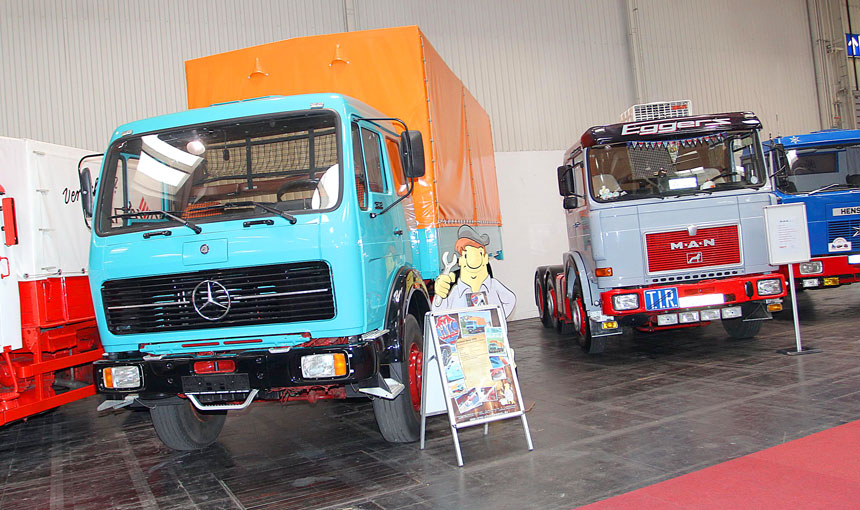
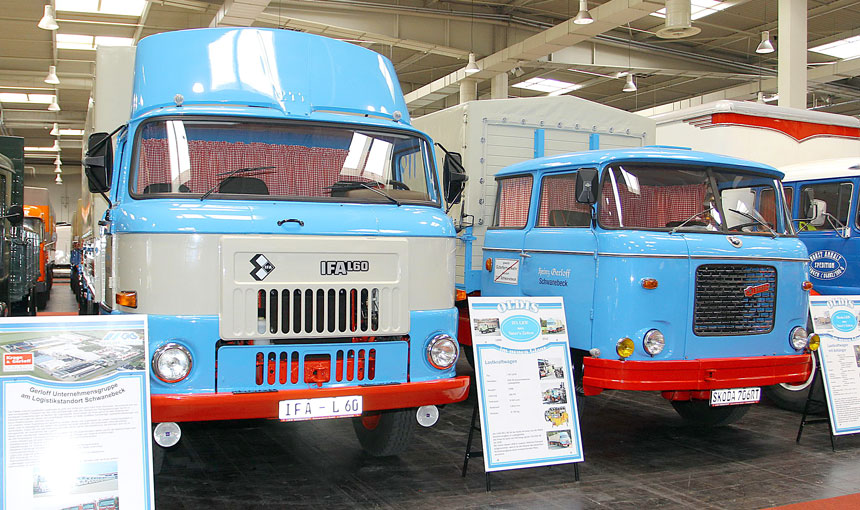
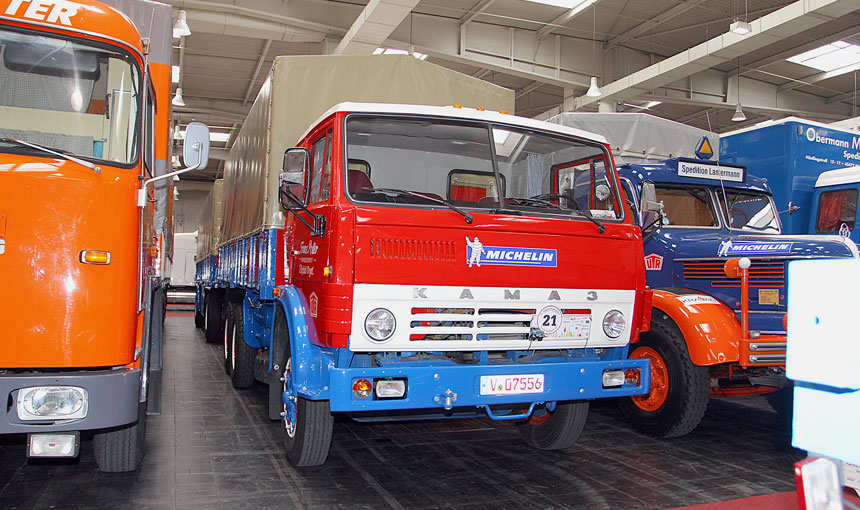
-
Spicer was the vendor of your steering shaft (Mack vendor code 2104 in the days of the former Mack Trucks and its superior parts system). Your Mack dealer should be easily able to view your steering shaft assembly's breakdown and see the 2104- number for the boot, and then supercede it to the latest number (if it indeed has a part number supercession). From what you're saying, Volvo has superceded it to NLA (No Longer Available). You could ask your Mack dealer for the original Spicer boot number, and then call Spicer at 1-800-621-8084 and inquire about the difference between that number and the 25160249, i.e. inner diameter at the ends where it mounts, working length expanded and compressed.
-
. . . .
-
Kenworth Offers Several New Options for T680 and T880
kscarbel2 replied to kscarbel2's topic in Trucking News
Kenworth T680 and T880 Add Cummins Westport ISL G Near Zero Emissions Natural Gas Engine Kenworth Truck Company Press Release / October 1, 2016 Kenworth will offer the Cummins Westport ISL G Near Zero NOx emissions natural gas engine as an option in its model T680 and T880 trucks. Emissions from the ISL G Near Zero natural gas engine are 90 percent lower than the current NOx limit of 0.2 gram per brake horsepower-hour, and meet the 2017 EPA greenhouse gas emission reduction requirements. The new engine achieves this reduction through the introduction of advanced engine calibration, a unique maintenance-free, three-way catalyst after-treatment system, and a closed crankcase ventilation system. “The Kenworth T680 and T880 equipped with the ISL G Near Zero emissions engine is well suited for regional haul, vocational and refuse fleets focused the reduced environmental impact of natural gas use and reducing their operating costs,” said Jason Skoog, Kenworth assistant general manager for sales and marketing. The 8.9-liter Cummins Westport ISL G Near Zero comes with ratings up to 320 hp and 1,000 lb-ft of torque. The engine can operate on 100 percent natural gas, which can be carried on the vehicle in either compressed natural gas (CNG) or liquefied natural gas (LNG) form. The new ISL G Near Zero is also compatible with renewable natural gas (RNG) which allows for even further reductions in GHG emissions. The new engine will become available in the Kenworth T680 and T880 in early 2017. .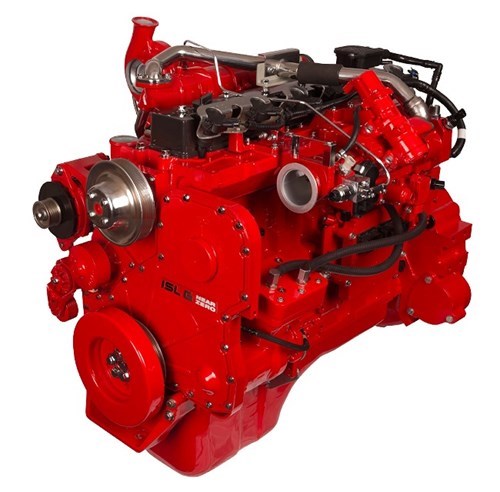
-
Fleet Owner / October 10, 2016 New highway bill calls for 20 FMCSA rulemakings; here's what coming A high-ranking official with the Federal Motor Carrier Safety Administration opened his presentation here by assuring fleet executives that “we don’t just make things up” and that the “vast majority” of the agency’s rulemakings are mandated by Congress. Indeed, the FAST Act—the five-year highway bill enacted last December—calls for 20 rulemakings, explained Jack Van Steenburg, chief safety officer and assistant administrator for FMCSA. And the federal rulemaking process—notices of proposed rules, cost-benefit calculations, public comment periods, extensive reviews—are there to protect the public from “over-zealous” regulation. In short, “there shouldn’t be any surprise” when a new rule is developed, he emphasized. Van Steenburg led off the 2016 ATA Management Conference and Exhibition session, “More regulations: What you should expect next, when and why,” before yielding the floor to trucking industry representatives who followed up with explanations of new regulations coming from National Highway Traffic Safety Administration, the Environmental Protection Agency, the Occupational Safety and Health Administration, and the Pipeline and the Hazardous Materials Safety Administration. And the number and scope of the new and pending rules might prompt truckers to wonder just how successful those protections from over-zealous federal regulators truly are, and instead to side with ATA President and CEO Chris Spear who earlier in the annual meeting faulted regulators who “issue mandates as if they were mere parking tickets.” Regardless, here’s a rundown of what’s on tap from Washington: Speed limiters for trucks While the joint rulemaking from FMCSA and NHTSA proposes three speed alternatives, “there are other considerations out there,” Van Steenburg said. “This is not a done deal folks.” FMCSA expects a lot comment on the rule, and acknowledges the speed differentials between commercial vehicles and passenger cars will get much of the attention. “Twenty-two percent of the large-truck drivers that are killed in crashes are speeding,” he said. “We really need to reduce that.” The rule is currently open for public comment, with both ATA and the Owner-Operator Independent Drivers Assn. asking for extensions. Electronic logging devices “This is a big, big rule,” Van Steenburg said, before explaining the December 2017 deadline. He also discussed the self-certification process, and suggested that while many of the biggest names in e-log services have to put themselves on the list of certified providers, he expects them to be on it soon. And many will be able to do with only software changes to current systems. FMCSA also will be taking down some of the test scenarios included in the self-certification process because those test pertain to Web Services—and the agency is not yet ready with its part of the system. FMCSA will also clarify how a provider can still self-certify, even before Web Services is up and running. “We will have Web Services and e-RODS in probably six to seven months,” he said. FMCSA will also host two additional webinars to explain the transition. Drug and alcohol clearinghouse The rule is currently under review at the White House Office of Management and Budget (OMB), and “it’s going to be a winner for the industry” by allowing carriers to access a single federal database to find out if a truck driver has a previous drug or alcohol incident on his or her record. “It really prevents job hopping,” he said. “It’s a tool for all of us.” Entry-level driver training Also at OMB, the negotiated rulemaking to set federal driver training standards will have a three-year phase-in period, and Van Steenburg expects it to be out by the end of the year. Windshield-mounted safety technology “All of that equipment we’ve exempted over the years is in the rule and is permanent now,” Van Steenburg said, adding that while the rule specifies a number of technologies that are approved, “there are a couple that are gray areas.” He named “fleet-related incident management systems” and “performance and behavior management systems” as items specified by Congress, but not exactly specific as to what the terms mean. “Obviously, we’re going to give a lot of discretion to the carriers to install that,” he said, then noted that the real question is whether or not the devices need to be installed on the windshield. Stability mandate The rule, published in 2015, requires electronic stability control (ESC) systems on large trucks and buses beginning in 2017. The first phase begins Aug. 1, explained Fred Andersky, director of government and industry affairs for Bendix Commercial Vehicle Systems. Six-by-four tractors built after Aug. 1 will be required to have full stability control, as opposed to simple roll stability systems. Class 8 motorcoaches will be required to have the technology in June 2018, and remaining tractors and Class 7 trucks will come under the mandate in August 2019. Single unit trucks will not be required to have full stability systems, he added. Collision mitigation Safety groups petitioned NHTSA petitioned for a rulemaking on collision mitigation technology last year, and the National Transportation Safety Board has also called for the technology to be made standard on commercial vehicles. Dubbed forward collision avoidance and mitigation braking systems or “F-CAM” systems, such technology should be able to brake on stationary vehicles, rapidly reduce closing speed, have a low rate of false alerts and interventions, and meet or exceed the European mandate for the equipment. Andersky pointed out that NHTSA recently completed on real-world study on collision mitigation systems, finding that the technology was effective in reducing rear-end collisions, but that there was high level of false alerts on stationary objects, such as overhead signs or guard rails. The agency will conduct an additional study using newer technologies designed specifically to better handle braking on stationary objects. “NHTSA may come out with a Notice of Proposed Rulemaking in 2017, but I think it’s more likely to be 2018,” Andersky said. “Depending on how the election goes, it could all change after November. There could be a big difference in terms of rulemaking as we move forward.” Autonomous vehicles Noting that “rulemakings take time,” Andersky explained the DOT’s recently announced policy on autonomous vehicles sets the government up to develop “flexible and nimble” guidance. “They know that the technology is going to keep evolving,” he said. “A rulemaking is too slow to keep up. Is it a hard and fast rule? No. Does it have the teeth of a regulation? NHTSA can, if it’s an imminent hazard, have a recall whether or not there is a FMVSS being violated. That’s going to be an interesting one to see how that plays out.” Andersky noted that it won’t be just the companies that manufacture the technology that will fall under the guidance. Others using Level 2 autonomous systems—such as Peloton, which uses such systems in a platooning system, and OTTO, which is developing self-driving trucks—will be regulated as well. “In a nutshell, really, right now this has more impact on suppliers,” Andersky said. “For fleets, this means being able to take a look and evaluate the technology. Some of these systems can be retrofittable. In which case, test it in your new trucks first and make sure it’s going to work and can manage the situation, because if you put this technology in all of your trucks and NHTSA decides to have a recall, you could have some issues.” Fuel efficiency standards Following up on the “win-win” Phase 1 truck fuel efficiency/greenhouse gas emissions standards, the Phase2 goals are specific and challenging but the rule is flexible enough that truck and engine makers will be able to meet them without disruption, explained Sean Waters, director of compliance and regulatory affairs for Daimler Trucks North America. “We picked low-hanging fruit first, the quick, easy wins for our customers,” Waters said, referring to the 2010 standards. “This is a much tougher rule. We’ll have to spend hundreds of millions of dollars in R&D to hit the targets, but we’re confident we can hit those targets in a way that will still provide benefits for our customers. If the technology saves the customer money at the end of the day, then they’re going to buy it and we’ll see environmental benefits as well as fuel economy benefits.” He pointed out that “a whole suite of technologies” will be available, and customers will decide which best fit their operations, rather than being forced to adopt systems that don’t match their needs. Why? Waters also briefly discussed the possibility of doing away with regulations that no longer serve their original purpose. He cited specifically the ongoing attempt to allow camera systems to replace side mirrors, technology designed to improve both safety and truck aerodynamics. “It’s very hard to get the government to get rid of regulations,” he said. “Are people going to buy [the cameras] tomorrow or a week from tomorrow? No. But the technology that exists today can provide a real safety benefit that we’re not allowed to put on our trucks because of a FMVSS requirement.” He also questioned the need for marker lights on the top of trucks—and added that research has yet to find what the original justification for the 1930s rule was. So Waters is taking a “comprehensive look” at the truck regulations to determine which make sense and which no longer do. He hopes to develop a petition that makes the case for eliminating the unnecessary rules, and asked those in attendance to participate “to see if we can’t clean up some of the regulations and get them to align with our modern technology.” Beyond regulations “It’s very easy to regulate the heavy-duty trucking industry,” Waters said. “We’re easy to find. NHTSA and EPA know how to regulate us. We’re not afraid to do our part and improve the truck. But there’s more to be done.” Waters then posted a slide showing that more than 2.2 billion gallons of fuel are projected to be saved annually by GHG Phase 2—but more than 3 billion gallons are wasted due to congestion. “We obviously have to have increased spending on infrastructure, and now is the time,” he concluded. “For all of the great new technology we put on our trucks, it doesn’t get any better fuel economy if it’s just sitting in traffic, stuck. This is an area we can, should, and must improve.”
-
Fleet Owner / October 10, 2016 Within the next decade every truck will be “a connected truck,” and from there “it’s a short next step to integrating trucks into logistics systems,” according to Troy Clarke, president and CEO of Navistar. “Asset utilization is a big deal,” said Clarke, who comes to that perspective from years of running manufacturing operations. “You have to use your assets every minute possible to generate revenue in a plant, and I look at trucks the same way.” Remote diagnostics systems like Navistar’s OnCommand are one way to leverage connected truck capabilities to maximize uptime, Clarke told Fleet Owner during the introduction of the new International LT on-highway tractor. “Connecting our customers with freight” would be the next step “in providing solutions to help improve utilization,” he predicted. As greenhouse gas restrictions phase in over the next 10 years, truck prices will inevitably go up as manufacturers adopt technologies to cut those emissions by boosting fuel efficiency, according to Clarke. Fleets looking to compensate for higher equipment prices “will need more uptime, better utilization,” he said, pointing out at “every one point increase in uptime is worth more than 1 MPG” in carrier profitability. Such a focus on truck utilization represents “a tremendous alignment of interests for fleets, for shippers, for everyone,” Clarke said. More efficient truck use not only improves fleet businesses, but brings better distribution networks to shippers, offsets congestion pressures by decreasing the number of trucks on the road, and ultimately contributes to greenhouse gas control efforts. For Clarke, “the connected truck is that platform, the access point for all the data” needed to achieve such asset utilization gains. Navistar’s newest investor, Volkswagen Truck & Bus shares the same vision for connected trucks as integrated elements in an optimized supply chain. It recently launched RIO, a cloud-based database connecting truck data with a variety of infrastructure entities that it has developed with partner Telogis. VW’s MAN Truck group is the first to offer RIO, but the system is brand agnostic and open to all truck users, according to the company. The goal is to create “an OS for logistics,” said Andres Neilsen, VW Truck & Bus Chief Technical Officer. For example, an initial application for RIO is helping European truckers find open parking spaces, but also capturing information on trailer loads could easily lead to brokering any available space, he speculations. “We’re not that far yet, but we want to be ready if and when it’s time.” Neilsen told Fleet Owner. “The concept is to create an open architecture that allows other applications to draw on that database.”
-
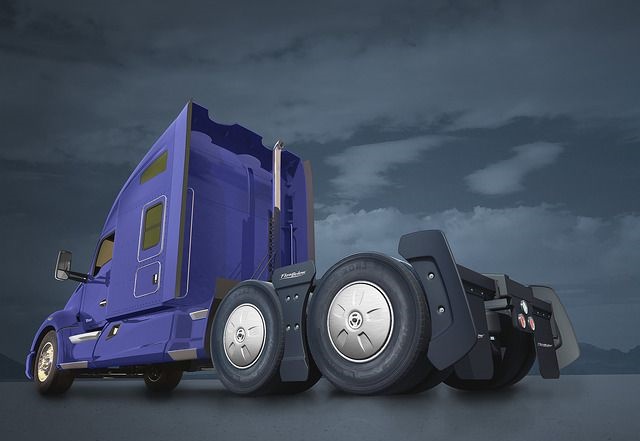
Heavy Duty Trucking / October 10, 2016 Kenworth is offering a few new options for its heavy-duty trucks, including a new natural gas engine and bunk heater system fo the T680 and T880 and a FlowBelow AeroKit for the T680. Kenworth will offer the Cummins Westport ISL G Near Zero NOx emissions natural gas engine on its T680 and T880 model. The engine produces emissions that are 90% lower than the current NOx limit of 0.2 gram per brake horsepower-hour and it meets the 2017 EPA greenhouse gas emission reduction requirements. The 8.9-liter Cummins Westport ISL G Near Zero comes with ratings up to 320 horsepower and 1,000 lb-ft. of torque. The engine can operate on 100% natural gas, which can be carried on the vehicle in either compressed natural gas or liquefied natural gas form. The ISL G Near Zero is also compatible with renewable natural gas, which allows for even further reductions in GHG emissions. “The Kenworth T680 and T880 equipped with the ISL G Near Zero emissions engine is well suited for regional haul, vocational and refuse fleets focused on the reduced environmental impact of natural gas use and reducing their operating costs,” said Jason Skoog, Kenworth assistant general manager for sales and marketing. Kenworth is also adding cab temperature monitoring for the T680 and T880 with its Auto Start and Stop Capability and an optional Espar Airtronic D4 fuel-fired bunk heater. The Espar bunk heater produces nearly double the BTUs of Espar’s previous generation heater. “For operators who run in cold temperatures, or shut down for a 34-hour reset, our new offerings give a one-two punch in vehicle performance and driver comfort,” said Kevin Baney, Kenworth chief engineer. “We’ve built our power management system into what we feel is the most comprehensive system in the market. And, for engine-off, constant heat in the sleeper, the new Espar Airtronic D4 heater has a BTU rating up to 13,650, and is available for the Kenworth T680 and T880 specified with either the 76-inch or 52-inch sleepers.” The Engine Auto Start and Stop system monitors the starting batteries and batteries used to power hotel loads. When the batteries need to be recharged, the system starts the engine to begin battery charging. The system also monitors oil temperature, starting the engine when the temperature falls below a pre-determined level. Additionally, Kenworth and FlowBelow have partnered to develop the FlowBelow Tractor AeroKit as an option on the T680. The kit consists of an AeroKit fairing fitted to each side of the truck between the Kenworth T680’s tandem axles along with a fairing directly behind the rear drive axle. The fairings are constructed of a durable and flexible thermoplastic polyolefin. The system also uses quick-release aerodynamic wheel covers that are designed to reduce turbulence within the wheel itself. “The tandem axle fairing and wheel cover combination enhances the T680’s superior aerodynamics by keeping airflow moving even more efficiently around the end of the tractor and onto the trailer, especially when the trailer is outfitted with its own side fairings, and reduces drag and turbulence around the tractor’s rear wheels,” said Kenworth's Baney. “This option offers our T680 customers an additional option to help optimize fuel economy.” .
-
Ford Shuts Mustang Factory for One Week After Sales Plunge 32% Bloomberg / October 10, 2016 Ford Motor Co. is shutting its Mustang factory in Michigan for a week after the iconic sports car suffered a 32 percent sales decline in the U.S. last month and was outsold by the Chevrolet Camaro for the first time in almost two years. The second-largest U.S. automaker idled the factory in Flat Rock, south of Detroit, to match production capacity with demand, Kelli Felker, a company spokeswoman, said in an e-mailed statement. The plant, which employs 3,702 workers and makes Mustangs and Lincoln Continentals, will resume production Oct. 17, Felker said. Under the automaker’s labor agreement, workers will be paid during the shutdown. The idling may be a sign of the growing weakness of the U.S. auto market, which had been a leading driver of economic growth. Automakers’ monthly sales have been coming up short -- though they beat expectations in September -- and many analysts are now predicting the U.S. auto industry won’t match last year’s record of 17.5 million cars and light trucks. Mustang, which is among Ford’s most storied nameplates, received a racy redesign two years ago on the car’s 50th anniversary. That new look helped propel the Mustang past the Camaro in 2015 to regain its title as the top-selling sports car in America, which it had held for decades before General Motors Co. redesigned the Camaro in 2010. Camaro Gains Camaro overtook Mustang last month for the first time since October 2014 on the strength of incentives that more than tripled last month to $3,409 per car, compared with an average discount of $2,602 on the Ford pony car, according to data from researcher J.D. Power obtained by Bloomberg. “In terms of incentives, we’re always going to be disciplined, but we’ll be competitive as well,” Erich Merkle, Ford’s sales analyst, said in an interview. Ford has sold 87,258 Mustangs in the U.S. this year, down 9.3 percent, while GM had Camaro sales of 54,535, off 11 percent, according to researcher Autodata Corp. Ford Chief Executive Officer Mark Fields has said the U.S. auto market has plateaued and that showroom sales are weakening. Going Global Ford began selling Mustang globally last year, and the factory produces versions with the steering wheel on both sides of the dashboard for right-drive and left-drive markets, Merkle said. Production of the Continental is still increasing at the Flat Rock factory, Felker said. The automaker sold just 775 copies of Lincoln’s new flagship sedan last month, its first sales since the automaker discontinued the car in 2002. Until February, Ford also built the Fusion family sedan in Flat Rock. But as sales for that model flagged, the automaker consolidated production of the Fusion at it primary plant in Hermosillo, Mexico, Felker said. Fusion sales have fallen 9.1 percent this year to 210,462 models. With a slowing market for cars, Camaro’s inventory rose to a 139-day supply at the end of August, said Jim Cain, a GM spokesman. The incentives, coming at the end of the 2016 model year, helped lower Camaro supply to 120 days, still twice what is consider an optimum inventory. Mustang supply rose to 89 days at the end of September from 71 days a month earlier. The deals on the Camaro will cool off this month as GM rolls out the 2017 model, Cain said. “We’ve been able to achieve some pretty significant increases in retail market share and transaction prices while keeping our incentives pretty disciplined for the calendar year,” Cain said.
-
Reuters / October 10, 2016 Fiat Chrysler Automobiles (FCA) and engine manufacturer Cummins are fighting over the $200 million estimated cost for a recall of 130,000 Ram pickup trucks equipped with Cummins diesel engines that could exceed U.S. pollution limits. The U.S. Environmental Protection Agency (EPA) and California Air Resources Board (CARB) have demanded a recall of 2013 through 2015 model year Ram 2500 pickup trucks with 6.7L Cummins diesel engines because moisture can lead to the deactivation of the selective catalyst reduction system, causing excess nitrogen oxide emissions, Cummins said in court documents that have not been previously reported. A lawyer for Fiat Chrysler, John Berg, said at a Sept. 23 court hearing in Detroit the recall could cost $200 million, according to a transcript. The auto maker is willing to cooperate in the recall, Berg said. "What we are not willing to do is bear the cost of it," he said. Fiat Chrysler has sued Cummins to recover the $60 million it has spent to date repairing 42,000 trucks at its own expense, he said. The legal dispute between Fiat Chrysler and Cummins began in August when Fiat Chrysler sued the engine maker in U.S. District Court in Detroit for breach of contract, saying the Indiana engine company failed to provide working parts and would not indemnify it. Cummins countersued, saying Fiat Chrysler would not cooperate in the recall "for one reason – money" and said the automaker was "holding both Cummins and its own customers hostage." When the emissions system fails, the warning light goes on and if the vehicle isn't fixed soon the vehicles go into "limp mode" that allow them to only be driven very slowly, Berg said. Cummins spokesman Jon Mills said Monday the two companies have a dispute regarding the financial responsibility for the recall, but "are working collaboratively to resolve an issue with a third party after treatment system purchased by (Fiat Chrysler) as quickly as possible on behalf of our customers." Fiat Chrysler spokesman Mike Palese said Monday the automaker "remains committed to working with Cummins to ensure that any necessary repairs are carried out effectively and efficiently." Cummins wants the recall to start next month in California and eight other states, and plans to complete the action early next year, according to court documents. Cummins said in a court filing the recall will reduce the fuel economy of vehicles by a "negligible" amount - from 14.6 miles per gallon to 14.4 miles per gallon.
-
Donald Trump and the declining prestige of US democracy Gideon Rachman, The Financial Times / October 9, 2016 The presidential debates are a poor advert for the western system How did it come to this? The presidential election debates should represent US democracy at its finest. Instead, the second Clinton-Trump debate centred around sordid allegations of sexual assault, threats, lies and mutual contempt. At one stage, Mr Trump boasted that Mrs Clinton would “be in jail” if he were in charge of the legal system. Political rivals to the president get imprisoned in Robert Mugabe’s Zimbabwe. America is meant to live by different standards. Sunday night’s spectacle is not just embarrassing for the US. America is widely regarded as the “leader of the free world.” So the rise of Mr Trump threatens to damage the prestige of democracy everywhere. The damage is not restricted to the world of ideas. Authoritarianism and anti-Americanism are on the march, led by increasingly confident governments in Beijing and Moscow. A strong and impressive US should be central to rallying the response of the world’s democracies. Instead, we had the depressing and degrading spectacle of the second Trump-Clinton debate. Even in their current sorry state, the presidential debates have shown some of the drama and energy that distinguish US politics. Millions of people around the world watched and discussed the confrontation. The next session of China’s National People’s Congress will not attract a similar audience. It is also true that neither Xi Jinping of China nor Vladimir Putin of Russia would ever be subjected to the kind of brutal interrogation to which American politicians are subjected on a routine basis. Instead, last week, the Russian Duma sent Mr Putin 450 roses to mark his birthday. Yet, even so, the second presidential election debate was a desperately poor advertisement for US democracy. In some respects, Mr Trump has actually introduced some of the malign features of Russian and Chinese politics into the US. One of the strengths of the western democratic system is that a free press and open debate are meant to expose falsehoods. Yet Mr Trump sprays out lies like a skunk trying to repel its enemies. His method seems to be to create such confusion that the truth simply gets buried amid a mass of falsehoods. This is characteristic of the current Russian propaganda system described in an aptly titled book by Peter Pomerantsev: Nothing is True and Everything Is Possible. The Chinese challenge to America’s democratic ideology is more subtle and perhaps more dangerous because China, unlike Russia, can make a good claim to be a well-governed country. China is the largest economy in the world measured by purchasing power parity. The Chinese argue that their system selects leaders on merit, after decades of rigorous assessment. President Xi only made it to the pinnacle of state power after many years of work in the provinces and in different government jobs. He has been judged by his peers, not the voters, to be qualified to run the country. The Chinese do not yet argue that their system should be applied around the world. But they do increasingly condemn — as agents of America, seeking to “sow chaos” — those who make the case for a more liberal political system within the Sinic world, for example in Hong Kong or Taiwan. Beleaguered liberals in Russia or China need a well-functioning US democracy as a support and an inspiration. Instead, they see a system that produces Mr Trump, a man whose political style owes more to President Putin than to President Obama. In Beijing recently, I was told that many Chinese officials quite like the idea of Mr Trump as US president “because he makes America look so bad”. By contrast, US allies around the world would be dismayed to see the Oval Office occupied by an erratic “America First” narcissist like Mr Trump. Of course US politics has thrown up villains and melodrama before. The first great US political scandal that I followed as a child was Watergate — which also featured a “bad guy” making scandalous remarks on a secret recording. The Watergate tapes introduced the American public to the phrase “expletive deleted”. Many Americans were scandalised by the profanity and cynicism of Richard Nixon, their president. But the way that the US system — the courts, the press and the Congress working together — dealt with Nixon was ultimately very impressive. And for all his flaws, no one doubted that Nixon had the experience and the intelligence to be president. By contrast, Mr Trump is manifestly unqualified and has thrown the US system into confusion, leaving the press and the Republican party floundering. The fact that more than 40 per cent of Americans, and a majority of whites, are probably going to vote for him suggests that the US is in deep trouble. We can, by now, all list the ingredients that have helped create this sickness — economic stagnation, inequality, illegal immigration, the rise of social media — but the outcome threatens the prestige of democracy worldwide. If Mrs Clinton makes it to the White House there will be relief across the west and a certain disappointment in Moscow and, perhaps, Beijing. But it will be very hard to erase the memory of this campaign. It has presented an image of a troubled, divided and deluded US to the rest of the world. As a result, it has already dealt a serious blow to the prestige and power of the west.
-
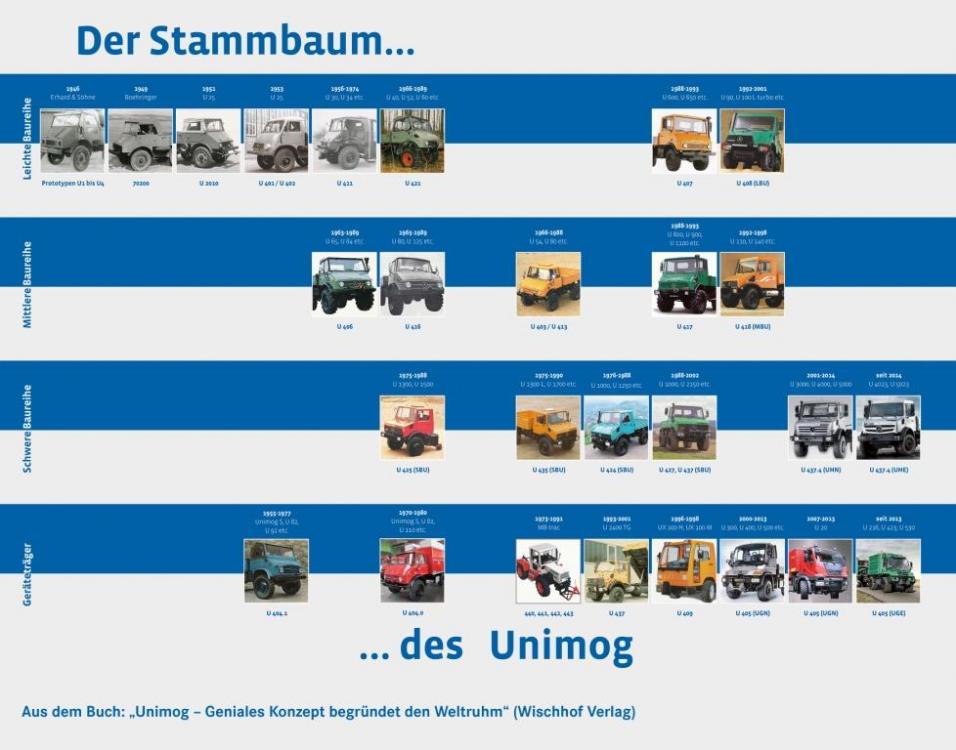
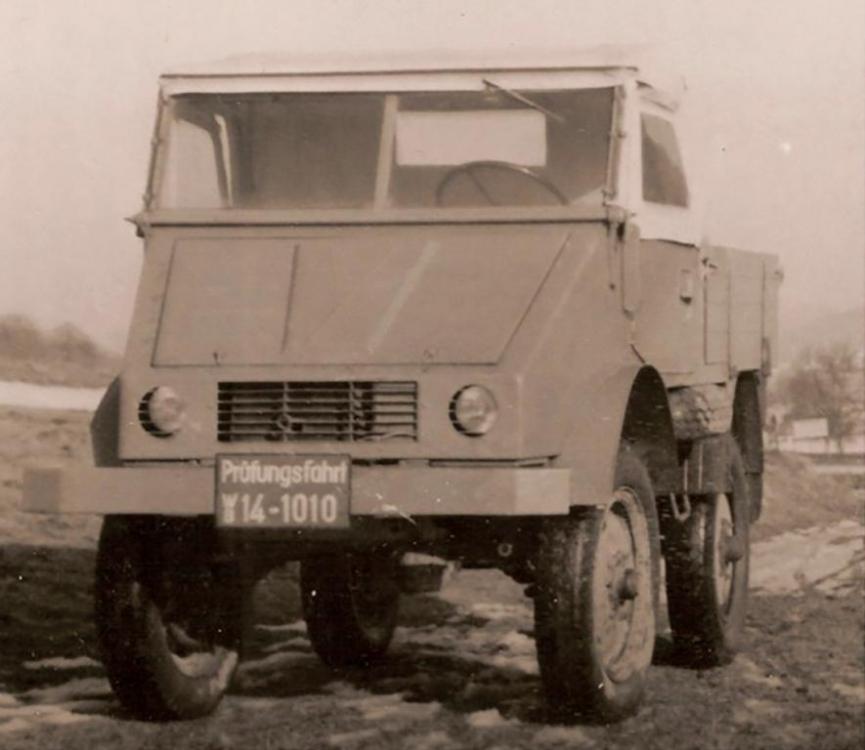
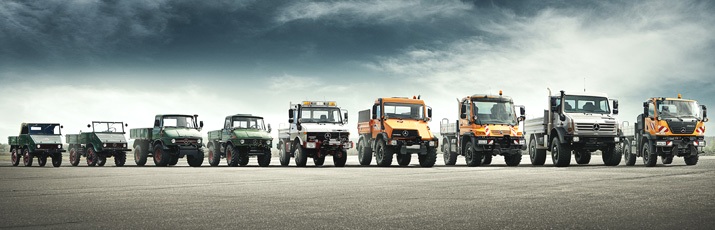
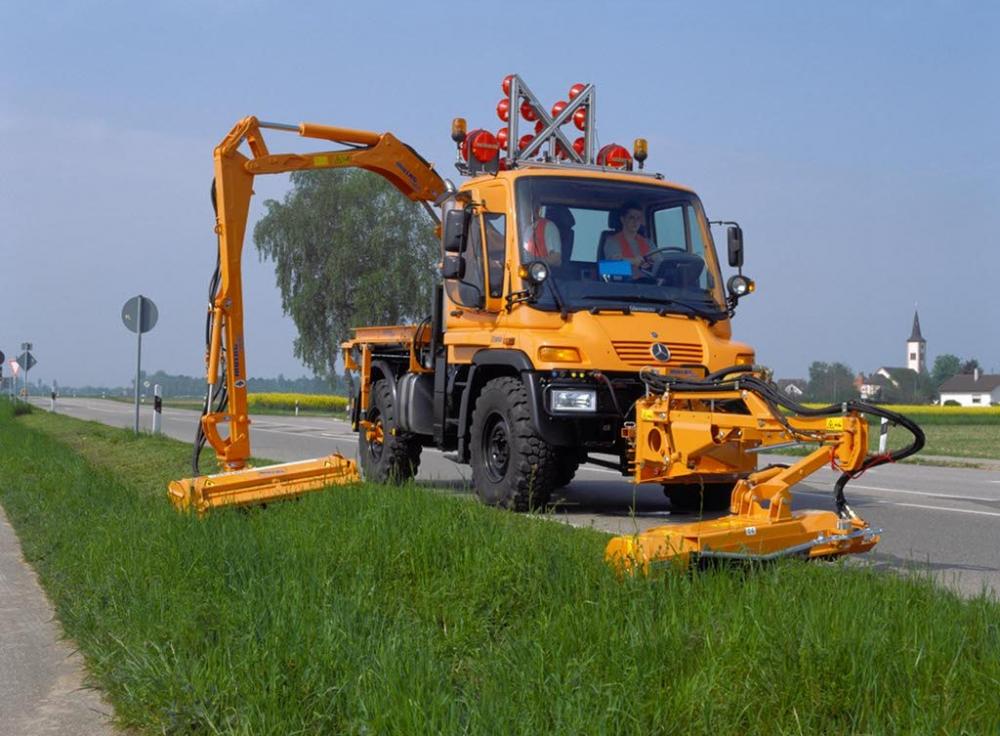
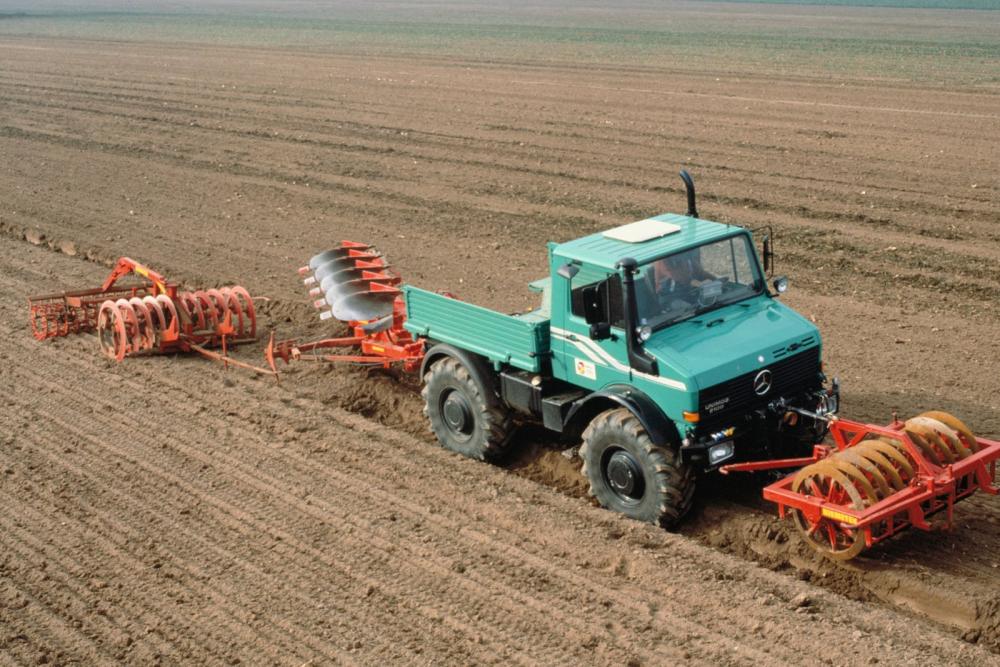
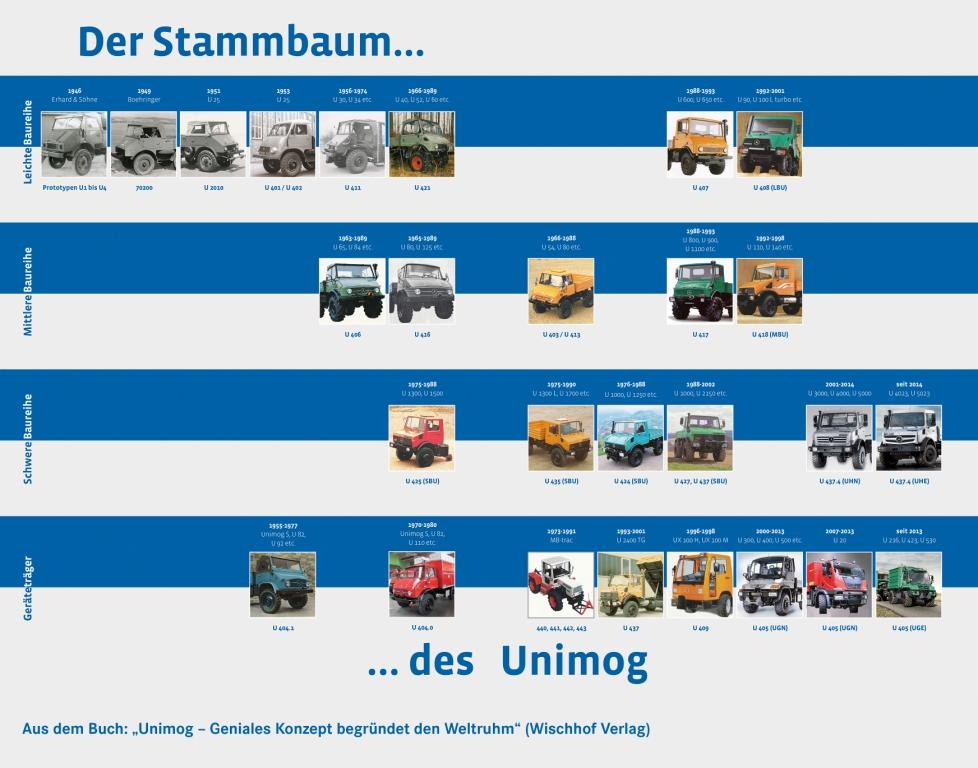
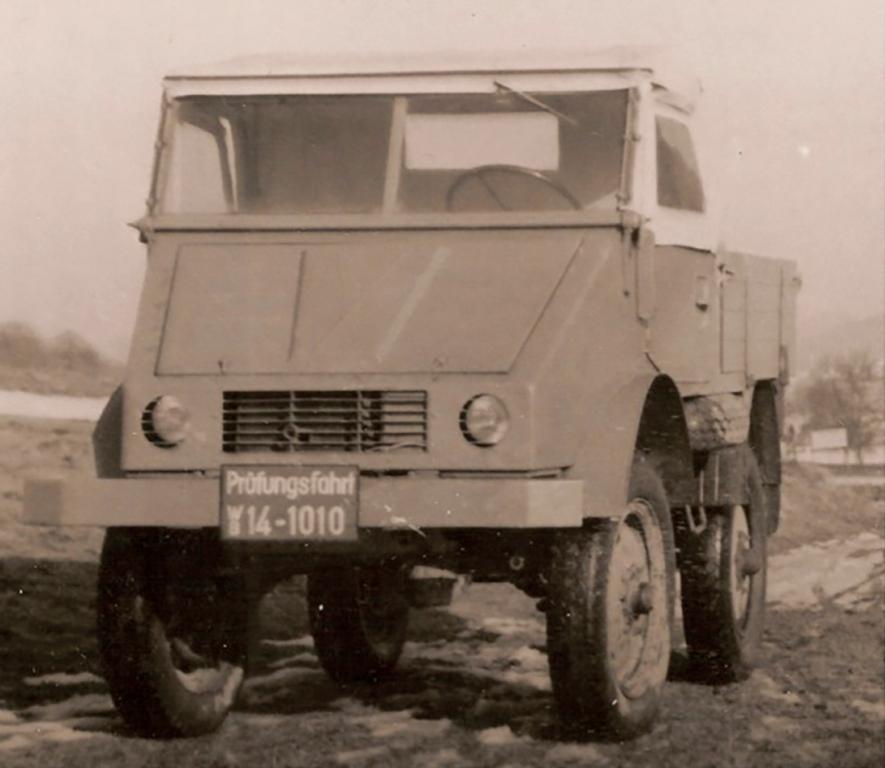
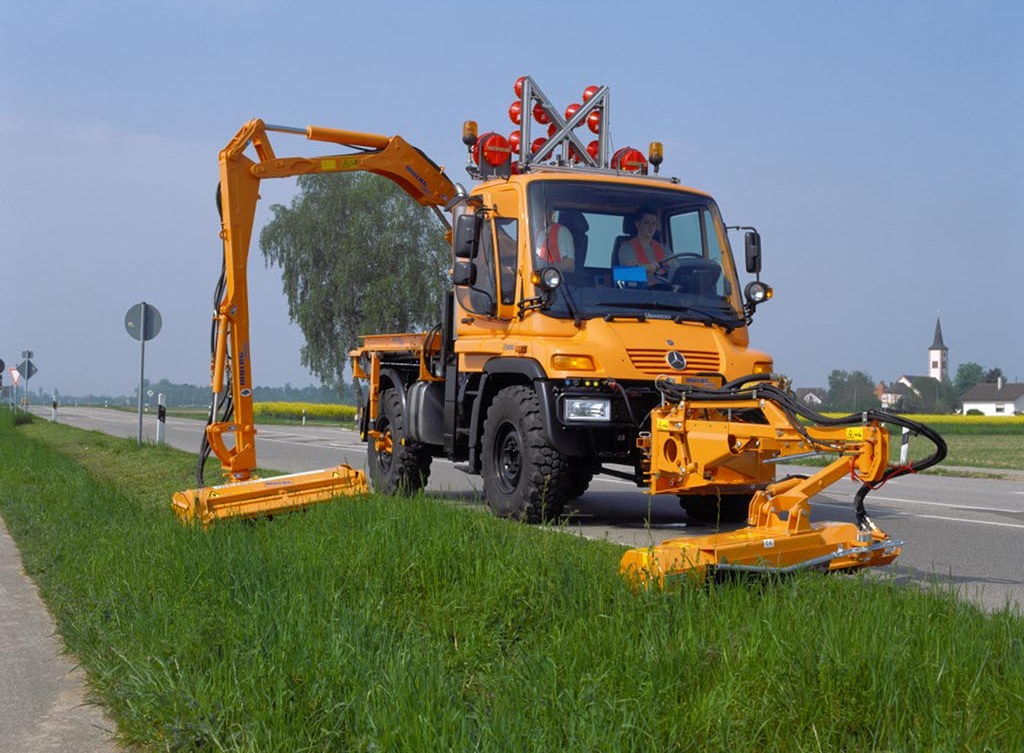
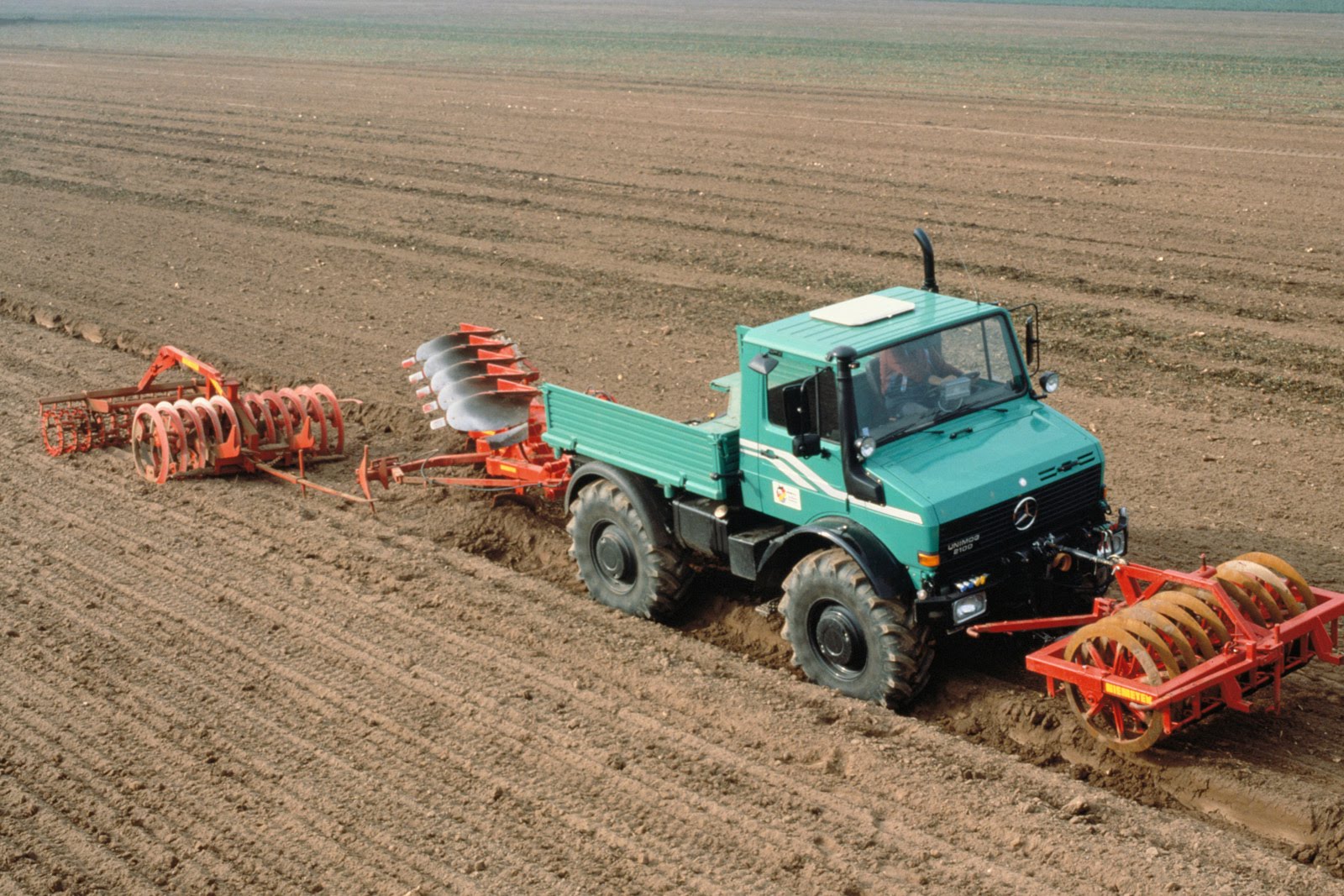
Daimler Press Release / October 7, 2016 First test drive with the Unimog prototype on 9 October 1946 Daimler engineer Albert Friedrich had been working since October 1944 to develop an agricultural motor vehicle which was to open up entirely new perspectives Friedrich's ideas were used 70 years ago by head designer Heinrich Rößler to create a vehicle concept that has also revolutionised the development of agricultural tractors and their implements, municipal technology, and road usage services Market segments today include implement carriers for year-round operation, tractors, off-road implement carriers, the energy sector, forest firefighting and non-civil uses Stuttgart – 70 years ago, on 9 October 1946, the Unimog Prototype 1 completed its first test drive. Chief designer Heinrich Rößler himself was at the wheel, and he tested the prototype, which had no bonnet and was fully laden with wood, on rough forest roads. The prehistory is closely linked to the difficult situation in the post-war period, when Germany was suffering supply shortages. In 1945 and 1946, there was a dire lack of food. It was this situation that gave Albert Friedrich, who for many years was head of aircraft engine development at Daimler-Benz AG, his idea of an agricultural motorised vehicle which should help to increase agricultural productivity. 1945, the decisive year 1945 was an elemental year for the Unimog idea and its realisation. Albert Friedrich returned to Stuttgart-Untertürkheim in June 1945. He wanted to help with the reconstruction of Daimler-Benz AG and at the same time contribute his idea of an agricultural motorised machine. On 4 August of that year, an engineer for Daimler-Benz AG, under the leadership of Friedrich, drew up the first blueprint for such a vehicle. This blueprint was revised, and on 7 September 1945 it was presented to the board of company directors, who, however, showed little interest in the project. Despite this decision, the project blueprint was submitted on 9 October 1945 to the "Production Control Commission" of the responsible American military authority, with an application for permission to manufacture ten test vehicles. This approval was granted on 20 November 1945 by the responsible "Food and Agricultural Group" of the British and American occupied zone. The implementation of the basic plan began in January 1946 By then, Friedrich had increased his contacts with the metalwork company Erhard & Söhne in nearby Schwäbisch Gmünd, so that in December 1945 the "L" department (for Landwirtschaft, i.e. agriculture) was able to make the project reality. Friedrich passed the leadership of the project on to his former subordinate, designer Heinrich Rößler, who took up the post on 2 January 1946. In only a few weeks, a new overall plan was developed, with the engine and gearbox positioned directly to the right of the middle line of the vehicle. This meant that the torque tubes – which protect the drive shafts – could be at right angles to the axles. As a result, only four drive joints were needed for the chassis. This was a brilliant design which, 70 years later, is still used for the Unimog of the highly mobile U 4023/U 5023 series. Between January and March 1946, the definition of the "engine-driven multi-purpose machine" was also finalised: top speed of 50 km/h (a tractor was only half as fast) sprung and damped axles all-wheel drive and differential locks at the front and rear brakes on the front and rear axles frame design similar to cars and trucks two-seater cab with a closed cover and upholstered seats auxiliary load area over the rear axle with 1.0 t load-bearing capacity static weight distribution: 2/3 on the front axle, 1/3 on the rear axle implements attachable on the front, middle, sides and rear power take-off shafts at the front, middle and rear power take-off for implements The story of a truly remarkable vehicle In March 1946, Hans Zabel from Gaggenau, who had been part of the project from the beginning, coined the term Unimog (Universal-Motor-Gerät, i.e. universally applicable motorised machine). By 1954, the "universally applicable motorised machine for agriculture" had become a vehicle that could be equipped with 66 different agricultural appliances. Change and technical progress were constant companions in the course of the Unimog history. To date, there have been thirty different model series and almost 400 000 vehicles sold. No other commercial vehicle in the world can function as a tractor, towing vehicle, truck, fire fighting and exploration vehicle, bus and working machine. .
-
VW-Navistar Deal to Yield New Engine Platform for 2021 Transport Topics / October 3, 2016 The recently announced Volkswagen-Navistar deal will yield a new North American engine platform for 2021, the top executives with both companies said here. At a briefing with U.S. and Canadian trucking media at the IAA Commercial Vehicles Show on Sept. 21, Andreas Renschler, head of Volkswagen Truck & Bus, and Navistar CEO Troy Clarke and Chief Financial Officer Walter Borst shared details of how the partnership came to fruition and how they will proceed once it officially closes. “We are, at the moment, developing new product lines [for the company’s brands] … and can put all the requirements from Navistar, as well, into this development,” Renschler said. VW also controls Euro- pean truck makers MAN SE and Scania Group. “We are so excited to have found a partner … that looks at the future very similar to how we do and can bring technology, scale and get a high degree of alignment on how we look at the future,” Clarke said. There was no visible Navistar presence at Volkswagen’s exhibit space at IAA but at a media event Sept. 20 that showcased VW’s truck family, Renschler and Clarke made an entrance in an International ProStar. At the briefing, Clarke said once the deal closes — by early next year is the current schedule — the companies plan to “review portfolios from A to Z to see how quick we can align them.” Clarke noted that Navistar’s current N13 engine is based on technology from MAN’s 13-liter version that meets Euro6 emission standards. The 2021 date for a new engine platform is significant because of the new Phase 2 federal greenhouse-gas rule. Made final in August, the regulation says trucks and engines manufactured in that year must tighten their emissions of carbon dioxide and other GHGs. Clarke said that VW and Navistar will be shipping engines to each other and looking for “immediate opportunities to save” while looking for “where are we going to be 10 years from today or 15 years from today.” Clarke cited telematics as one area where Navistar’s OnCommand Connect program could likely be enhanced by VW’s RIO system that debuted at IAA. VW said RIO allows all pieces of the supply chain to connect through a single system and offers recommendations for action in real time based on data analysts and other information. Borst, who was wearing a RIO pin on his suit jacket, said that VW’s 16.6% stake is in line with the two other largest shareholders and provides appropriate representation on the board of directors. He said that it could have been cost- prohibitive for Navistar to invest in advanced technologies on its own. Clarke said the five largest shareholders own more than 85% of the Lisle, Illinois-based firm and the 10 largest hold about 93%. Carl Icahn and Mark Rachesky each own more than 16% of Navistar. Feedback from Navistar’s customers has been “very positive,” said Clarke, who also joked that Borst was hugged by a dealer after an emergency meeting, which he had never seen before. Clarke said he initially met with Renschler for dinner about a year ago and was impressed with his deep knowledge of the U.S. truck market. Renschler previously was head of Daimler AG’s commercial vehicles division, including Freightliner and Western Star Trucks in North America. The two continued to meet on occasion to discuss their visions for the future of truck making, and around March, the companies launched serious negotiations about a venture. As Clarke and the new Navistar leadership team have spent several years setting a new direction after the company’s failed emissions strategy at the start of the decade, he said the team had “taken steps to prepare for a partner but at the same time has become a better stand-alone company.” All three executives touted the timing of the deal, saying the current slowdown in truck sales provides them a chance to align the companies for when the North American region regains momentum. Navistar has been the largest purchaser of the Class 8 engines made by Cummins Inc., based on the percentage of engines used. In response to a question during Cummins’ press conference at IAA, CEO Tom Linebarger said the VW deal actually could provide a boost for the independent engine maker. “At first, you might think that it is really bad,” Linebarger said, but the agreement will give Navistar’s customers additional confidence in the company’s turnaround. That will lift its total sales, including those with Cummins engines. “I believe our ability to be agile and be customer partners … has served us for a long time and, I believe, will serve us for a long time in the future,” he said.
-
Kenworth Customers - Gary Merlino Construction / Stoneway Concrete
kscarbel2 replied to kscarbel2's topic in Trucking News
Fleet Owner / October 7, 2016 The construction market remains volatile, notes Ralph LoPriore, director of fleet assets and processes for Stoneway Concrete and its parent company, Gary Merlino Construction. “Wages are stagnant, and the cost of living is up,” he says. “Also, there isn’t a large backlog of jobs, and some projects are delayed waiting for permits and environmental concerns to be addressed.” Business, equipment and industry issues such as more competition, a lack of new workers, the ongoing shortage of drivers, and safety and other regulations drive up costs as well. “It all adds up to an even greater set of fleet management challenges,” LoPriore states. “Profit margins are slim, and we’re being asked to do more and operate more efficiently with less.” Stoneway and Merlino field a combined fleet of 85 transit mixers and 60 dump trucks. Based in Renton, WA, the companies include the Stoneway concrete supply operation, gravel pits, and a concrete recycling division. Gary Merlino Construction specializes in infrastructure work, much of it for the City of Seattle, Sea-Tac Airport, and customers such as Boeing. One of Stoneway’s and Merlino’s biggest issues is driver retention. “We asked ourselves what we could do to augment our specs and use the trucks as a tool to retain drivers,” LoPriore relates. “In some cases, it was as simple as listening to what drivers say is important to them and adding comfort options to help improve morale. “We also took a close look at how we can address operational issues by making more effective spec’ing decisions,” he continues. “One question was how to field a mixer with more payload capacity. Our customers always want more yardage with fewer trucks on the job, so we looked at how many times we sent out one more mixer with a small load.” The answer? A mixer with more capacity and enough power but without a larger engine. The solution? A seven-axle Kenworth T880 mixer chassis with a Paccar MX-11 engine, a pusher axle for weight distribution, and a setback front axle for a tighter turning radius and driver comfort. “That combination provides the necessary horsepower-to-weight ratio and payload capacity,” LoPriore says. “These 12-cu.-yd., 80,000-lb.-GVW mixers can carry 4,000 additional pounds of concrete per load compared to a typical 76,000-lb.-GVW mixer with a 13L engine. Our mixers typically run six days a week, so the T880s can generate about $98,000 more in annual revenue.” LoPriore notes that the newest mixers at Stoneway Concrete are equipped with Allison automatic transmissions for driver comfort and safety, tire pressure monitoring systems to improve fuel economy and lower maintenance costs, and air disc brakes to improve stopping distances. The company is also looking into outfitting its trucks with 360-deg. camera systems to improve safety on job sites. “They may cost $4,000 each,” he states, “but if they prevent one backing accident, they will be worth the investment. “Too often,” LoPriore says, “we were making decisions based on what’s always been done before. We need to ask the right questions to understand our challenges. To remain successful, we need to deal with facts and make decisions that will deliver the best return on investment and a lower cost of operation.” -
VW launches twin-steer 6x2 rigid for beverage industry
kscarbel2 replied to kscarbel2's topic in Trucking News
In a perfect world, the body would be longer, up to the back of the cab adding two more beverage bays. But they were juggling to meet Brazil's strict truck weight regulations.
.jpg.6417af670c0ded1c4f7d7f3f7eeeaab7.jpg)


.jpg.fb78ace962f6046edcc1db143520e0e8.jpg)
.jpg.439573618774e4387dfd9a51b1452822.jpg)
.jpg.97e88f1cf6abb20ac51b5be458f58f8b.jpg)
.jpg.7ae1f43ce00203b65f60f7b3957909f9.jpg)
BMT Forum Logo