


kscarbel2
-
Posts
19,178 -
Joined
-
Days Won
115
Content Type
Profiles
Forums
Gallery
Events
Blogs
BMT Wiki
Collections
Store
Everything posted by kscarbel2
-
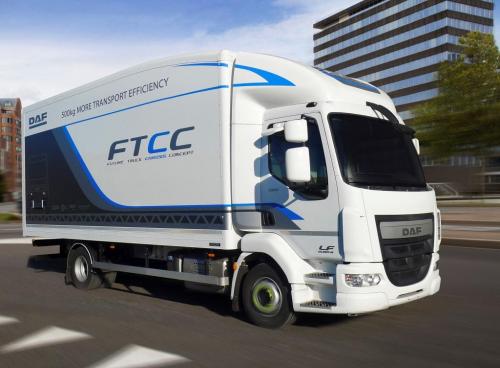
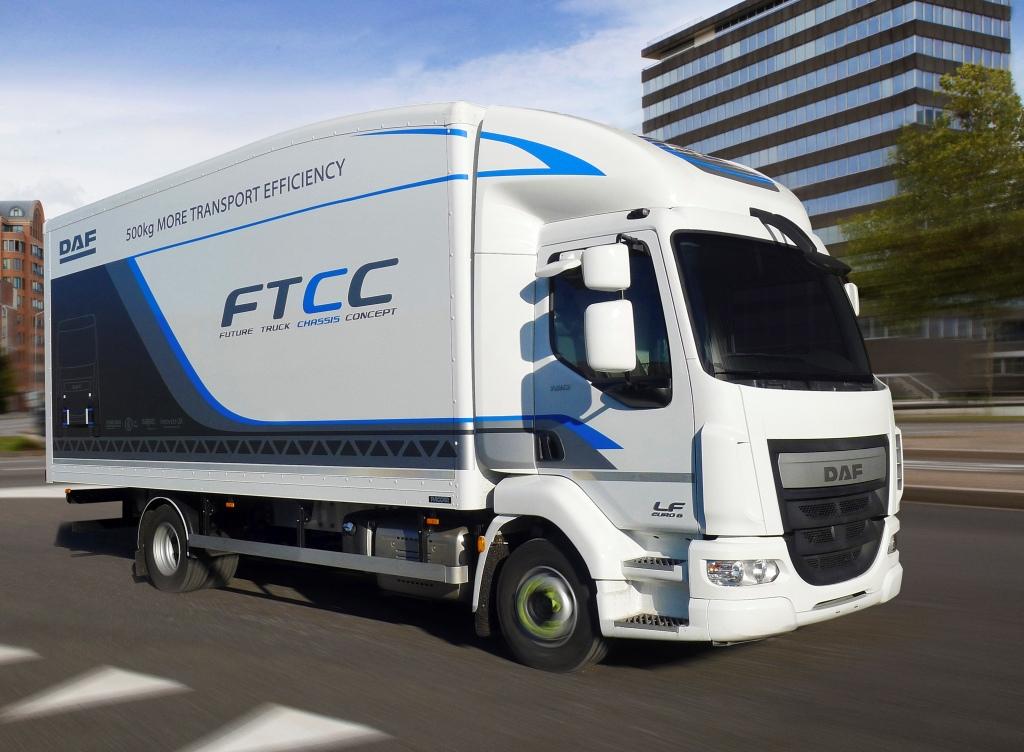
DAF Press Release / June 12, 2015 With a vision to further increasing transport efficiency, DAF has built a prototype distribution truck with a significantly lower kerb weight. Thanks to the application of innovative and patented chassis design innovations in combination with lightweight materials and components, the Future Truck Chassis Concept (FTCC) achieves a remarkable weight saving of no less than 500 kilograms (1,102 lb) on a 12 metric tonne (26,455lb) LF medium truck, which already offers a low kerb weight for highest payload. The FTCC is based on DAF’s popular LF-series and built by Leyland Trucks (http://www.leylandtrucksltd.co.uk/) in close cooperation with both Sapa Profiles UK (http://www.sapagroup.com/en/sapa-profiles-uk-ltd-aluminium-extrusion/) who worked extensively with DAF on the design and provided the aluminium extrusions whilst and CSA Group, who assisted with the validation of the truck by defining and conducting vehicle and rig based testing. The project was co-funded by the British Government’s Innovate UK (https://www.gov.uk/government/organisations/innovate-uk). Aim was to realize an increased payload at a lower fuel consumption, resulting in reduced CO2 emissions. New design concepts The FTCC research project features a number of new design concepts to further enhance transport efficiency. Extensive use is made of aluminium extrusions for an optimal ratio between weight and stiffness. Next to amongst others, side and cross members, parts of the wheel suspension, the floor of the body and even the Front Underrun Protection (FUP)) are made of aluminium. Patented innovations The Front Underrun Protection is mounted on a newly designed and patented front frame module. This module is smartly attached to the side members, as these don’t go to the very front of the vehicle, allowing optimal packaging. Another patented innovation is the body floor structure being integrated in the chassis frame design, by incorporating the body sub frame into the main chassis side members. In addition to the many weight saving measures, the project included a number of other advanced vehicle features such as independent front air suspension with rack and pinion steering, to investigate its benefits in terms of ride quality, steering precision and vehicle packaging improvements. Reduced fuel consumption Leyland Trucks Senior engineer, Rob Lawton, who led the project team, commented: ‘Light weighting is at the heart of our global efforts to reduce fuel consumption and thus emissions. Increasing payload without loss of vehicle integrity is fundamental to that process. Our FTCC project has achieved our objectives: a 30% weight saving focused on the components used in the main truck chassis frame, body under structure, front suspension and steering.’ Innovations for the future The FTCC demonstrates the potential is of innovative weight saving technologies. The truck will be displayed at a variety of international events to demonstrate the technological advances it incorporates. The FTCC is first of all a study model, which won’t be on the market on short notice. However, it shows innovations which might be considered for the future if financially feasible as well. .
-
Prime Mover Magazine / June 14, 2015 Airtec Corporation has announced the release of a new line of digital tyre inflation equipment and digital on-board weighing scales system to the Australian market. The range includes its new Truckie's Tyre Maintenance (TTM) Kits designed to help operators improve tyre pressure management. "The TTM Kit includes 22 DS-1 flow-through caps enabling the operator to inflate the tyre through the sealing cap, reducing labour time by 65 per cent and helping pressure tyre pressure," Airtec said. "Additionally, the kit comes with two types of valve extensions to make the inner dual tyre valve accessible for inflation and a dial gauge pressure tester to get an accurate pressure valve. The other is Airtec's Tyre Management - XTC Digital Tyre Inflator with temperature compensator. "The temperature compensating inflation technology eliminates temperature-pressure errors by measuring the actual tyre air temperature prior to the inflation process and automatically adjusting the final inflation pressure according to temperate differences," the company said. "No guess work and no need to refer to detailed compensation charts." In addition, Airtec also released the new AXL and AXM On-board Digital Truck Scales. Designed to show the vehicle's weight loads at any time, the AXL is a standalone axle load weight indicator suitable for any prime mover and trailer fitted with an air bag suspension system. "The AXM is a complete system that indicates each axle group weight through wireless communication either to a mobile phone app or to an in-cab remote display," added Airtec. Related photographs: http://www.primemovermag.com.au/news/article/airtec-launches-new-digital-product-range
-
Fleet Owner / June 12, 2015 Shell preps for LNG, moves to spur transport market The fall in the price of diesel may have taken the shine off of alternative fuels in U.S. trucking for the time being, but liquefied natural gas (LNG) is already used in a significant and rapidly growing number of highway trucks in China. And the technologies developed there and produced at scale are likely to gain a foothold in the North American market in the near future, Shell representatives explained in global media event at the Southwest Research Institute (SwRI) . Simply, for Shell, an expected doubling in energy demand in the next 50 years poses “an incredible challenge,” and natural gas “is going to be a big part of that story,” says Colin Abraham, president, Shell Lubricants Americas. Of course, Shell has been extracting gas for 50 years and owns processing facilities around the globe. Increasingly, the energy giant is investing in smaller, near-to-market LNG production facilities as well as LNG retail networks. The bottom line for transportation is that there will be good business case for LNG for a long time to come, and Shell plans “to drive adoption, particularly in trucking and shipping,” Abraham said. The advantages to LNG, along with its availability and affordability, are that the liquid form of the gas is energy dense and transportable, and that as methane, it’s the cleanest burning hydrocarbon and therefore will be more environmentally acceptable, explains Scott Hartman, downstream LNG application specialist for Shell. Compared to CNG, which is commonly moved through pipeline networks and requires additives for transport safety, LNG is much more pure. And that means fewer engine deposits. While CNG still makes sense in many applications, LNG is very good fuel for long-haul trucking, Hartman says. The proving ground for LNG trucks is China, where there are more than 330,000 medium- and heavy-duty trucks on the road, according to Shell—and that number is expected to triple in the next five years . That compares to about 23,000 in the U.S. and only 2,000 in Europe. Still, Shell has equipped a “Center of Excellence” in the truck engine testing facilities at SwRI where LNG engines are put through their paces and appropriate lubricant formulations are evaluated. The effort is all the more critical because there are no standards specifically for lubricants used in natural gas engines, so Shell has had to develop its own battery of tests. “Customers like to see the evidence before they make that investment in natural gas,” Hartman said. “We’re starting to realize some real tangible benefits from setting up these tests.” And even though the demand isn’t here yet, the market could get a boost with competition from some new players. “There are Chinese engines on the way which will meet EPA standards in the U.S. market in the next couple of years,” Abraham told Fleet Owner in a follow-up interview. Hartman anticipates these will be 13-liter, high-pressure, direct-injection engines—and, because of the scale of production already in place there, the costs likely will be more affordable. “All the OEMs offer natural gas trucks, but they all use the Cummins Westport engines. What we really would like is a lot more diversity in that space,” Hartman said. “It's business: If you create competition, people are going to have to react.” Of course, trucks need service networks, so the most likely model would be a licensing deal with North American truck makers, they suggest. Indeed, also at the research center was a Chinese-made LNG fuel tank which was undergoing durability testing. And passing. It’s a project with OEM partners that Hartman declined to name. “We want them to understand that we believe in it, we’ve tested it,” he said. “And they’ve given us fair indication that if Shell supports these technologies they would be happier to take those onto their trucks.” “I think we’re looking, potentially, at a 60 percent drop for the cost of the fuel tank,” Abraham added. Additionally, Shell and GE Capital have recently signed a commercial agreement with a view to spurring the trucking industry's adoption of LNG in Canada—a deal that, if successful, would likely expand to the U.S. as well. Under the agreement, GE Capital and Shell will work together to reduce monthly payments for truck fleets that lease natural gas vehicles. Specifically, fleets owners can sign natural gas fueling contracts with Shell and, separately, secure leases for LNG vehicles with GE Capital. The agreement covers equipment that will purchase fuel from Shell's facilities. “It’s about the risk of having no secondary market at this point, and the fleets are looking for someone to cover them for that,” Hartman said. “What it says is how much Shell believes in that market.” Indeed, just this week Abraham had signed deals to supply LNG trucks for two big fleets, he added. And Shell continues to roll out retail locations, with 5 to 10 more stations coming in the next year. “We’re in the market. We’re keeping in front of customers. It’s sort of like a test market, but we’re going to stay with it,” Abraham said. “Even at lower oil prices, there’s still a differential. Depending on the environmental considerations the customer might have, depending on the type of business—and if we can get the price of a new LNG truck down—the economics is there.”
-
Fleet Owner / June 12, 2015 Big-truck manufacturers in the U.S. had their best May since 2006, as medium- and heavy-duty truck sales rose 16.5% to 37,225 units, compared to 33,185 units the previous year, representing the 21st consecutive month of year-over-year sales increases. Class 8 sales continued to drive the overall market – up 24.1% on sales of 21,501 units compared to 17,990 a year ago – with all companies posting gains. Daimler’s Freightliner saw a 36% sales increase, raising its U.S. market share to 38.4 percent. Paccar’s Kenworth jumped 29%, and Peterbilt rose 26.9%. Medium-duty sales were up 7.5% compared to 2014 with 15,724 units delivered in May. All weight classes saw year-over-year increases as well. Canada The sales streak continued in Canada as it saw its ninth consecutive month of year-over-year increases in medium- and heavy-duty trucks. Class 8 sales were up slightly by 1.8%. Daimler’s Freightliner gained 24.9%. International delivering the best results among all competitors in Class 8, jumping 48.8% on volume of 374 units. Class 7 saw the highest surge – 61.4% – among all big truck groups, with all companies posting double-digit gains.
-
Transport Topics / June 12, 2015 Paccar Inc. is recalling more than 100,000 Kenworth model-year 2011-2016 trucks because water may leak into the windshield wiper motor, the National Highway Traffic Safety Administration reported. Wipers may stop working on the “intermittent” setting, reducing drivers’ visibility and increasing the risk of a crash. Water may cause corrosion which, over time, may result in an electrical short, increasing the risk of a fire, NHTSA said. The affected trucks include Kenworth T270, T370, T440, T470, C500, C540, C550, T680, T800, W900, and 963 trucks manufactured between Nov. 1, 2010, and April 7, 2015. Paccar still is developing and testing a remedy and has not yet provided a notification schedule, but owners may contact Kenworth customer service at 425-828-5000 and reference recall No. 15KWF.
-
Ford plans to offer Raptor and FX4 variants of the global Ranger in the Australian market Ford Australia has registered the Ford Ranger Raptor and Ford Ranger FX4 trademarks ahead of the revised Ford Ranger‘s local launch later this year. On June 5, 2015, Ford lodged trademarks for the Ford Ranger Raptor, Ranger Raptor and Ranger FX4. While there has never been a Ranger Raptor, the previous US market Ranger was available with an FX4 package which included all-terrain tires, a Torsen limited-slip rear differential, skid plates, Bilstein shock absorbers and a 31-spline 8.8-inch rear differential.
-
Bloomberg / June 13, 2015 Ford Motor Co. Executive Chairman Bill Ford talks about the automaker's return to the Le Mans race in 2016 with the GT sports car and production of the aluminum-bodied F-150 pickup. Ford, speaking with Matt Miller on Bloomberg Television's "Bloomberg Markets," also talks about business strategy and the outlook for consolidation in the auto industry. Bill Ford on the 2016 Le Mans race: "Make no mistake, we want to win" With Carroll Shelby overseeing the racing program, Ford's GT40 took 1st, 2nd and 3rd place at the 1966 Le Mans race, and took first place in 1967, 1968 and 1969. It was actually "plan B" that won for Ford. After announcing that Ford was getting back into racing in 1962, Henry Ford II's plan A was to buy Ferrari, but in the end Enzo decided not to sell. Video: http://www.bloomberg.com/news/videos/2015-06-12/bill-ford-racing-to-keep-up-with-demand-for-f-150
-
Superliner Hood Welting/Seal
kscarbel2 replied to thomastractorsvc's topic in Exterior, Cab, Accessories and Detailing
Okay, that's a valid model (RWL766LST) and Mack Western-type 5-digit serial number (39600)............a Hayward production Super-Liner 6x4 tractor with an NTC400 and an aluminum frame. There no reason for your Mack dealer to throw you the 2RU139F.............backtrack...........and then offer you the 12AX136F. That's simply not the way Mack parts is (err...was) done. Under the parts look-up system of the former Mack Trucks, the model and serial number would tell you exactly what THAT truck was built with. There was no guessing involved. And if the dealer level parts research data was incomplete, the dealer would call the specifications department of Mack Parts Operations and probably speak with Bill Tober, our parts expert knower-of-all on Hayward production vehicles. Now that all said, you're dealing with the Volvo spare parts distribution system now, so you're lucky to be able to get anything for a truck that age owing to Volvo's thought process on trucks older than 10 years. Either Volvo is supplying the wrong part under what I suspect is the right number (2RU139F), the parts man is younger and lacks experience, or the parts man resents researching older trucks. -
Superliner Hood Welting/Seal
kscarbel2 replied to thomastractorsvc's topic in Exterior, Cab, Accessories and Detailing
What is your model and serial number, as shown on the vehicle identification plate attached to the driver's door? -
North Carolina troopers ordered to catch truckers napping
kscarbel2 replied to kscarbel2's topic in Trucking News
Our government (ie. our employees) is supposed to serve the best interests of the people (a government of the people, by the people, for the people supposedly being our central theme). North Carolina is making a "knee-jerk" decision here, and losing a lot of face in the process. No rocket science here, there is a right way to go about this. Before parking on interstate highway exit ramps and on-ramps, rest areas and at weigh stations (after hours) for the purpose of rest is to be prohibited by North Carolina (IF indeed this change is the overwhelming desire of the people.....was there a referendum?), then firstly........alternative means need to be created that will replace the current means that are to be banned. Alternative means being a convenient roadside facilty free-of-charge where drivers can legally rest (ie. sleep)..........I believe most states call them rest areas. Clearly North Carolina must eradicate the term "rest area" within its boundaries (as the state's new draconian law bans resting there), and create a more applicable name. -
-
-
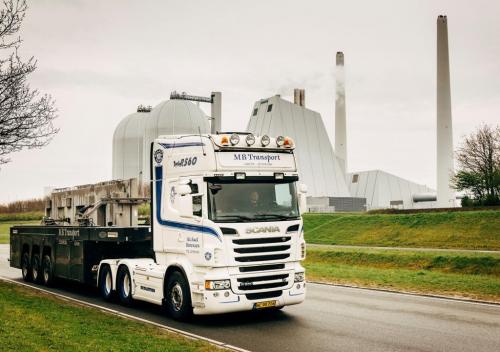
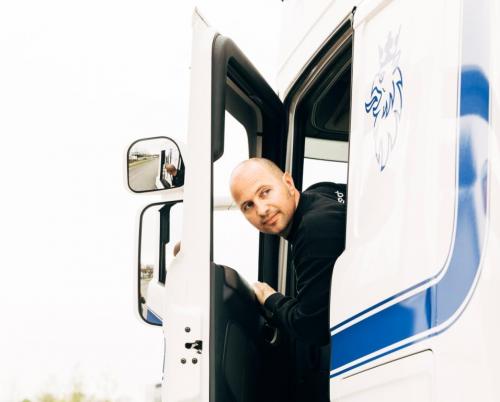
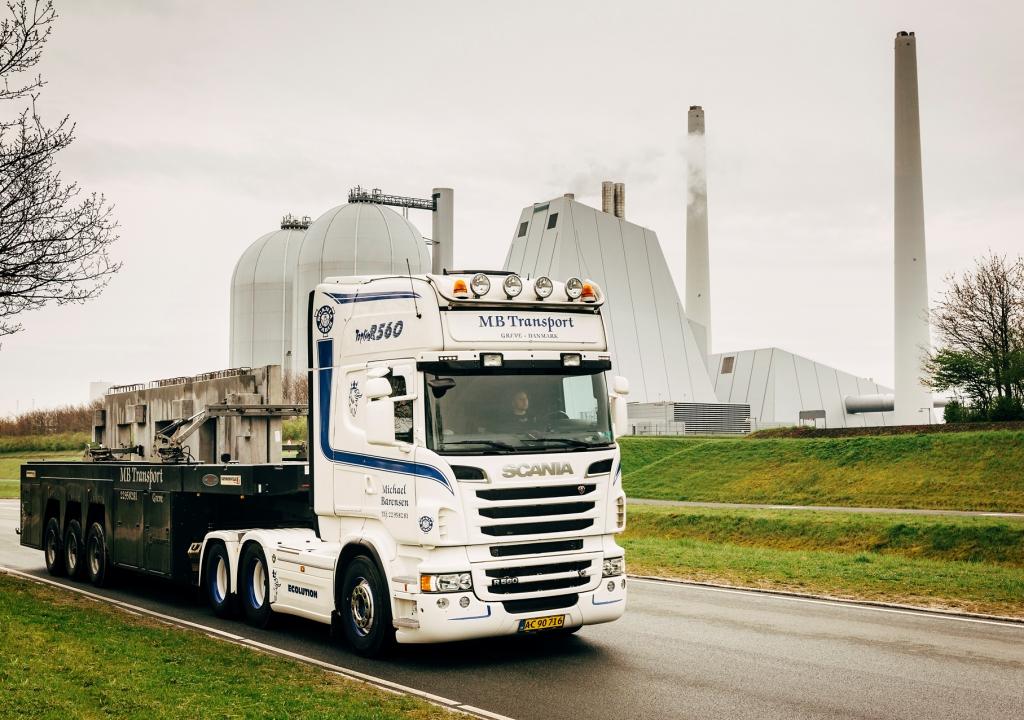
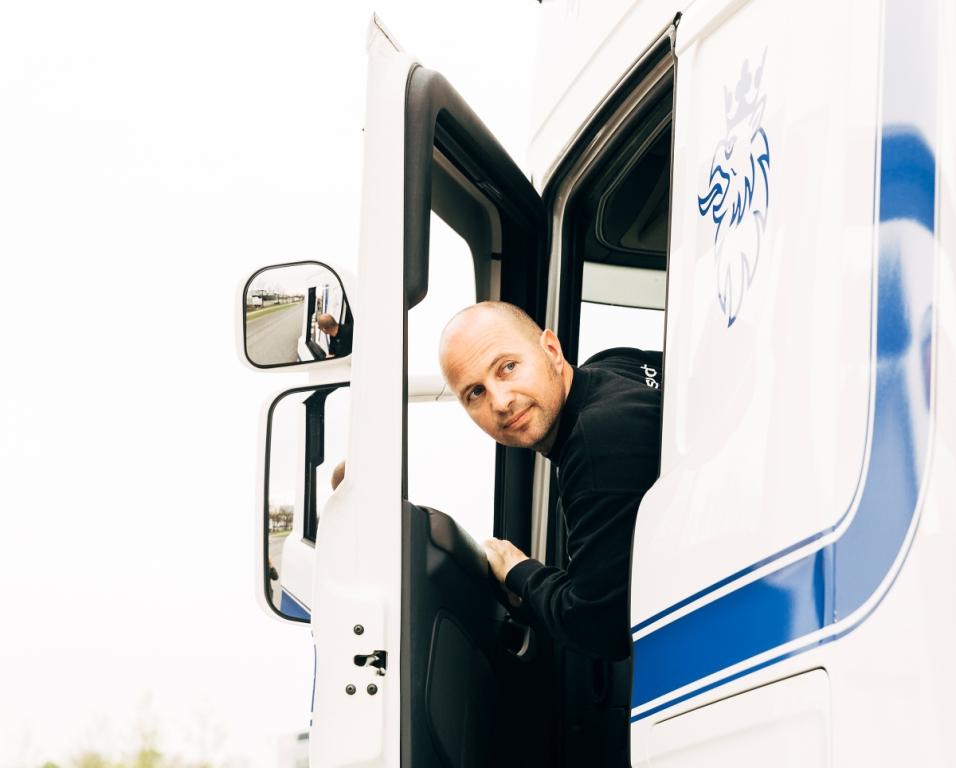
Scania Press Release / June 11, 2015 The Ecolution by Scania service package guarantees customers fuel savings of 10 percent. By focusing on coaching, Scania Denmark has found that it can deliver fuel savings of 16 percent. Ecolution by Scania is a comprehensive service package that improves customers’ fuel economy and ultimately their bottom line. The package contains various provisions for helping to reduce fuel consumption. These include optimising a regular Scania truck according to the specific needs of each customer in terms of cargo weight, driving conditions and drivers’ potential; an extended maintenance programme that for example involves regular axle alignment and tyre pressure monitoring; and driver training. Driver training the biggest factor Erling Petersen, Driver Trainer Manager, Scania Denmark, says the critical component is coaching. “Driver training is definitely the biggest factor [in reducing fuel consumption],” he says. “If an Ecolution customer achieves fuel savings of 15 percent, 2 or 3 per cent [of that] is from truck optimisation and another 2 percent from the maintenance programme. But 10 percent comes from coaching.” Scania Denmark currently has 275 Ecolution trucks on its books, 80 of which were sold in 2014, with some 450 drivers a month receiving training from a small but experienced team of driver coaches. “The customer must respect the coach, which they won’t if the coach isn’t an experienced driver himself,” Petersen says. “An experienced driver trainer can explain what to do in the different situations that drivers face and the customer will listen to them.” Reducing fuel consumption and tyre wear Ecolution by Scania helps Michael Bærensen, owner of MB Transport, save about DKK 3,000 each month. Michael Bærensen is a case in point. As the owner of MB Transport, a trucking company based near Copenhagen, he ferries concrete between construction sites on Zealand and Jutland once, if not twice, a day in his Scania R 560 covering as much as 1,200 to 1,400 kilometres every 24 hours. When Bærensen bought his truck two years ago he also signed up for Ecolution by Scania. “Before, I drove a Scania R 500,” he says. “With that truck I drove 33.3 litres per 100 kilometres, now I drive 28.5 litres per 100 kilometres per litre. I have saved about DKK 3,000 each month through reduced diesel consumption and less tyre wear.” Bærensen says the driver training component of Ecolution has made a big difference. “I took the Ecolution training course and quickly learnt how to best drive the truck,” he says. “My employee hasn’t taken the course, but I’ve instructed him how to drive efficiently. I get a report each week and one each month, where I can see all data. It’s important to read the reports to see where we can improve.” Ensure longer vehicle uptime Petersen adds that after a couple of years many customers report that their Ecolution trucks are performing much better than their non-Ecolution trucks. While this means that customers may buy new trucks less regularly, it also means it is easier for them to resell their used trucks, which are in much better condition than they would have been without Ecolution. “Our customers are very pleased with their trucks,” Petersen says. This is confirmed by figures showing 75 percent of the Ecolution trucks bought in Denmark are purchased by existing Ecolution customers. “Ecolution is a good concept for our customers,” Petersen says. “They save a lot in fuel costs, reduce their maintenance costs and ensure longer uptime for their vehicles – and it is better for the environment.” .
-
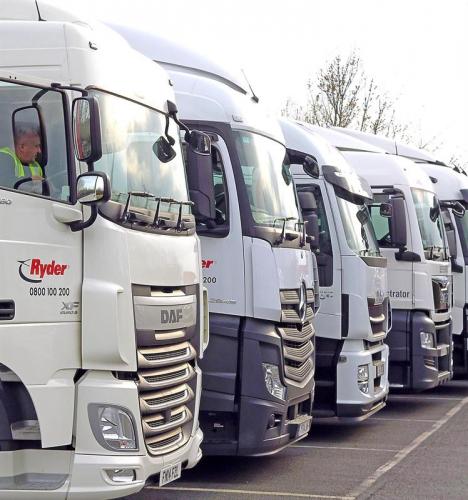
Transport Engineer / June 12, 2015 Ryder is upgrading its rental fleet with 400 new Euro 6 big cab 6x2 tractor units and 350 new trailers, making its one of the most modern rental fleets in the UK. The new tractors are a mix of DAF, Mercedes-Benz, MAN and Iveco units, all fitted with telematics as standard. As for the trailers, they include 200 curtainsiders, 100 fridge trailers and 50 box trailers. "This latest investment in new assets will endow Ryder with one of the largest and most comprehensive Euro 6 fleets in the country enabling our rental customers to have access to the benefits of this new technology," states David Hunt, vice president and managing director Ryder Europe. "Our significant investment in new trailers will ensure that Ryder maintains its leadership position intrailer rental with an extensive range of options for customers. "We also continue to invest in our personnel and workshops across our national network of 28 locations with all of our workshops equipped, and our staff trained, to support the specialised maintenance requirements of Euro 6 specification vehicles." This year's investment in new assets follows the company's multi million pound purchase of nearly 1,000 Euro 5 derogated vehicles in 2014. Ryder maintains one of the largest and youngest HGV rental fleets in the UK with this year's investment in new vehicles ensuring that the average age of rental trucks remains at 24 months. .
-
Scania Press Release / June 11, 2015 The market for fire and rescue vehicles is continually moving towards increasingly advanced solutions. This week, the industry is gathered in Germany for the Interschutz fair. “Interschutz is the largest fire vehicle exhibition in the world, it's the place to be,” says Key Account Manager Mats Brodin to Scania Studio. Related reading - http://www.scania.com/products-services/trucks/special-purpose-trucks/fire-rescue/
-
The Associated Press / June 11, 2015 Georgia will spend $10 million to add officers to the state law-enforcement division focused on watching and inspecting commercial trucks, Governor Nathan Deal announced Thursday along a stretch of interstate where tractor-trailers recently caused a pair of crashes that killed 10 people. Within the next year, the state Department of Public Safety will hire 60 officers to its commercial-truck enforcement division. They will be spread among regions of the state where crashes involving big trucks are most common, such as the Interstate 16 corridor leading to the Port of Savannah. The Georgia State Patrol says two recent crashes on I-16 west of Savannah were caused by tractor-trailers that slammed into stop-and-go traffic. The first chain-reaction collision April 22 killed five nursing students from Georgia Southern University. The second crash May 19 killed five more people at the junction where I-16 meets busy Interstate 95. "These tragedies brought to the forefront our need to strengthen our safety measures as we prepare for a significant increase in commercial truck traffic in the years to come," Deal told reporters at a news conference along I-16 near the site of the first crash in Bryan County. Georgia officials say commercial trucks were involved in 16,518 wrecks statewide last year and 157 people died. Lt. Col. Russell D. Powell, deputy commissioner of the Department of Public Safety, said wrecks involving big trucks are up about 4 percent since 2012 and officials worry they will keep increasing as an improving economy and lower gas prices put more cars and big trucks alike on Georgia roads. The new officers will join 234 commercial-truck enforcement officers already on the job in Georgia. They work much like troopers employed by the State Patrol, but focus on tractor-trailers and other big trucks. Powell said their duties include pulling over drivers for speeding and other traffic violations as well as inspecting trucks both on roadsides and at designated weigh stations. More than half the 60 new officers will be stationed along the I-16 and I-95 corridors in southeast Georgia, Deal said. Another 20 will be deployed in metro Atlanta. The rest will be used along Interstate 85 south of Atlanta. Jimmy DeLoach, a former Garden City mayor and Chatham County commissioner, approached Deal about beefing up highway enforcement after his granddaughter, 21-year-old Abbie DeLoach, was among the nursing students killed on I-16 in April. "Sure it will help, because of the speed," DeLoach said, adding that he saw several tractor-trailers going too fast on his way to the governor's news conference. "One of those big trucks passed me like I was stopped." Edward Crowell, president of the Georgia Motor Trucking Association, said his group for years has advocated more officers focused on commercial trucks. "It's going to be good and make life safer for everyone," Crowell said.
-
Join us at the 2015 Engine Expo at the Messe Stuttgart to learn more about how we view the industry’s major challenges including regulatory requirements, total cost of ownership, and even market differentiation. During the Technology Forum, Hilko Schmitt, Business Development Manager Europe, will present "The Next-Generation Engine Brake: HPD". Join Hilko on June 16th at 11:20 as he discusses the logical next step in engine brake technology: High Power Density, or HPD. Jacobs’ answer to today’s and tomorrow’s demands on engine braking will be shown later this year, during OEM and customer demonstration venues. At the Engine Expo, he will show how Jacobs came to the development of the HPD system, how it works, and what it delivers. If you cannot attend the Technology Forum and are interesting in an informative, collaborative afternoon with our engineers, complete the Technology Roadshow contact form, and we will be in touch to arrange the next steps. Download the technology brief - http://www.jvstechroadshow.com/files/JVS_TechBrief_High_Power_Density.pdf
-
Calgary Herald / June 7, 2015 The 400-tonne heavy haulers that rumble along the roads of northern Alberta’s oilsands sites are referred to in Fort McMurray as “the biggest trucks in the world,” employing thousands of operators to drive the massive rigs through the mine pits. Increasingly, however, the giant trucks are capable of getting around without a driver. Indeed, self-driving trucks are already in use at many operations in the province, although they are still operated by drivers while the companies test whether the systems can work in northern Alberta’s variable climate. That is about to change. Suncor Energy Inc., Canada’s largest oil company, confirmed this week it has entered into a five-year agreement with Komatsu Ltd., the Japanese manufacturer of earthmoving and construction machines, to purchase new heavy haulers for its mining operations north of Fort McMurray. All the new trucks will be “autonomous-ready,” meaning they are capable of operating without a driver, Suncor spokesperson Sneh Seetal said. The move to driverless trucks comes as Suncor and its competitors in the oilsands look for opportunities to cut costs and boost productivity, an effort that has intensified amid the year-long plunge in oil prices. The steep fall in prices has already forced the sector as a whole to lay off thousands, with Suncor itself letting go 1,000 people this year. Driverless trucks aren’t new to the resource industry. Mining giants Rio Tinto Group and BHP Billiton Ltd. use them at many of their operations and oilsands producers see driverless trucks as an obvious way to boost productivity. For Suncor’s roughly 1,000 heavy-haul truck operators, however, the prospect of driverless trucks has raised more immediate fears of significant job losses. “It’s very concerning to us as to what the future may hold,” said Ken Smith, president of Unifor Local 707A, which represents 3,300 Suncor employees. Smith said Suncor has signed agreements to purchase 175 driverless trucks. Suncor has been testing “autonomous haulage systems” in its oilsands mining operations since 2013 to determine whether the GPS-assisted trucks can work year-round in the oilpatch, Seetal said, adding the company doesn’t expect to make a decision until 2017 on whether to fully bring in the system, with implementation spread out over several years. “It’s not fantasy,” Suncor’s chief financial officer Alister Cowan told investors at an RBC Capital Markets conference in New York last week. He said the company is working to replace its fleet of heavy haulers with automated trucks “by the end of the decade.” “That will take 800 people off our site,” Cowan said of the trucks. “At an average (salary) of $200,000 per person, you can see the savings we’re going to get from an operations perspective.” A wider push to automate various functions in the energy industry is already underway. For example, Canada’s largest drillers, Precision Drilling Corp. and Ensign Energy Services Ltd., use high-tech drilling rigs capable of moving autonomously between oil wells throughout North America. Nor is the use of autonomous trucks likely not confined to Suncor, although companies are reluctant to confirm plans. Imperial Oil Ltd. spokesperson Pius Rolheiser would not say whether his company was testing the trucks at the company’s Kearl oilsands mine — which is weeks away from doubling its production capacity to 220,000 barrels per day. “While Imperial doesn’t discuss specific plans, we do as a matter of practice look at all new and emerging technologies and their potential to enhance safety and effectiveness of our operations,” he said. Similarly, at oilsands miner Shell Canada Ltd. “automated hauling opportunities is something we are exploring, but we have no specific timeline for it,” spokesperson Cameron Yost said in an email. Unifor’s Smith said he expected that if Suncor began pulling drivers from its “autonomous-ready” trucks, other oilsands mine operators would follow suit and thousands of jobs would be eliminated. He also said Unifor members were concerned about their safety if Suncor phases in driverless trucks working along side trucks with drivers before going fully autonomous. “We’d like to see how it’s working in other places, exactly if other people are blending the two types of equipment on the same job site,” Smith said. Seetal said Suncor was still working through its pilot project and had not made a decision on whether to implement a fully autonomous system. “If we decide to go that route, we would absolutely work through how we could look for redeployment opportunities for our employees and we expect there would be some changes to skillsets,” she said. “An autonomous truck still requires people to load it, to maintain the roads and to make the technology work,” she added.
-
Owner/Driver / June 11, 2015 Visitors to this year’s Perth Truck and Trailer Show, held on July 24 to 26, will be offered a series of information seminars relevant to the industry. The show, held at the Perth Convention and Exhibition Centre, will host the seminars on Friday, July 24, and make them open to the public. The seminars are free to attend, but registrations are required and can be made via the Truck Show website at www.perthtruckshow.com.au. Show Director Peter Woods says the seminars were an exciting new aspect of the event and offered valuable information. "We find that the majority of show visitors on the Friday are from the vehicle industry, and would therefore benefit from these information seminars," Woods says. Woods says the topics are likely to include dangerous goods transport, reducing fatigue’s contribution to road crashes, chain of responsibility and trailer brake requirements. Meanwhile, some of the biggest names in truck and trailer manufacturing will be exhibiting their latest products during the Perth Truck and Trailer Show, including Australia’s largest trailer manufacturer MaxiTrans, who will display products from its range of trailer brands Freighter, Maxi-Cube, Hamelex White, Lusty EMS and Azmeb. The Southern Cross Industries WA group, a regular exhibitor at the Perth Truck Show dating back to 2007 will also make a return. Southern Cross State manager Aaron Gilchrist says the company will be exhibiting custom built signature Southern Cross equipment, as well as a comprehensive display of spare parts. Paul Wilson, sales and marketing manager Kenworth/DAF says CJD Equipment are proud to be the Kenworth and DAF Dealers in WA and equally excited to have recently celebrated a 30 year relationship with Paccar. "We see this show as a great platform to which we can display the latest innovations from Kenworth and DAF." "We are certainly looking forward to the 2015 event, and showcasing new models to the WA market." The Perth Truck and Trailer Show will be presented by the Commercial Vehicle Industry Association which is a division of the Motor Trades Association of WA.
-
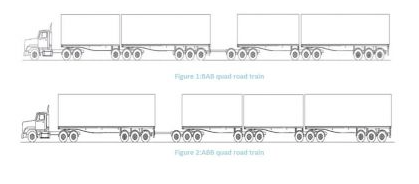
Diesel News Australia / June 11, 2015 In a win for productivity, the South Australian State Government has approved the use of quad road trains on selected routes. Operators will be able to run ABB and BAB quad road trains north of Port Augusta under the new rules. The approval was as a result a review into agricultural transport, which was followed by a report, A Modern Transport System for Agriculture: a new partnership approach. Operators have been calling for the introduction of quad road trains to align regulations in the north of South Australia (SA) with those in the Northern Territory. Quad road trains will now be permitted to run from the start of the 53.5 km road train network at Port Augusta to the Northern Territory border, and also between Pimba and Olympic Dam along the Olympic Dam Highway. This change will allow the trucking industry to uncouple road trains and continue their trips without having to reconfigure truck and trailer combinations. The SA government reckons the change will improve efficiencies along the remote long-distance corridor, with a productivity boost of at least 8 per cent through the introduction of these larger capacity vehicles. Two combinations of quad road trains will be permitted. The BAB quad consists of a prime mover towing two sets of B-double trailers, while an ABB quad has a prime mover towing a single trailer and a set of B-triple trailers on behind. “For our members and their customers who choose to use these configurations it will mean greater productivity and safety,” said David Smith from the Livestock and Rural Transporters Association of SA. “It’s a very welcome step in the right direction for the transport and agricultural industries in South Australia. “ The SA government has announced it will be implementing a range of other measures to boost regional transport productivity in coming months, including the introduction of triaxle dollies. Related reading: http://www.premier.sa.gov.au/images/news_releases/2015/15_06Jun/roadtrains.pdf https://www.police.sa.gov.au/sa-police-news-assets/traffic/quad-road-trains-on-sections-of-far-north-highways http://www.pir.sa.gov.au/__data/assets/pdf_file/0004/245128/Modern_Transport_System_for_Ag.pdf .
-
Owner/Driver / June 11, 2015 Labor senator says he does not want the National Heavy Vehicle Regulator extending its reach to Western Australia. A senator of the government that championed the establishment of a national heavy vehicle regulatory regime says he does not want it introduced in his home state of Western Australia. Labor senator for WA Glenn Sterle, himself a former truck driver, used a recent Senate estimates hearing to take a dig at the Heavy Vehicle National Law (HVNL), including the fatigue management scheme that is a part of it. The law currently operates in all jurisdictions except WA and the Northern Territory, and the National Heavy Vehicle Regulator (NHVR) has spoken of the need for the entire country to switch to the same system. But when the topic of regulatory harmonisation arose during the estimates hearing, Sterle responded: "God hope it does not happen. We do not want that happening over here." Sterle then went on to criticise the fatigue management system used in the eastern states, which differs to the model in WA. "We do not want in the west that nonsense fatigue regime you have here, I can tell you. I thought I would get that out," he says. "I have never been any different on that, although we want our truckies and other road users very safe on the road." Sterle was part of the government that clinched a deal in 2011 with state and territory ministers to introduce the HVNL and establish the NHVR. Former federal transport minister Anthony Albanese labelled a national system "absolutely vital" for removing cross-border anomalies and an "important reform" that was "100 years too late". WA and the NT have expressed concern about adopting the HVNL, with both saying their existing heavy vehicle laws best suit their needs. WA Transport Association (WARTA) CEO Ian King recently told Owner//Driver the state’s position had not changed. "We’re looking at what is happening over there [in the eastern states]. Do we need it in WA since 97 or 98 per cent of the business is intrastate?" King says.
-
Australasian Transport News (ATN) / June 10, 2015 The Australian Livestock and Road Transport Association (ALRTA) is set to launch a new 24-hour emergency helpline for livestock drivers in trouble. In partnership with sponsor National Transport Insurance (NTI), the Livestock Assist program will offer a one-call hotline for drivers in the event of an accident or breakdown on the road. Using NTI’s database of service providers, the operator will be able to assist with all medical, mechanical, and animal welfare issues – whether the incident takes place in the outback or the city. LRTA South Australia president David Smith says the hotline is a smart initiative. "To me, it’s a very welcome step," he says, noting that drivers will face less personal stress in the wake of an accident. NTI industry affairs manager Owen Driscoll is expected to explain the details of the Livestock Assist program in a presentation to the LRTA South Australia conference this coming weekend. The program’s official launch will take place during the ALRTA’s national conference in Bunbury over July 3 and 4.
-
Superliner Hood Welting/Seal
kscarbel2 replied to thomastractorsvc's topic in Exterior, Cab, Accessories and Detailing
If your Super-Liner is Hayward production, then the hood cowl welting is absolutely NOT rubber (ie. 12AX136F). That is for the altogether different hood mounting configuration of the Macungie-built RWI Super-Liner (built on the MH Ultra-Liner platform). I believe 2RU139F is right (2RU135F was the hood welting for the B-model, similar to 139F but different width). When your Mack dealer looks up the part number of the hood cowl welting using your truck's model and serial number, they should be able to provide you with the correct part.........without any doubts. If Volvo is substituting a felt different from the original, by former Mack Trucks policy, the part number would have to have been changed. -
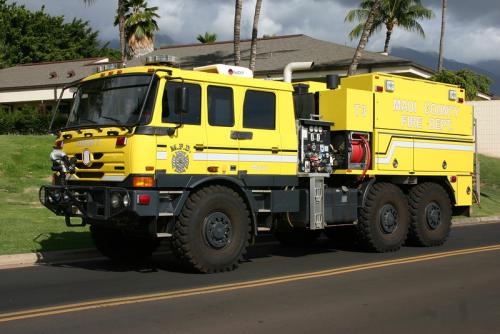
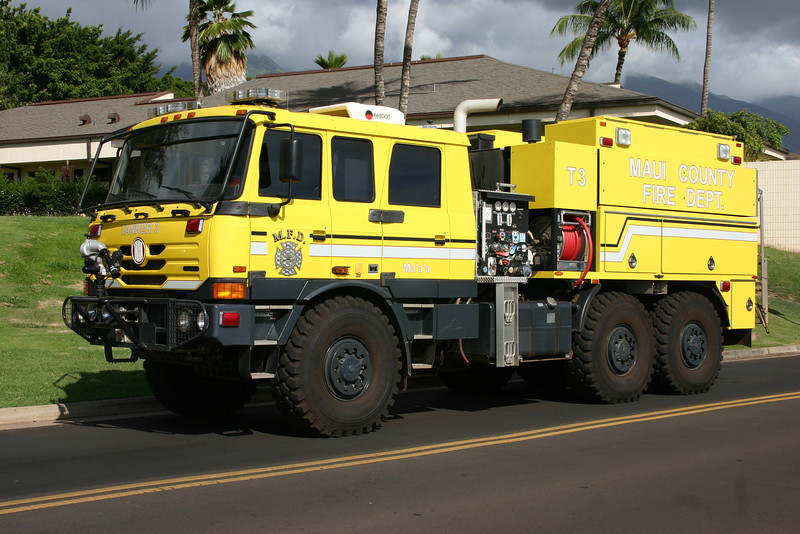
Good catch. The Maui Fire Department's Lahania Station 3 operates this 2010 Tatra T-815 6x6 as Tanker 3. .
-
Superliner Hood Welting/Seal
kscarbel2 replied to thomastractorsvc's topic in Exterior, Cab, Accessories and Detailing
Is your Super-Liner a Hayward-built Mack Western RWL/RWS, or a Macungie-built RWI ? (If you're looking for welting, I'm assuming RWL/RWS)


BMT Forum Logo